The 12 Best Low-Calorie Fruits To Add To Your Diet

These are the best options for adding some sweetness to your diet without going overboard on calories.
Fruit catches a bad rap among the calorie-conscious sometimes. In fairness, if you look at fruit solely by its calorie and sugar content, it kind of makes sense. But there are three things worth remembering:
For one, fruits are profoundly nutritious, containing piles of valuable micronutrients, fiber, and water. Secondly, low-calorie fruits do exist, and can add some much-needed sweetness to your diet without breaking the bank calorically. And third, the sugar content is natural rather than “added sugars,” which are what most health-conscious folks try to limit.
TL;DR
Many of the best low-calorie fruits contain plenty of fiber and water. Berries and melons lead the way here — many come in at or under 60 calories per serving. And make sure you’re sticking with whole fruits; juices are a different story altogether.
Key Takeaways
- The best low-calorie fruits are high in water content and dietary fiber.
- Despite being low in calories, these fruits deliver plenty of valuable nutrition.
- Berries and melons are among the most calorie-friendly options out there.
- If you’re going to add fruit to your diet, go for the real thing, not juices.
The Lowest-Calorie Fruits, Ranked
Read this first: This list of low-calorie fruits should help you understand how you can incorporate fruit into your diet, but it’s not a list of fruits you can eat as much as you want of without worry. Whether you’re counting calories or just trying to be more mindful of how much you’re consuming day-to-day, remember that moderation is everything.
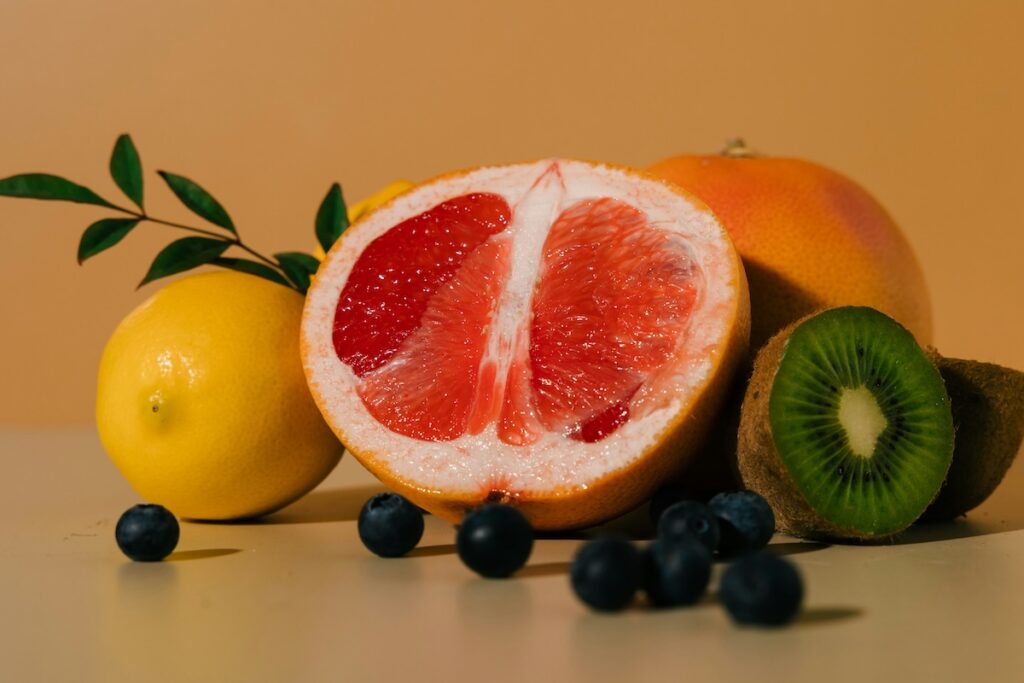
That said, these low-calorie fruits are your best picks if you want a sweet snack that won’t throw your budget out of whack. All serving data has been pulled from the U.S. Department of Agriculture’s FoodData Central database. Serving sizes vary by fruit below, so treat this as a general guide rather than a strict per-gram ranking.
Plum: 30 calories
Serving: 1 fruit
A medium-sized plum contains only 30 calories. If you like to snack by biting out of whole fruits rather than slicing them or grabbing handfuls, plums are a prime pick.
Honeydew: 37 calories
Serving: 100 grams
Honeydew is not the most nutritionally-dense fruit out there, but it’s quite light on calories and comes with a solid amount of potassium.
Kiwi: 42 calories
Serving: 1 fruit
A medium-sized kiwi weighs about 69 grams. It contains over 70% of your daily requirement of vitamin C alongside a small amount of fiber.
Watermelon: 46 calories
Serving: 1 cup
As the name implies, watermelon is over 90% water by volume, making it one of the most calorie-efficient fruits. Watermelon also provides a small amount of dietary fiber, vitamin C, and an antioxidant called lycopene.
Grapefruit: 52 calories
Serving: ½ fruit
Half a pink or red grapefruit runs about 52 calories, and it’s mostly water — you still get roughly 2 grams of fiber and around 40% of your daily vitamin C out of it. The pink and red varieties also carry lycopene, the same antioxidant that gives watermelon its color.
Strawberry: 53 calories
Serving: 1 cup, sliced
In addition to being one of the best low-calorie fruits out there by caloric content, strawberries contain meaningful fiber content and vitamin C, as well.
Cantaloupe: 55 calories
Serving: 1 cup, cubed
Cantaloupe is low in calories but high in valuable vitamins and minerals like potassium, vitamin A, and vitamin C. There’s even a small amount of protein on offer per serving (a little under 1.5 grams).
Orange: 62 calories
Serving: 1 medium fruit
A medium orange lands right around 62 calories and is tough to beat for vitamin C, with one fruit covering over 70% of what you need in a day. You also get about 3 grams of fiber, which helps that natural sugar hit your bloodstream a little more slowly.
Papaya: 62 calories
Serving: 1 cup
One cup of papaya delivers 2.5 grams of fiber, the digestive enzyme papain, and a good dose of vitamins A and C.
Blackberry: 62 calories
Serving: 1 cup
If you’re trying to increase your fiber intake, blackberries are one of your best bets. You get a whopping 7.6 grams of dietary fiber — plus vitamins C, K, and almost 40% of your daily quota of manganese to boot.
Raspberry: 64 calories
Serving: 1 cup
Raspberries are compositionally similar to blackberries, down to the low calories and high fiber (almost 8 grams). You get vitamins C and K, plus manganese here, too.
Peach: 68 calories
Serving: 1 whole fruit
A large peach weighs about 175 grams and contains just under 70 calories. You also get scant but mentionable amounts of dietary fiber plus vitamins A and C.
How to Work Low-Calorie Fruits Into Your Day
Low-calorie fruits can serve as both complements to larger meals or standalone snacks, particularly if you’ve got a sweet tooth. Here’s some practical guidance on upping your fruit intake without going overboard on calories:

Pair with protein or fat: The calories in fruit come almost entirely from sugars. To make a more balanced meal, add fruit to a protein or fat-heavy plate. Think berries in greek yogurt or alongside almonds.
Bigger is better: Small fruits you can gobble up by the handful can still be light on calories, but the challenge is maintaining portion control. If you hate weighing or measuring your food, go for large single-serving fruits like kiwi or peaches.
Choose whole, not juice: Many fruit juices lack the robust nutrition (and low caloric content) of whole fruits, and are laden with added sugars for flavor. Whenever possible, go for the real thing.
Emphasize water: Fruits with high water content are less calorically dense by default, making them “safer” picks calorically if you like to enjoy large quantities. Watermelon leads the way here, but other options include cantaloupe, peaches, and oranges.
Frequently Asked Questions
Watermelon is one of the lowest-calorie fruits by volume, making it a great pick if you like to get your fill of fruit but want to keep things conservative on the calorie front.
Some of the best low-calorie fruits for weight loss are watermelon, strawberries, cantaloupe, and kiwi. These are strong choices because of their low caloric density, high water content, and high fiber content.
Yes, you can eat too much fruit on a low-calorie diet. Even low-calorie fruits can affect your rate of weight loss if you consume so much that you exit a caloric deficit. Low-calorie fruits let you physically consume more, but it all adds up.
Yes, berries are generally low in calories. Strawberries, raspberries, and blackberries all fall between 40 and 60 calories per cup. Most berries are dense in dietary fiber as well, helping you to feel full without overdoing it.
Bottom Line on Low-Calorie Fruits
Low-calorie fruits can be a real blessing for anyone with a sweet tooth. Fruits like watermelon, strawberries, cantaloupe, or kiwi let you snack generously without racking up too many extra calories. But the real benefit of low-calorie fruit is the high fiber, water, and micronutrient content — you really do get a lot out of a little. And if you’re rounding out a lighter snack rotation, low-calorie cheese is another easy win.
Experts Who Contributed
- Jake Dickson BS-EXS, NASM-CPT, wrote this article.
- Lauren Keary, NASM-CNC, reviewed this article for accuracy.