
Cottage Cheese vs. Tofu: Which Wins on Protein?

These two different foods both pack a lot of protein per gram and some worthwhile nutrients to boot.
Everyone needs protein — the Recommended Dietary Allowance is about 0.36 grams per pound of body weight a day (0.8 grams per kilogram), though active people and older adults often aim higher — to build and maintain muscle tissue, support bone health, and stay full.
Two popular non-meat options are cottage cheese and tofu. Both fit into most vegetarian diets, and tofu is a staple among vegans and other plant-based eaters. But while both are solid additions to a high-protein vegetarian diet, they differ in how much protein they provide, their nutritional profiles, and how your body uses that protein. Here’s how they stack up.
What You Should Know About These Two Foods
Let’s start with what these two protein sources have in common. They’re both fairly affordable: cottage cheese costs around $4 for a large tub, while tofu typically runs between $2 and $4 per pound. They’re also complete proteins, meaning they contain all nine essential amino acids — the building blocks of protein that your body can’t produce on its own and must get through food. Lastly, both offer a decent array of nutrients beyond protein.
As for how they differ, cottage cheese is made from milk curds and packs about 12 to 14 grams of protein per half-cup serving, depending on the brand and fat content. You may be surprised by how much sodium is in a serving, though it also provides calcium and vitamin B12.
Tofu, on the other hand, is made by coagulating soy milk and pressing the resulting curds into blocks of varying firmness. Its protein content varies, with some firm varieties providing around 8 grams per 3-ounce serving and others packing considerably more. You’ll also get iron, unsaturated fats, and naturally occurring plant compounds called isoflavones. Varieties made with calcium salts can be particularly rich in calcium, sometimes providing more than cottage cheese.
Going Deeper on the Comparison
When comparing tofu and cottage cheese, or any two protein sources, you want to look at protein quantity and quality, and weigh any nutritional trade-offs between the two. Ultimately, there is no “best” protein source. Some foods have slightly more protein than others and different nutrient profiles. What you eat depends on your goals.
There are two ways to compare protein content: protein by weight and protein per calorie. Protein by weight tells you how many grams of the good stuff you’re getting per a specific measurement — 100 grams in our example below. It doesn’t, however, account for how calorically dense that food is. Even if a food packs 20 grams of protein per 100 grams, it may also contain plenty of fat and carbs. If you’re watching your calorie intake, you want a food that provides plenty of protein for relatively few calories.
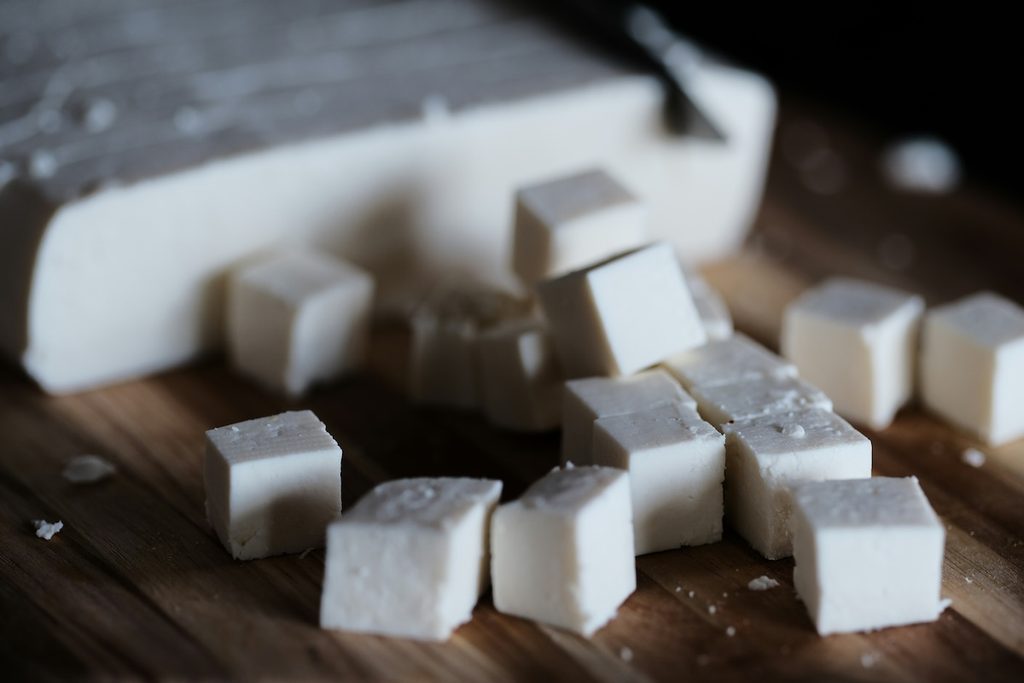
According to the USDA, firm, calcium-set tofu contains more protein (17.3 grams) than 2% cottage cheese (10.4 grams) per 100 grams, but it also has more calories — 144 compared to 81. That works out to roughly 12 grams of protein per 100 calories for tofu and 12.8 grams for cottage cheese. So cottage cheese has a slight edge for anyone looking to maximize protein while keeping calories in check. Keep in mind, though, that tofu’s nutritional content can vary considerably depending on the type and brand.
How much protein a food contains, though, isn’t necessarily an indicator of quality. Protein quality is typically measured by its essential amino acid content and how efficiently your body digests those amino acids. Two common methods are the Protein Digestibility-Corrected Amino Acid Score (PDCAAS) and the Digestible Indispensable Amino Acid Score (DIAAS). Both cottage cheese and tofu contain high-quality proteins. One study — which used minipigs, not humans — found that 95% of the amino acids in tofu protein were digestible, and gave tofu a DIAAS of 97. Meanwhile, the primary proteins in cottage cheese, casein and whey, are highly digestible and provide all nine essential amino acids. So while dairy proteins generally have an edge in protein quality, tofu is a strong alternative.
Lastly, consider the other nutrients. Cottage cheese provides vitamin B12 and calcium, but can also be relatively high in sodium. Tofu contains iron and unsaturated fats, and varieties made with calcium sulfate can provide substantially more calcium than cottage cheese. Unseasoned tofu is also naturally low in sodium, making it a potentially better choice for someone watching their salt intake.
Cottage Cheese (2% Milkfat)
Per 100 grams
- Calories: 81
- Protein: 10.4 g
- Fat: 2.3 g
- Carbohydrates: 4.8 g
- Calcium: 111 mg
- Iron: 0.13 mg
- Sodium: 308 mg
Firm Tofu (Calcium-Set)
Per 100 grams
- Calories: 144
- Protein: 17.3 g
- Fat: 8.7 g
- Carbohydrates: 2.8 g
- Calcium: 683 mg
- Iron: 2.66 mg
- Sodium: 14 mg
The Takeaway
If you’re looking to maximize protein while keeping calories relatively low, cottage cheese has a slight edge over some varieties of tofu. However, tofu is a better fit for vegans, people who avoid dairy, or anyone looking to limit their sodium intake. Both are versatile, affordable protein sources that fit easily into a balanced diet, so there’s no reason you can’t enjoy them.
Bottom Line
Cottage cheese and tofu are two excellent sources of complete protein, and neither is inherently healthier than the other. Cottage cheese offers slightly more protein per calorie in our comparison, while tofu provides iron, unsaturated fats, and potentially more calcium with considerably less sodium. Ultimately, the better choice comes down to your dietary preferences, nutritional needs, and which one you’re more likely to eat consistently.
Experts Who Contributed
- Andrew Gutman, NASM-CPT, BRM, wrote this article.
- Lauren Keary, NASM-CNC, reviewed this article for accuracy.