
Anti-Inflammatory Recipes to Add to Your Rotation

One region of the world gets it right at every meal.
Spoiler alert: It’s the Mediterranean diet. When you search for anti-inflammatory recipes, you often get more than you asked for. The premise is legit, but “anti-inflammatory” foods are often more marketing than merit — you don’t need turmeric shots at every meal.
As it turns out — and what the science says, too — the best anti-inflammatory recipes overlap with a Mediterranean eating pattern. That’s fish, vegetables, nuts, and oils. No sugary carbs. Nothing fried. The right recipes are linked to lower inflammation, improved gut health, and are just plain tasty.
TL;DR
Anti-inflammatory recipes lean heavily on fruit, vegetables, fatty fish, and whole grains. These are hallmarks of a Mediterranean dietary pattern. But if you want to reap the benefits, you need to be more consistent than a meal here and there.
Key Takeaways
- The best anti-inflammatory recipes are based around produce, whole grains, fatty fish, and oils.
- This Mediterranean-esque eating pattern favors food with inflammation-fighting spices like ginger, garlic, and turmeric.
- Studies show this type of eating works, but not after just a meal or two.
- To reap the benefits of anti-inflammatory recipes, you must make them the basis of your diet long-term.
What Makes a Recipe Anti-Inflammatory
Before we break down the best anti-inflammatory recipes, we need to be on the same page about what that label even means. Inflammation is an immune system response. When something goes wrong, like suffering an injury or contracting an illness, your body produces temporary inflammation to help “put out the fire.”
Chronic inflammation is another matter. This inflammatory response is less intense, but more persistent. Studies show that long-running inflammation is associated with greater risks of heart disease, type 2 diabetes, arthritis, and other conditions.
What leads to chronic inflammation? Chronic disease, for one. And then there are lifestyle factors — body fat, physical inactivity, high stress, or a poor diet. Your food choices can both worsen and alleviate inflammation.
An anti-inflammatory recipe is built around foods associated with reducing inflammation. Scholars at Harvard Health Publishing highlight the following food groups:
Berries: Strawberries, raspberries, blueberries, and blackberries, for their anthocyanins, which have anti-inflammatory properties.
Fatty fish: Salmon, tuna, or sardines, due to their high omega-3 fatty acid content.
Leafy greens: Arugula, chard, kale, or spinach — with spinach in particular having been shown to reduce inflammation and slow cognitive decline.
Nuts and seeds: Pistachios, almonds, sunflower seeds, or pumpkin seeds are rich in fiber and healthy fats. (For omega-3s specifically, reach for walnuts, flax, or chia.)
Tomatoes, Harvard says, get their “superpowers” from a phytochemical called lycopene, which may help lower the inflammatory marker IL-6. The research on circulating lycopene and inflammation is still mixed, though, so treat it as one helpful piece of the puzzle rather than a magic bullet.
Anti-Inflammatory Recipes to Try
Here are some anti-inflammatory recipes worth trying. Remember — you can’t solve a persistent issue with a one-time intervention. Your eating habits need to shift long-term to make a dent on chronic inflammation.
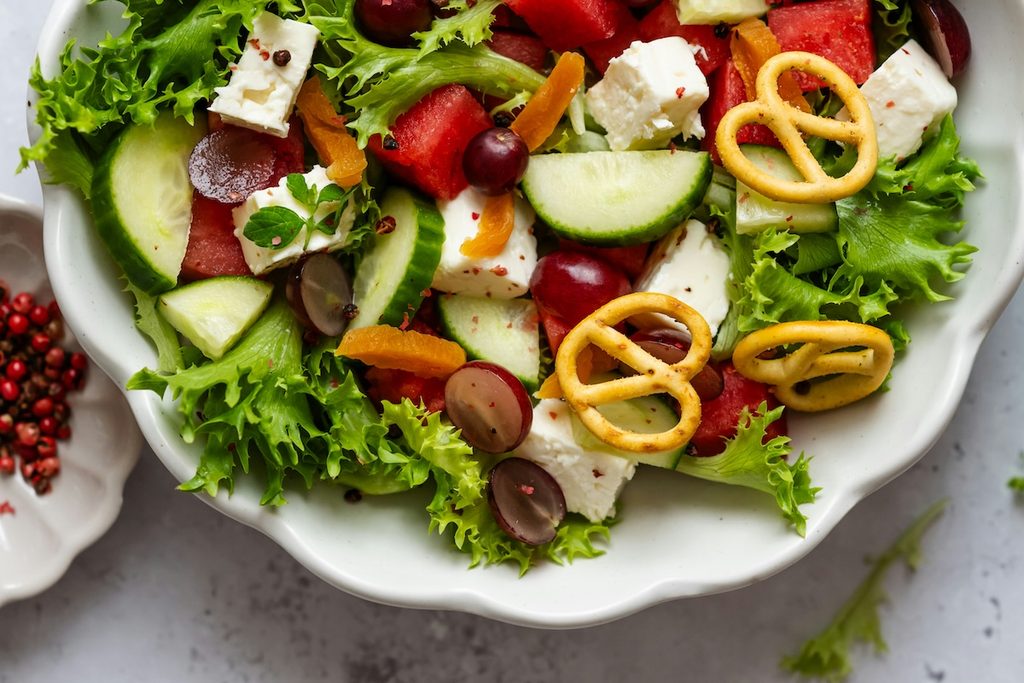
That said, think of these plates as jumping-off points, not a meal plan to stick to. You can customize and swap ingredients to your preference as long as the core foods stay in rotation.
For Breakfast
Overnight oats with berries: Oats soaked in the fridge overnight with milk or yogurt, topped with fresh berries and/or walnuts.
Egg & veggie scramble: Scramble eggs in olive oil and add chopped spinach, diced tomatoes, then season with turmeric and black pepper.
Whole wheat bagel with salmon: Whole grains add fiber, while the salmon provides protein and plenty of omega-3 healthy fats. You can also include fresh spinach leaves as well.
For Lunch
Salmon & rice bowl: Add salmon to brown rice with cucumber, arugula, and olive oil. Squirt some lemon juice over the top.
Lentil & veggie soup: Lentils, carrots, onions, garlic, cumin, and kale, prepared in a single pot.
Mediterranean fish salad: Build a base of romaine lettuce, tomatoes, cucumber, olives, chickpeas, then add your fatty fish of choice over top.
Tuna salad: Chop canned or cooked tuna, add and toss with white or lima beans, red onions, parsley, and lemon.
For Dinner
Oven-roasted salmon and asparagus: Toss asparagus spears with red pepper, black pepper, and olive oil. Roast both in the oven and dress with fresh lemon juice.
Roasted vegetable pasta: Whole-wheat pasta tossed with roasted zucchini, cherry tomatoes, and diced garlic. Top with olive oil and basil.
Chicken skewers: Skewer plain, skinless chicken breast with sliced bell peppers and zucchini.
As a Snack
Hummus & veggies: Carrots, cucumbers, broccoli, or bell peppers work great as dippers.
Mixed nuts & dried fruit: Almonds, walnuts, or pistachios, plus prunes, figs, dates, or apricots.
These meals are not magic, they’re jumping-off points. These options should illustrate that anti-inflammatory recipes are diverse and customizable as long as the crucial food groups are present most of the time.
How to Eat Anti-Inflammatory Day to Day
Getting the right anti-inflammatory recipe is the easy part. Changing your diet takes work, and can be tedious if you’re used to eating a certain way. First things first, know that you don’t have to pull a 180 on your diet at every meal. Introduce new foods gradually and take time to learn how you enjoy preparing them. Beyond that…

- Build around plants, making sure ⅓ to ½ of your plate contains vegetables and fruit.
- Go for fish over poultry when possible for the omega-3 fatty acids.
- Use olive oil while you cook. It’s high in calories, but is less inflammatory than butter.
- Season aggressively for more than taste — certain seasonings have anti-inflammatory properties.
- Skip added sugars whenever possible.
On the last point, an effective dietary change depends on what you omit just as much as what you introduce. These anti-inflammatory recipes should replace troublesome food sources like sugary treats, refined carbs, or deep-fried food. You don’t have to purge them from your diet permanently, but these two styles of eating generally can’t coexist if you want to quell inflammation.
Frequently Asked Questions
Anti-inflammatory foods include leafy greens, fatty fish, nuts and berries, and other vegetables like tomatoes. These foods, when eaten regularly as part of a broad dietary pattern, have been linked to reducing chronic inflammation.
A simple anti-inflammatory meal would be sheet pan-roasted salmon with asparagus, tomatoes, and olive oil. You get omega-3 fatty acids, valuable phytochemicals, and fiber all at once.
People following anti-inflammatory diets should limit or avoid ultra-processed foods, deep fried foods, and anything with lots of artificial sugars.
Yes, anti-inflammatory diets do work as long as you make them part of your actual diet instead of being a here-and-there thing. Evidence suggests that following a Mediterranean-esque eating pattern consistently can make a difference in chronic inflammation markers.
Bottom Line on Anti-Inflammatory Recipes
When people say “anti-inflammatory recipes,” they generally just mean “eat Mediterranean.” Produce, fish, fruits and vegetables, and oil lead the way and have robust evidentiary support. However, a diet is more than what you eat; it’s also what you leave out. You need to consistently substitute fried, sugary, or processed foods for low-inflammation alternatives if you want to make a long-term difference.
Experts Who Contributed
- Jake Dickson BS-EXS, NASM-CPT, wrote this article.
- Lauren Keary, NASM-CNC, reviewed this article for accuracy.