9 Filling Low-Calorie Meals That Actually Keep You Full

These breakfast, lunch, and dinner ideas prove low-calorie meals can be filling, flavorful, and worth craving.
The terms “low-calorie” and “healthy” get a bad rap. People hear them and think of wilted salads or dry chicken breast, but you can make low-calorie meals — including plenty in the 300-to-500-calorie range — that you’ll actually crave again and again. The key is how you build the plate.
Start with a solid source of protein, which can help make a meal more filling, then layer in the flavors and textures that make your favorite foods worth eating in the first place. There are also more lower-calorie swaps available than ever — condiments, breads and tortillas, cheeses, sauces, etc. — that make it easier to recreate burgers, sandwiches, bowls, and other comfort foods for fewer calories without making them taste like “diet” versions.
TL;DR
You can absolutely get a satisfying meal for 300 to 500 calories. They usually consist of protein, low-fat dairy, and vegetables. Think grain bowls, a veggie omelet, and a turkey wrap made with low-fat cheese and light mayonnaise.
Key Takeaways
- Filling low-calorie meals should include protein and high-volume vegetables (lettuce, cucumbers, peppers, etc.).
- You can make a satisfying meal for around 300 to 500 calories, though the exact number to target for “low-calorie” depends on your activity level, height, weight, and age.
- Spread your daily calories across three meals, so you can eat large enough portions often enough to stay full throughout the day.
- Prioritize fiber and protein, which fill you up and benefit your gut health.
Low-Calorie Meal Ideas for Every Time of Day
Everyone needs a different amount of calories, depending on their size, activity levels, and goals. A low-calorie meal for an active 200-pound man is going to look drastically different than what “low calorie” means for a 130-pound woman. Start by estimating your daily calorie needs with an online calorie calculator, or working with a registered dietitian if you want more individualized guidance.
Once you have that number, divide it by how often you typically eat (we suggest eating at least three meals per day). If you need around 2,000 calories per day and eat three times, for example, that gives you roughly 650 calories per meal to budget. You don’t have to split them perfectly evenly, but that gives you a useful starting point.
From there, the goal is to make those calories count. Protein, vegetables, fruit, beans, potatoes, and other filling foods can help you build a substantial meal without blowing through your daily total. The low-calorie meals below all fall between 300 and 500 calories, depending on portions and the specific ingredients you use.
Breakfast
Egg and Cheese Breakfast Sandwich
Estimated calories: 330
Estimated protein: 19 grams
Estimated fiber: 11 grams
- Toast 1 whole-wheat English muffin until lightly crisp.
- Coat a small nonstick skillet with cooking spray and fry 1 large egg over medium heat to your preferred doneness.
- Place 1 slice of reduced-fat cheddar cheese over the egg during the last minute of cooking, letting it melt.
- Layer the egg and cheese onto the toasted English muffin with tomato and spinach. Serve with 1 cup of berries on the side.
Potato and Egg Breakfast Bowl
Estimated calories: 440
Estimated protein: 35 grams
Estimated fiber: 8 grams
- Dice 7 ounces of potatoes into small cubes. Toss with salt, pepper, and paprika, then air-fry at 400°F for 15 to 20 minutes, shaking every 5 minutes, until browned and tender.
- Meanwhile, coat a nonstick skillet with cooking spray and sauté 1 cup of chopped peppers and onions over medium heat until softened.
- Add 1 large egg and ½ cup of egg whites to the skillet and scramble until cooked through.
- Add the potatoes to a bowl and top with the eggs and vegetables, ¼ cup of reduced-fat shredded cheese, and ¼ cup of salsa.
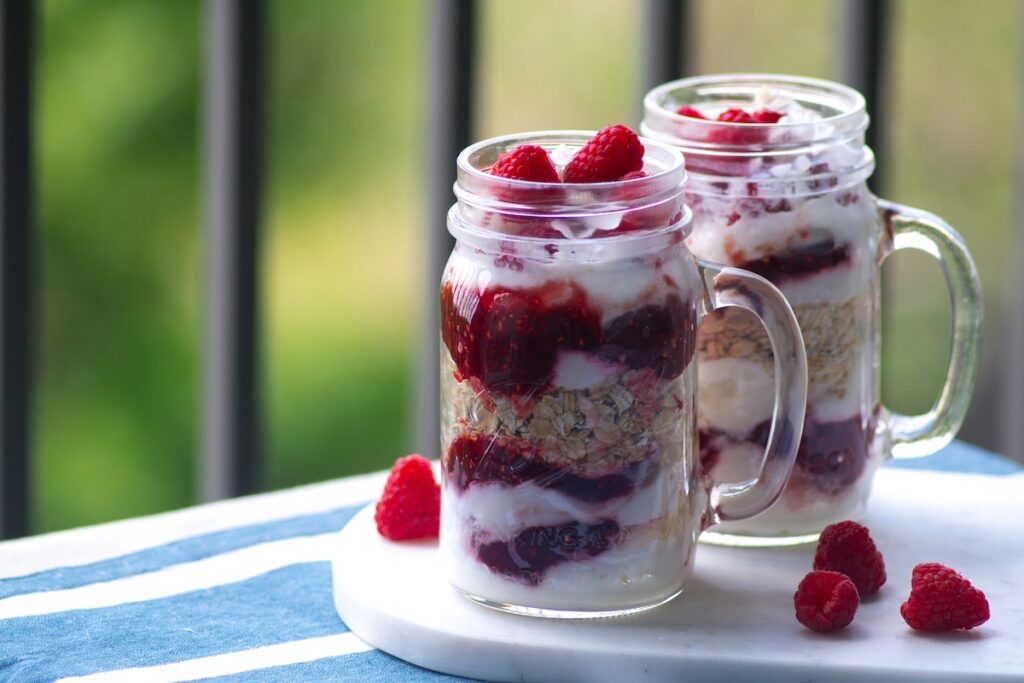
Berry Overnight Oats
Estimated calories: 390
Estimated protein: 29 grams
Estimated fiber: 13 grams
- Add ½ cup of old-fashioned oats, ¾ cup of nonfat Greek yogurt, and ½ cup of nonfat milk to a jar or covered container.
- Stir in 1 tablespoon of chia seeds and ½ cup of berries.
- Cover and refrigerate overnight, or for at least 4 hours.
- Stir before eating. Add a splash of milk if the oats are thicker than you like, and finish with cinnamon or a zero-calorie sweetener, if desired.
Lunch
Chicken Shawarma Bowl
Estimated calories: 430
Estimated protein: 45 grams
Estimated fiber: 6 grams
- Season 4 ounces of chicken breast with cumin, paprika, garlic powder, turmeric, salt, pepper, and a squeeze of lemon juice. Cook in a skillet or air fryer until the chicken reaches 165°F internally, then slice it into strips.
- Add ½ cup of cooked rice to a bowl with about 2 cups of chopped lettuce, cucumber, tomato, and onion.
- Top with the chicken, 1 tablespoon of hummus, and a few pickled onions.
- Finish with ¼ cup of a yogurt-based garlic sauce, or mix plain Greek yogurt with lemon juice, garlic, salt, and pepper for a quick version.
Turkey Club Wrap
Estimated calories: 420
Estimated protein: 40 grams
Estimated fiber: 12 grams
- Spread 1 large high-fiber tortilla with 1 tablespoon of light mayonnaise.
- Layer on 4 ounces of sliced turkey breast, 2 slices of cooked bacon, 1 slice of reduced-fat cheese, lettuce, and thinly sliced tomato.
- Fold the sides of the tortilla inward, then roll it tightly from the bottom.
- Slice the wrap in half and serve as-is, or toast it briefly in a dry skillet for a crispier exterior.
Black Bean Taco Bowl
Estimated calories: 415
Estimated protein: 27 grams
Estimated fiber: 18 grams
- Heat ¾ cup of drained and rinsed black beans with cumin, chili powder, garlic powder, and a pinch of salt.
- Add ⅓ cup of cooked rice to a bowl, then top with the black beans and ⅓ cup of corn.
- Add chopped lettuce, tomato, and salsa.
- Finish with ¼ cup of plain Greek yogurt and 2 tablespoons of shredded cheese. Add cilantro, lime juice, or hot sauce, if desired.
Dinner
Cheeseburger Bowl
Estimated calories: 450
Estimated protein: 40 grams
Estimated fiber: 6 grams
- Dice about 5 ounces of potatoes, season with salt, pepper, and garlic powder, and air-fry at 400°F for 15 to 20 minutes until browned and tender.
- Meanwhile, cook 4 ounces of 93-percent lean ground beef in a skillet over medium-high heat, breaking it apart with a spatula. Season with salt, pepper, and onion powder.
- Add shredded lettuce, chopped tomato, onion, and pickles to a large bowl. Top with the potatoes, ground beef, and 1 slice of reduced-fat cheddar cheese.
- Drizzle with 1 tablespoon of light burger sauce, or mix light mayo, ketchup, and mustard together for a quick homemade version.
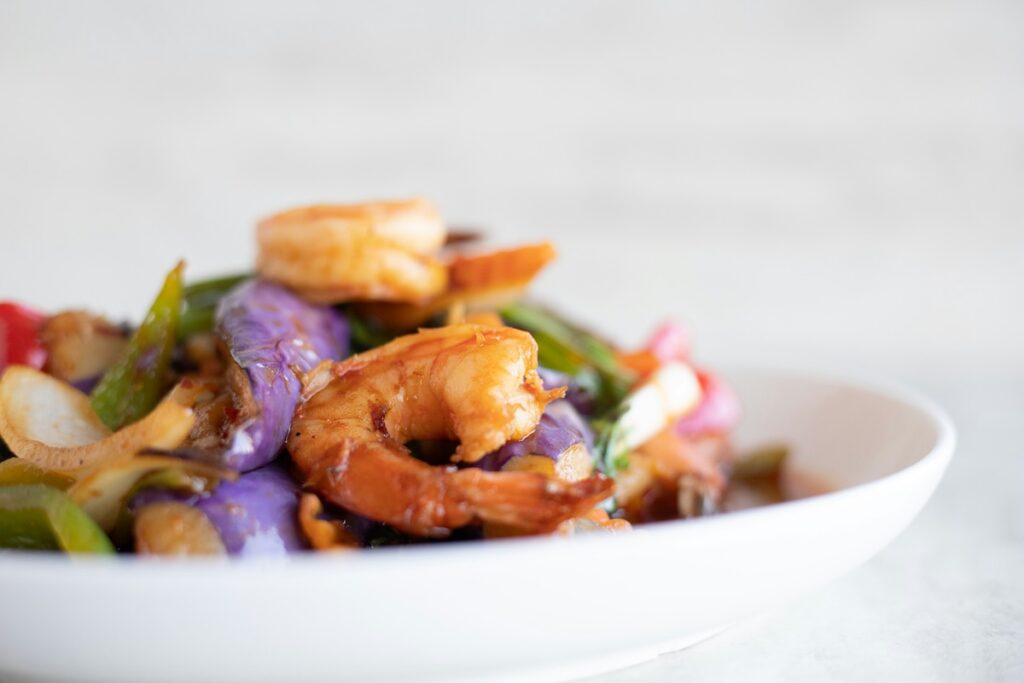
Shrimp and Vegetable Stir-Fry
Estimated calories: 430
Estimated protein: 38 grams
Estimated fiber: 8 grams
- Heat 1 teaspoon of sesame oil in a large nonstick skillet over medium-high heat. Add 5 ounces of peeled and deveined shrimp and cook for 1 to 2 minutes per side, until pink and opaque.
- Add 2 cups of stir-fry vegetables, such as broccoli, bell peppers, carrots, snap peas, or mushrooms, and cook until crisp-tender.
- Stir in 2 tablespoons of soy-ginger or lower-sodium stir-fry sauce and toss until the shrimp and vegetables are evenly coated.
- Serve over ½ cup of cooked rice and top with scallions or red pepper flakes, if desired.
Smoky Lentil and Potato Soup
Estimated calories: 470
Estimated protein: 26 grams
Estimated fiber: 25 grams
- Heat 1 teaspoon of olive oil in a medium saucepan over medium heat. Add chopped onion, carrots, and celery and cook for about 5 minutes, until they begin to soften.
- Add 1 cup of cooked lentils, about 3½ ounces of diced potatoes, 1 cup of diced tomatoes, and 1½ cups of vegetable broth.
- Season with smoked paprika, cumin, garlic, salt, and pepper. Bring to a boil, then reduce the heat and simmer for 15 to 20 minutes, until the potatoes are tender.
- Stir in a handful of chopped kale during the last few minutes of cooking. Finish with lemon juice or red pepper flakes, if desired.
How to Build a Filling Low-Calorie Meal
Start with protein. Protein makes a meal more satisfying and gives your body the amino acids it needs to maintain and build muscle. The 2025–2030 Dietary Guidelines for Americans recommend roughly 1.2 to 1.6 grams of protein per kilogram of body weight per day, or about 0.55 to 0.73 grams per pound. You don’t need to do protein math every time you eat, though. Just make sure there’s a palm-sized portion of real protein on the plate, like chicken, fish, eggs, tofu, or beans.
Make vegetables do most of the work. Cucumbers, peppers, tomatoes, spinach, broccoli, onions, and other vegetables add a lot of food for relatively few calories. That makes them an easy way to bulk up bowls, wraps, soups, stir-fries, and sandwiches without turning the meal into rabbit food.
Be a little more deliberate with fats. Avocado, nuts, cheese, olive oil, and similar foods can make a meal taste a whole lot better. They also pack a lot of calories into a small serving. You don’t have to avoid them, but pay attention to portions, especially if you’re tracking calories.
Budget your fats and sauces more carefully. A bowl full of lean protein and vegetables can stop being particularly low-calorie once you add a few heavy pours of dressing, mayo, oil, or cheese sauce. Keep the good stuff, but use less of it, or lean on lower-calorie options like mustard, salsa, Greek yogurt, or cottage cheese-based sauces.
Frequently Asked Questions
You can make a nutritious 500-calorie meal by serving lean protein with a generous portion of vegetables and watching the amount of calorie-dense condiments you use. Adding a fiber-rich carb, such as potatoes, beans, oats, or whole grains, can also help make the meal feel more substantial.
Sandwiches, bowls, wraps, soups, and salads all have low-calorie, high-volume potential. By prioritizing protein, fiber, and vegetables, you can pack more food into a meal for fewer overall calories. Water- and fiber-rich foods are especially useful because they add volume without adding many calories.
A dinner under 500 calories could be a cheeseburger bowl made with lean beef and roasted potatoes, a shrimp and vegetable stir-fry with rice, or a hearty lentil soup. Start with a lean protein source, add plenty of vegetables, and keep a closer eye on oils, sauces, cheese, and other calorie-dense extras.
Build the meal around protein, then add foods that provide plenty of volume and fiber, such as vegetables, fruit, beans, potatoes, or whole grains. You don’t need to eliminate fats or sauces, but using smaller portions of calorie-dense ingredients leaves more room for foods that physically fill the plate.
Bottom Line on Low-Calorie Meals
There’s no way around the fact that losing weight or maintaining a lower body weight usually requires some degree of portion control and calorie awareness. You can, however, lean on protein, vegetables, and lower-calorie versions of everyday foods to make lighter meals that still feel substantial. The aim is to build meals that give you more volume and satisfaction for the calories, rather than shrinking every portion.
Experts Who Contributed / Medical Review Byline
- Andrew Gutman, NASM-CPT, wrote this article.
- Lauren Keary, NASM-CNC, reviewed this article for accuracy.