Food Safety Mistakes You’re Probably Making at Home

Good habits from the store to the kitchen will help you avoid foodborne illnesses.
Professional chefs take food safety training courses. But the majority of us aren’t trained cooks. Instead, we’ve just been following recipes and hoping for the best. But most of these recipes don’t include food safety instructions. Some things, like washing your hands often and handling raw meat separately are common sense. But there are some common food safety mistakes you might not even realize you’re making. While some may not be a big deal, if you aren’t handling food safely when cooking, you’re at risk for getting sick. In fact, foodborne illnesses cause 48 million illnesses and 3,000 deaths each year in the United States, according to the USDA. Luckily, most of these are easily avoidable with a few healthy habits in the kitchen.
What You Should Know
Most kitchen risks come down to time and temperature — the core of any formal food safety training. Following a few simple rules goes a long way toward keeping everyone who eats your cooking safe. You may be familiar with the “danger zone,” when it comes to both food prep and food storage. Essentially, bacteria loves to grow and multiply on lukewarm food, so it’s important to keep hot food hot and cold food cold. When food sits at 40–140°F, this is the time you’re most at-risk for pathogens like E.coli to reproduce on your food in amounts high enough to make you sick.
Going Deeper: Food Safety Rules Worth Following
Here are the food safety rules worth following — many go hand-in-hand, starting at the store and ending with how you store the final product.
Shopping and storage: When shopping, you probably have your grocery store speedrun down. Making a few tweaks to your route will help you keep the “cold chain” (which refers to how food is kept cold across shipments until final delivery) intact. You should grab cold items and use an insulated bag to transport them home. This is especially important if you have to drive a long way to the store (and during summer months): You should never leave food in a hot car. When you get home, immediately put cold foods in the fridge, separating raw meats from ready-to-eat foods, keeping them on the bottom shelf. You should also set your fridge at 32–40°F to ensure food is stored below the danger zone.
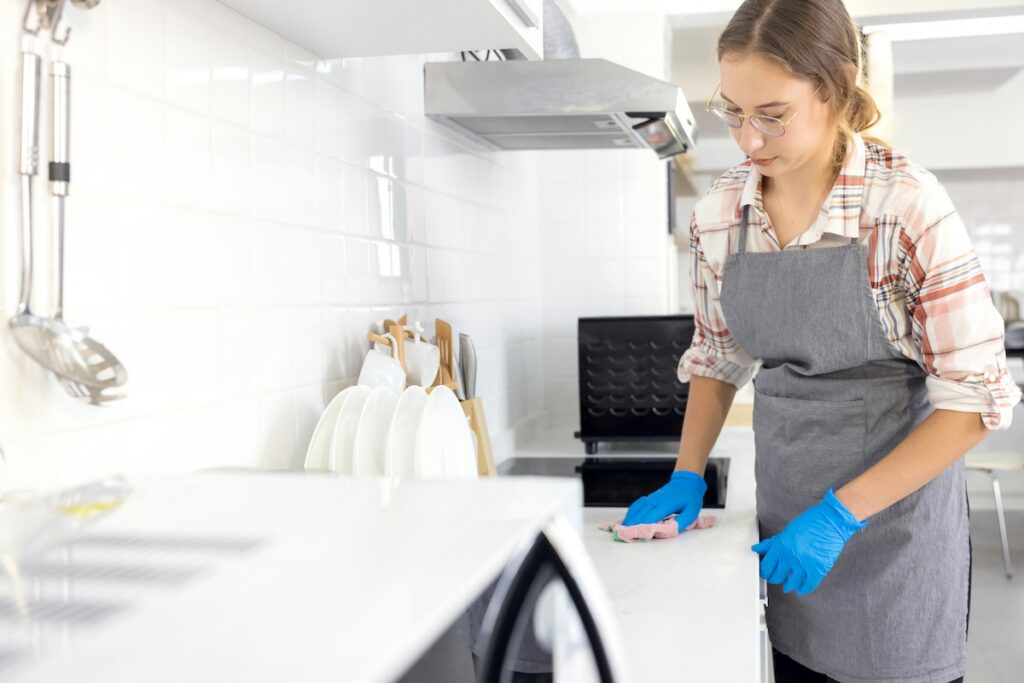
Cleaning: Keeping a clean surface is a no-brainer, but you need to remember to clean visible messes and account for invisible pathogens. Start by cleaning visible mess first, then sanitize your surface — especially if it’s come into contact with raw meat, fish, or poultry. Diluting a teaspoon of bleach in a cup of water will help to sanitize your surfaces. While you should rinse produce you’ll eat raw, you should never rinse raw chicken. Some people do this before prepping their food, but running poultry under the tap actually will just spread salmonella and other bacteria around your sink and cooking surfaces. You should also use separate cutting boards for high-risk foods (think raw meat), and be sure you’re washing your hands and tools between tasks.
Cooking and thawing: Taking a few steps to thaw your food safely will ensure your meat doesn’t enter the danger zone. Move food from the freezer to the fridge overnight before cooking. If you need to thaw it faster, run it under cold water or use the microwave, but never leave it out on the counter, as this will expose the thawed parts of the food to the danger zone as the middle continues to thaw out. You should also use a thermometer to verify safe temps as you’re thawing, cooking, and storing leftovers. A general rule of thumb is 145°F for most meats and fish, 160°F for ground meat and eggs, and 165°F for poultry and leftovers, according to the USDA.
Serving and leftovers: When it’s time to eat, it’s key to keep hot foods hot and cold foods cold. This can be tricky if you aren’t sitting down to a meal right away — like you might not be at a dinner party or a BBQ. So, be mindful of how long food has been sitting out and the environment it’s in. You should refrigerate leftovers within two hours (or one hour if food is in a place temps reach 90°F or higher). Once food is stored, be sure to label and use leftovers within three to four days to avoid getting sick.
The Takeaway
Most of these are small habits, but they have a big impact, as they’ll help keep you from an upset stomach, or worse. Investing in an insulated bag for trips to the store and a cooking thermometer will help keep food at the right temps from start to finish. When you’re done eating, promptly store leftovers in the fridge and eat within a few days, or freeze them for longer-term storage.
Bottom Line
You don’t have to be a trained chef to learn how to keep your food safe. But following these well-established food-safety practices from a trained pro will go a long way. You may not always follow all of these rules to a T, but the risk is real, especially when handling raw meat, and for vulnerable people. Slightly adjusting your shopping, cooking, and cleanup routines will help spare you and your guests avoidable foodborne illnesses.
Experts Who Contributed
- Lauren Keary, NASM-CNC, reviewed this article for accuracy.