The 6 Foods You Shouldn’t Save as Leftovers

While most leftovers are fine in the fridge, there are a few that require a little extra thought.
When it comes to leftovers, we tend to treat the fridge like a reset button. Cook it, cool it, save it, reheat it tomorrow. And most of the time, your food will be just fine with this process. But food-safety authorities like the USDA and CDC point to a handful of foods that deserve more care than the usual “just microwave it” logic, because reheating alone doesn’t clear all the gut health concerns.
What You Should Know
These are the foods you should reconsider as leftovers.
- Seafood and shellfish: two of the most perishable proteins around, and a possible carrier of norovirus and hepatitis A, plus bacteria like salmonella, listeria, E. coli, and Vibrio.
- Poultry: a top source of foodborne illness, mostly from salmonella and campylobacter (plus whatever you spread around handling it raw).
- Rich casseroles: a protein-and-starch combo that also traps heat.
- Rice and other grains: home for Bacillus cereus, which can survive a trip through the microwave.
- Party dips and appetizers: usually fine to eat, risky to leave out.
- Big-batch make-aheads: the same hazards as everything above.
There are really two groups here. First, the perishable proteins — seafood and poultry — that spoil quickly and can carry pathogens serious enough to land you in bed for days; raw shellfish alone is a known source of Vibrio infections. Chicken is the standout: the CDC estimates it sickens about a million Americans a year, and poultry ranks among the biggest single sources of food poisoning. Then there are the starchy foods — rice, pasta, potatoes, and the base of most casseroles — where Bacillus cereus can take hold. But time and temperature are key. Bacteria multiply fastest in the “danger zone” between 40 and 140 degrees Fahrenheit, so anything that sits out too long gives them exactly the window they need.
Going Deeper
Rice tends to surprise people. Reheating leftovers to 165 degrees is the usual golden rule, but Bacillus cereus doesn’t cooperate: its spores can ride out the initial cooking, and the toxin they leave behind stays active even after you bring the food back up to a safe temperature. So unfortunately the fried rice that sat out while you binged a few episodes of Love Island can still make you sick after an overnight stint in the fridge and a good zap from your microwave. Pasta falls into this category too, so be sure to get grains and pasta into the fridge fast, and if they’ve been out more than a couple hours, toss them.
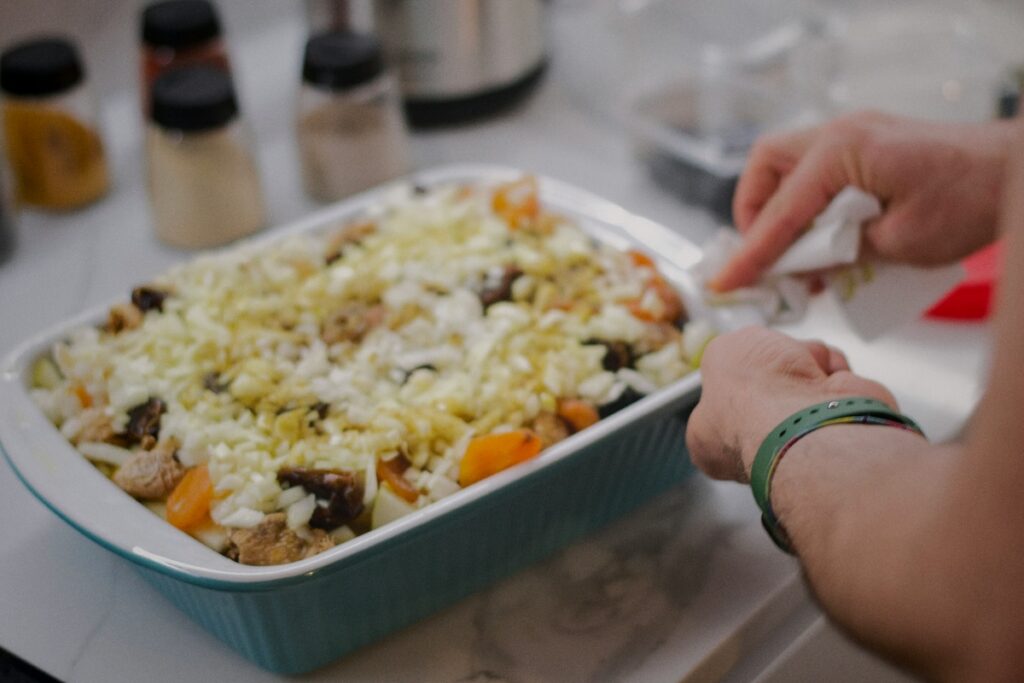
Casseroles are sneaky for a different reason. A big dish and its pan hold heat for ages, so the middle can still be sitting at a dangerously warm temp long after the edges feel cool — and yes, even once it’s in the fridge. Splitting it up into smaller and more shallow containers can cool it quicker. And microwaves heat unevenly, so “nuking it” doesn’t guarantee the whole thing hit a safe temperature. Check it with a thermometer in multiple spots to be safe. Do it carelessly enough times and the odds eventually catch up with you.
The Takeaway
Don’t live in fear of your own fridge, but remember these food-safety basics and most leftovers will be completely fine:
- Wash your hands, utensils, cutting boards, and countertops after handling raw meat, poultry, eggs, or seafood.
- Keep those raw ingredients away from anything you’ll eat uncooked, like a side salad.
- Cool food fast in shallow containers and refrigerate within two hours — one if it’s over 90 degrees out.
- Reheat to 165 degrees and check it with a thermometer.
- Thaw frozen food in the fridge rather than on the counter.
- Toss anything that’s been in the fridge more than three or four days.
The Bottom Line
The containers in your fridge that are worth extra caution are the perishable proteins and the starchy, saucy dishes — seafood, poultry, rice, and casseroles — while most everything else is forgiving as long as you chill it quickly and reheat it fully. When you honestly can’t remember how long something’s been sitting out, don’t risk it. A few bucks of tossed leftovers beats a night hugging the toilet any day. Once you’ve got the safety basics down, it’s worth thinking about what actively helps your gut too — like the fermented foods that feed it.
Expert Contributors
- Lauren Keary, NASM-CNC, wrote this article.