The Produce That Carries the Least Pesticide Residue

The newest “Clean Fifteen” list is here. Find out which non-organic produce options make the list — and should fill your cart.
If you’re truly worried about pesticide residue on your produce, some fruits and veggies come with built-in protection in the form of thick, inedible skin. This helps to keep most residue off the parts you actually eat, which can help provide peace of mind. To make your shopping list cleaner — without breaking the bank — here’s how to pick produce with the lowest pesticide residue.
What You Should Know About Pesticide Residue and Produce
Conventionally grown produce, think the fruits and veggies you buy at the grocery store, can carry pesticide residue — but that doesn’t mean cause for immediate alarm. Growing methods like use of fertilizers, pesticides and genetically modified organisms (GMOs) are used to maximize crop yield. While the United States Department of Agriculture (USDA) has stricter regulations for the types of pesticides and fertilizers used on food that is organically grown, there are some foods that you don’t necessarily need to focus on picking from the organic section.
That’s because a food’s structure — thick skins, husks, pods, and outer leaves you discard during prep — act as natural barriers to help keep pesticide residue off the part you actually eat. Certain growing conditions, like those grown in a controlled environment or cultivated indoors (mushrooms), or those with a short harvest window (asparagus) can mean less spraying and also help reduce exposure to pesticide residue.
When it comes to avoiding pesticide residue on your fruits and veggies it’s not about cutting fresh produce, it’s about making informed choices. And, of course, the nutritional benefits of eating produce and fresh foods, including providing vitamins and minerals, still stand — so you’ll want to keep them in your diet.
Going Deeper: 10 Lower-Residue Picks
Even when you can’t buy organic, certain foods that have thick skin are more protected from pesticide residue. The Environmental Working Group (EWG) calls these its “Clean Fifteen” — the nonorganic produce carrying the lowest pesticide residue, based on its analysis of USDA data. Here are 10 of them, listed in order of where they land on EWG’s 2026 ranking.
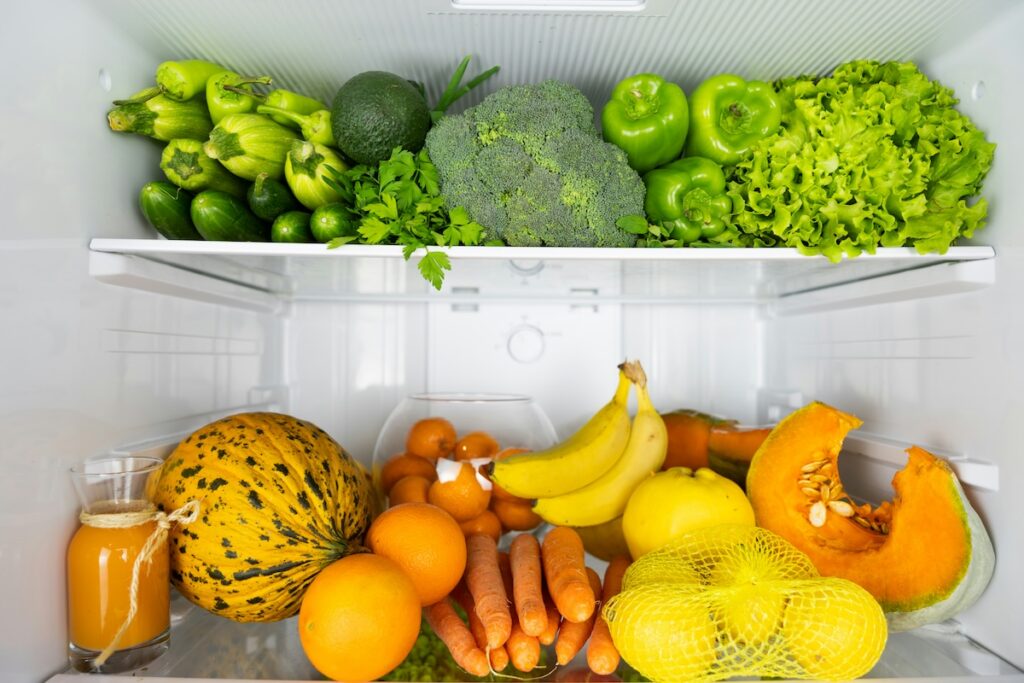
- Pineapple — The thick, inedible exterior of the pineapple protects the part of the fruit you eat from pesticides, making it one of the lowest-residue picks. A 2025 study published in Foods examined 387 samples of pineapple produced in major regions in China for 88 pesticides. Results found the interior fruit was protected by the rind and far below the risk threshold, meaning this fruit has one of the lowest pesticide residue risks. The pineapple tops the EWG 2026 Clean Fifteen list based on recent USDA data.
- Sweet corn — Nestled in husk and silk that get discarded, sweet corn is protected from coming in contact with pesticides. Research shows that while the protective outer layers take on chemicals, once shucked, the interior kernels and cob have minimal pesticide residue. If you’re opting for frozen rather than fresh corn, know the kernels are heat treated (blanched) before freezing, which can help further reduce the residue.
- Avocado — Avocados come with a couple built-in protective mechanisms. The thick skin of this healthy fat shields the flesh that you eat. And, the plant makes its own fungicide (persin), which is found in the leaves and the bark of the tree as well as the seeds. Avocados have consistently landed near the top of EWG’s Clean Fifteen, among the produce with the lowest measurable residue.
- Onion — We all know onions have layers, but you may not know that peeling the unappetizing papery outer skin before eating also removes most surface residue. Additionally, the plant’s naturally occurring sulfur compounds are thought to aid its defenses against pests during growth, which may reduce the need for pesticide use.
- Sweet peas — The firm pea pod forms a protective barrier around the veggie that the residue must cross — keeping a majority of pesticides out. Like sweet corn, peas are shelled, washed, and blanched before freezing for an added layer of protection against pesticides.
- Asparagus — This veggie is harvested young in a short window, sometimes just a 6- to 8-week harvest season for the crop. Since the veggie is picked so quickly, it reduces the overall exposure to pesticides. What’s more, a 2018 analysis by the FDA found 92 percent of asparagus sampled had no detectable pesticide residue.
- Cabbage — The outer leaves of the cabbage are removed before the veggie even makes it to the grocery store, potentially reducing exposure to pesticides before you even start prepping it at home. The cabbage is part of the cruciferous family, which produce glucosinolates that act as a defense against pests, which can help reduce the need for growers to use a lot of harsh chemicals during the growth process.
- Cauliflower — The edible white head of the cauliflower, called the curd, is protected by its outer leaves. Similar to cabbage, these leaves are typically removed before the veggie hits shelves.
- Bananas — The thick banana peel helps keep pesticides from getting onto the inner fruit. Many pesticides used to support growth are meant to stay on the peel and don’t cross over to the edible pulp. (Worth noting that you can eat the peel though, as it does contain worthwhile nutrients.)
- Mushrooms — On a commercial scale, the fungus is grown in a controlled, indoor environment, like a grow house. Since mushrooms are more protected during their short life cycle, they require less spraying and therefore will be exposed to fewer pesticides than produce grown outdoors.
The Takeaway
If you’re trying to cut pesticide exposure, without relying on expensive organic produce, leaning on options with built-in barriers is an easy, low-effort move. And, washing or peeling fruits and veggies before eating them helps further reduce your exposure to pesticide residue, according to the EWG. You don’t need to fear pesticides, as long as you’re making smart swaps. And remember, incorporating more fruits and vegetables into your diet, whether frozen or fresh, matters more than chasing a perfect list of pesticide-free foods.
Bottom Line
The growing conditions and structure of foods (like protective skins or leaves) helps to lower pesticide residue on these picks, meaning you don’t necessarily need to opt for organic to avoid chemicals, according to the EWG’s analysis of USDA data. And keep in mind, while you will still be exposed to some amount of pesticides, this residue on conventional produce is regulated. These fresh (or frozen) fruits and veggies are nutrient-dense and will support your overall health — so keeping them on your plate is the easy call.
Experts Who Contributed
- Lauren Keary, NASM-CNC, reviewed this article for accuracy.