Baduanjin: A Gentle 8-Move Qigong Routine for Beginners

The “eight pieces of brocade” is a low-impact qigong routine of eight slow movements paired with deep breathing.
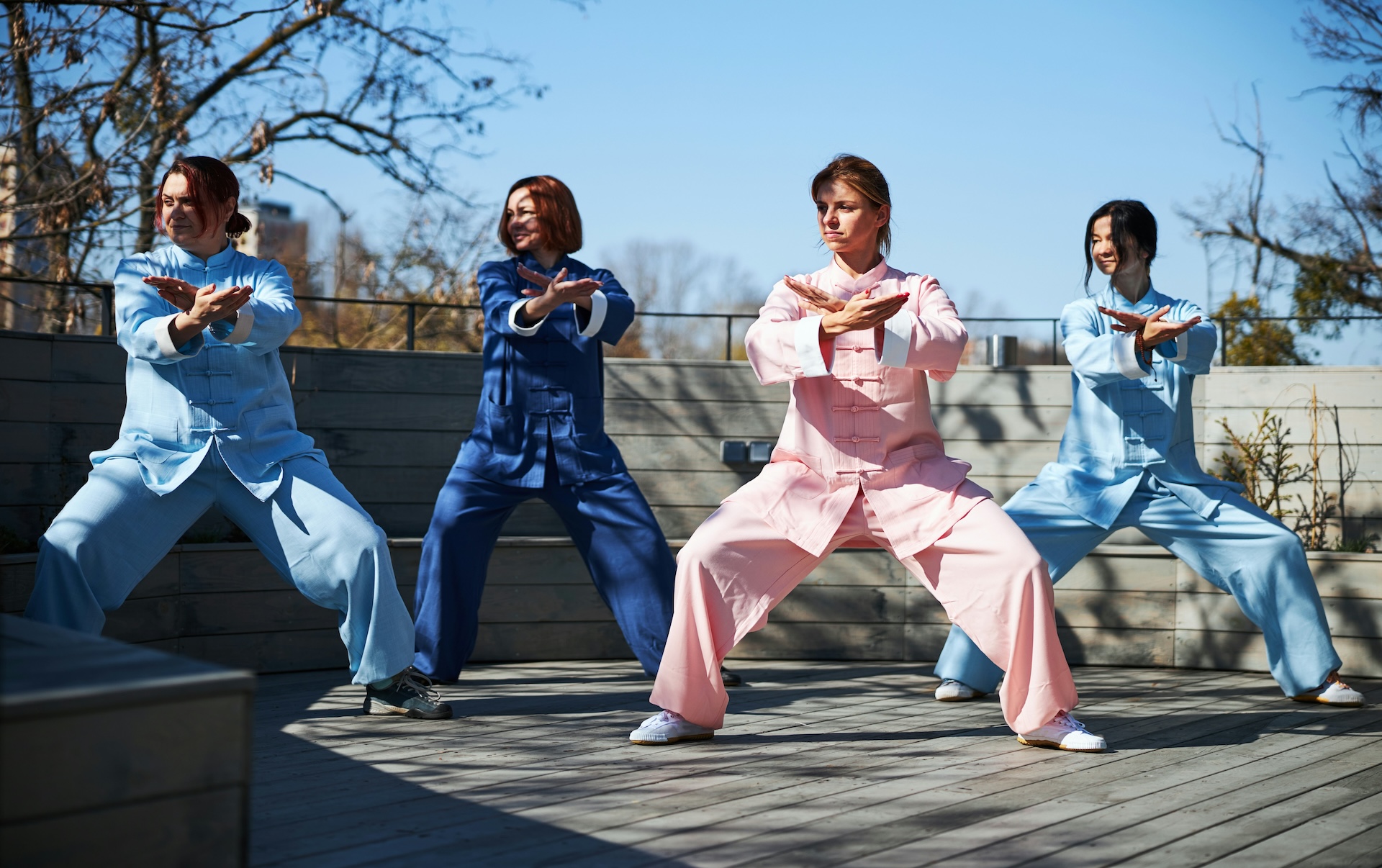
Baduanjin — “eight pieces of brocade” — is one of the oldest forms of qigong, a Chinese practice that combines slow, intentional movement with deep breathing. The routine consists of eight gentle movements flowingly strung together. You just need a few square feet and the mindset to move slowly and breathe with intention — no equipment or class required. That accessibility is a big part of the draw, and a body of research suggests the practice may be beneficial for balance, sleep, and stress.
What You Should Know About Baduanjin
Baduanjin is a set of eight slow movements synced to even breathing that are meant to loosen muscle tension and calm racing thoughts. It’s generally popular with beginners and older adults because it’s low-impact and easy (read: free) to incorporate into a routine.
Traditionally, each of the eight movements is said to stimulate specific meridians or organs — the spleen, the kidneys, the “triple burner,” etc. That’s the basis of Traditional Chinese Medicine, which is centuries-old and not the same as modern physiology. It’s a nice ode to Chinese heritage and it’s how the practice has been taught for generations, but those organ-and-meridian effects are not confirmed by science.
Modern studies have examined whether doing Baduanjin regularly helps with things like balance, sleep, and blood pressure though. A 2017 systematic review and meta-analysis of 19 randomized controlled trials (about 1,535 people) found the practice was linked to improvements in sleep quality, balance, trunk flexibility, and both systolic and diastolic blood pressure. A separate meta-analysis of older adults with insomnia found Baduanjin improved sleep scores, with longer programs (12 weeks or more) working better than the short ones. Reviews of its effect on physical function in middle-aged and older people show the same positive direction.
But many of these trials are small, based mainly in China, and vary in quality, so this is really just promising evidence and not the final word on the practice. It’s best to consider Baduanjin as something that’s easy to incorporate into your day-to-day and worth trying out for gentle movement and calm —but don’t expect it to be a cure-all for any underlying illness.
Going Deeper: The 8 Movements
While doing these exercises, move slowly and breathe consistently. Repeat each of them seven times, unless noted otherwise, and if there are two sides to the movement, do seven on each side. The traditional organ associations are also listed below as a nod to the traditional heritage of the practice.
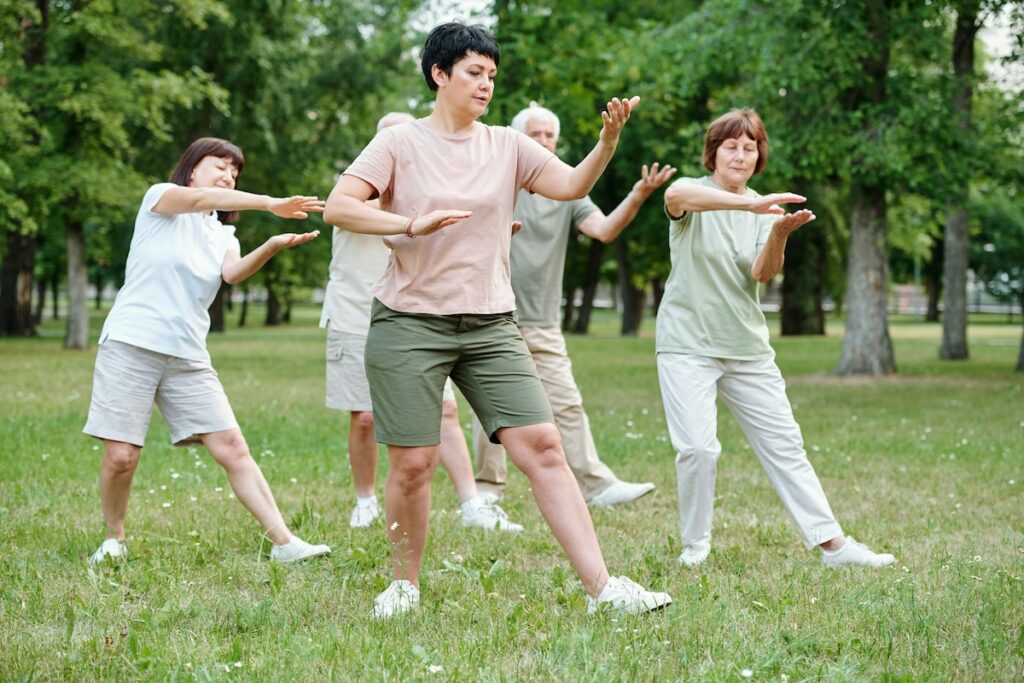
- Two Hands Hold Up the Heavens (traditionally said to benefit the internal organs): Stand tall with feet hip-width apart. Interlace your fingers in front of you, then turn the palms and float them up overhead, pressing toward the ceiling as you inhale and lengthen your spine. Hold for a beat, then release and lower the arms on your exhale.
- Drawing the Bow, Left and Right: Step into a wide stance with knees softly bent, as if sinking into a low chair. Bring both hands to one side and mime drawing back a bowstring — one arm extends straight out, the other pulls in toward your chest, opening across the shoulders as your gaze follows the “arrow.” Return to center and switch sides.
- Single Hand Pushes the Sky (traditionally said to aid the spleen and stomach): From a comfortable stance, press one palm up toward the ceiling while the opposite palm presses gently down toward the floor, so your body lengthens in both directions at once. Lower and switch sides.
- Looking Back (traditionally said to relax the neck): Rest your hands on your hips. Inhale and slowly rotate your head and gaze to one side, only as far as feels easy, letting your upper body turn slightly with it. Exhale back to center, then repeat the other way.
- Swaying the Hips (traditionally said to settle “heart fire,” or internal heat): Fold forward with a flat back and let your hands rest near your knees. Keeping your neck long and lower back relaxed, gently shift your hips from side to side.
- Reaching Toward the Ground (traditionally said to support the kidneys and lower back): Stand with feet a little wider than your hips. Hinge forward from the hips and reach your hands toward your shins or the floor, feeling a stretch down the backs of your legs, then slowly roll up to standing.
- Lifting the Fists (traditionally said to build energy): Turn your toes slightly inward and make loose fists. As you inhale, draw the fists up toward your armpits and rise onto the balls of your feet; as you exhale, press your hands down and lower your heels.
- Bouncing on the Toes (traditionally said to “shake off” illness): Stand tall with feet around hip-width. Rise gently onto the balls of your feet, then let your heels drop lightly back down, allowing a small, relaxed bounce to ripple up through the body. Traditionally repeated around 100 times to close the set.
A beginner note: stay within a comfortable range of motion, keep your breath slow and unforced, and ease off anything that strains your neck, back, or knees. If you’re managing an injury or health condition, check with your doctor or a qualified instructor before starting.
The Takeaway
Baduanjin is about as easy as it gets to add to your daily exercise with eight slow movements, some deep breathing, no equipment, and a few minutes in whatever size space you can find (so long as you’re able to extend your arms). It suits most fitness levels, and a decent research base notes that regular practice may support balance, sleep, and blood pressure. If you like the way it feels or makes you feel after, it’s an easy habit to work into a morning or wind-down routine.
Bottom Line
What’s reasonable to expect from Baduanjin is gentle mobility, some breath-focused calm, and (thanks to a growing evidence base) potentially improved balance, stress levels, and sleep. The traditional organ-and-meridian benefits are a great part of the heritage, but not proven with modern science. Use it as a calming, easy way to move and breathe, similar to a beginner yoga or tai chi flow, rather than a fix for any specific condition.