Your Gut Bacteria May Be Quietly Tweaking Your Mood

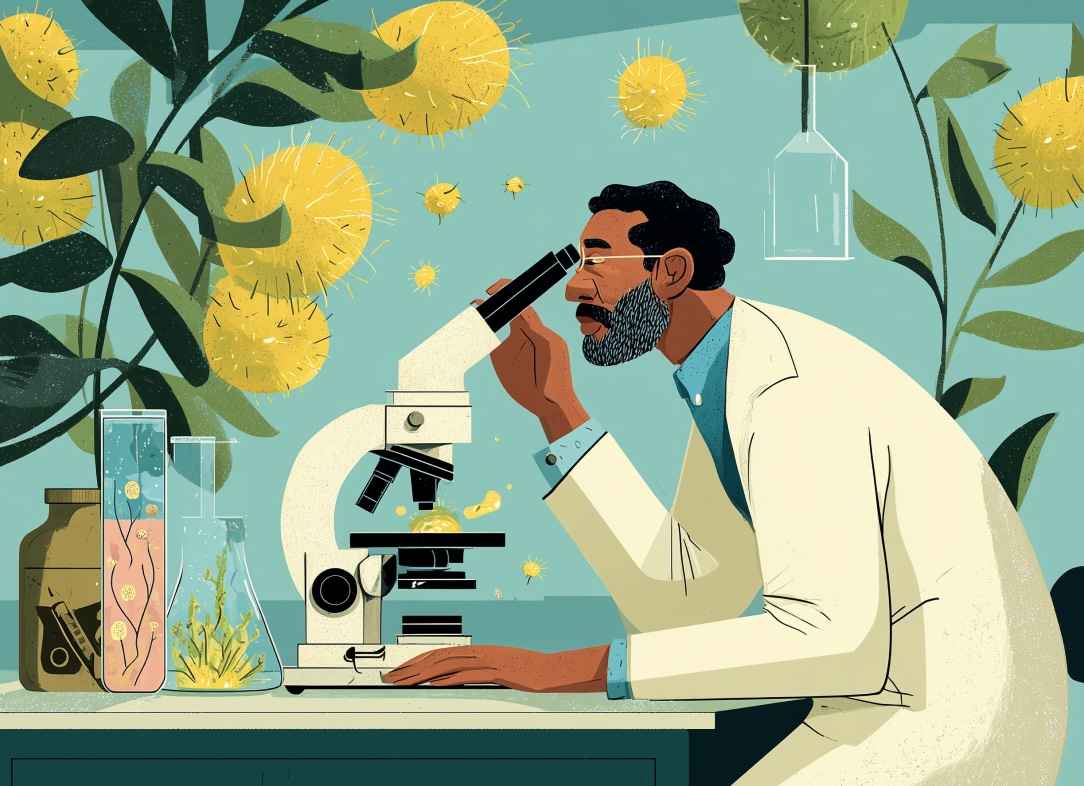
Midjourney
Gut Reaction: Researchers have long suspected the trillions of microbes in our intestines play a part in mental health. A Harvard study points to one specific way that conversation might happen, and a surprising environmental contaminant is part of the chain.
The Study: Investigators at Harvard Medical School, in research published in the Journal of the American Chemical Society, found that a common gut bacterium, Morganella morganii, can take diethanolamine (DEA) — a chemical found in many household and industrial products — and turn it into a fat-like molecule that closely mimics ones the body naturally makes inside its own cells. These imposters cause the immune system to release interleukin-6 (IL-6), an inflammatory molecule separately tied to major depressive disorder, which may suggest a link between gut microbes, environmental chemicals, immune system inflammation, and depression.
The Takeaway: This research opens the door to thinking about some depression as having gut-level origins, which could one day inspire new diagnostic tests or anti-inflammatory treatments.
Keep in Mind: This is early-stage research, and it does not yet prove DEA exposure causes depression in people. Plus, we are still far from a clinical test.