What to Eat After Intermittent Fasting

The first meal you eat after a fast can lock in that steady energy — or undo it. Here’s how to break a fast the right way.
The first time you do it, 16 hours feels like an eternity. But once you adjust to intermittent fasting — eating only within a specific “feeding window” each day — it turns effortless. That’s metabolic regulation at work: Your blood sugar settles, food noise falls away and, for many people, hunger becomes much more manageable.
If you’ve been wondering what to eat after intermittent fasting, your head’s in the right place. Your first meal after fasting can either help set the benefits of the fast in place or send you spiraling. Here’s how to get it right.
TL;DR
Wondering what to eat after intermittent fasting? Break your fast with a small, balanced, easy-to-digest meal — protein, fiber, and healthy fats, plus some complex carbs — rather than a full plate. Lead with protein and fiber to steady your blood sugar, and hold off on big sugary or greasy meals until later.
Key Takeaways
- Intermittent fasting blocks off a specific eating window every 24 hours.
- Limiting when you eat may help regulate hunger and provide steadier energy, which can make dieting feel more manageable.
- The meal you eat to break your fast matters more than any other in the feeding window.
- If you’re wondering what to eat after intermittent fasting, go for a mixed plate of protein, carbs, and healthy fats in moderate portions.
What Is Intermittent Fasting?
Before we dig in, let’s set the table. Intermittent fasting (IF) is a dietary practice that limits eating to a specific window each day. It usually works like this:
- For 16 hours a day, including sleep, you fast and consume zero calories.
- Over the 8 remaining hours, you hit your caloric and macronutrient goals as usual.
What IF is: A logistical adjustment to eating habits meant to regulate internal processes like hunger signaling and hormone balance.
What IF is not: A specific diet that prescribes what to eat, how much, or how often. As long as you stay calorie-free for 16 out of every 24 hours, you’re doing IF.
What the Research Says About What to Eat After Intermittent Fasting
Intermittent fasting is more of a strategy than a diet. Because the constraints are quantitative (eligible eating hours) and not qualitative (must-eat or can’t-eat foods), people tend to incorporate IF alongside other diets or meal plans.
According to scientific research, IF has two things going for it. First, concentrating your eating into a set window can act as a psychological guardrail against snacking and overeating, as described in a 2022 narrative review of intermittent fasting variants. Second, a 2023 systematic review and meta-analysis of 18 time-restricted-eating trials (1,169 participants) in Reviews in Endocrine and Metabolic Disorders found that eating within a set daily window can support glycemic control — your body’s regulation of blood sugar and insulin.
In plain English? Intermittent fasters feel like they’re eating more food because it’s in a condensed window, and may experience less hunger and cravings. For some people, it can feel like a genuine cheat code for managing hunger. How well it works depends in part on how you transition from fasting to feeding.
How Your Body Reacts When You Break a Fast
Contrary to what you might think, the body is quite good at making do with less, and 16-hour fasts are generally safe for healthy adults. That said, intermittent fasting isn’t for everyone — don’t do it, or talk to your doctor first, if you’re pregnant or breastfeeding, have a history of disordered eating, live with type 1 diabetes or take insulin or sulfonylureas, or are frail or older.
After hours without food, your digestive system sits idle like a vehicle at an intersection. When the proverbial light turns green, slamming on the gas is a great way to blow your engine out. You need to gradually accelerate — the same is true for entering your feeding window.
- Large, carb-heavy meals, especially ones with plenty of simple sugars (think cereal), can hit harder than usual after a fast.
- Big spikes in blood sugar beget crashes later, leaving you fatigued, irritable, foggy, and even hungrier.
Your digestive system is primed and ready at the end of a 16-hour fast. You don’t want to overload it and throw your feeding window into disarray.
The Best Foods to Break Your Fast
Remember — IF is not a list of foods to follow. You have the freedom to break your fast however you’d like, but that doesn’t mean you’ll be free from the consequences of choosing poorly.
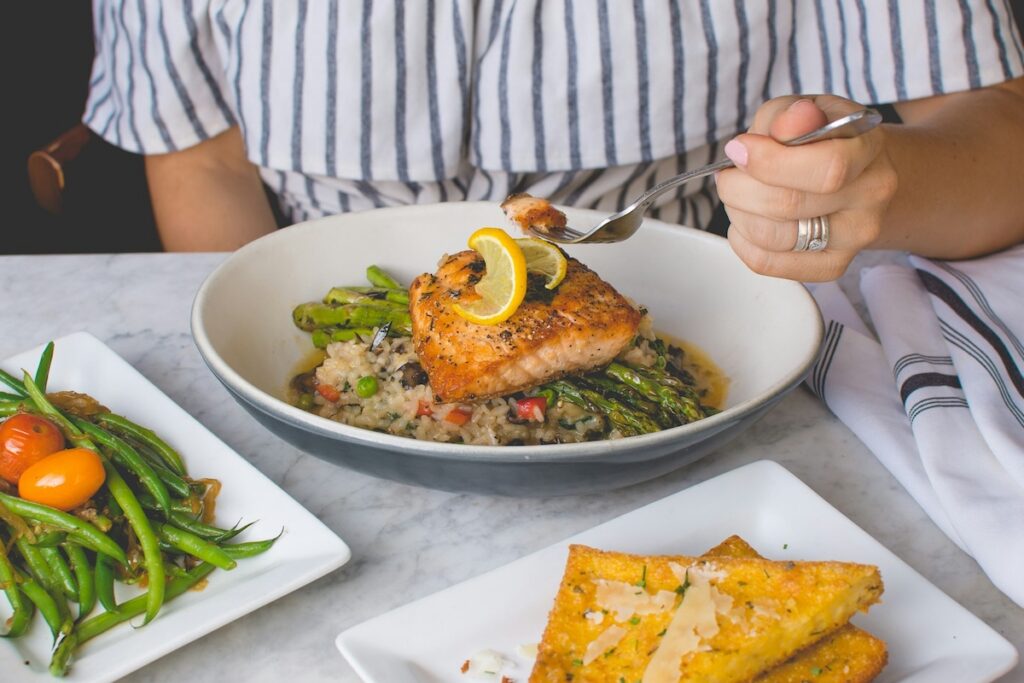
Good sense applies here. A medium-sized, balanced meal containing carbohydrates, protein, and fat, sets you up for success.
Foods to Favor
- Easy-to-digest protein sources, like eggs, tofu, or fish
- Complex carbs like sweet potato or oatmeal
- Healthy fats like avocado, nuts, or small amounts of oils
- Cooked or steamed veggies
- Fermented foods like sauerkraut, kimchi, or kefir to ease digestion back in
What To Limit or Avoid
- Large portions or gorging meals
- Sugary foods or refined carbs like cereal, pastries, or pasta
- Highly spicy foods
- Fatty protein sources like red meat
- Fried or ultra-processed foods
Practical suggestion: Two scrambled eggs with avocado spread across whole-wheat toast covers your bases. You get an injection of healthy fats and protein which slow digestive processes, plus low glycemic index carbs from the toast.
And remember: IF doesn’t control what foods you’re allowed to eat. Certain meals go down easier on a fasting stomach than others. This won’t change your total weight as long as you hit your calorie target, but the composition of your meal still shapes how you feel — and, over time, your fat-to-muscle ratio — so there’s value in giving your stomach something balanced.
How to Break Your Fast, Step by Step
- Hydrate with 8 to 16 ounces of room-temperature water a few minutes before the meal.
- Plate modest portions — you can always go back for more if you’re still hungry.
- Balance the nutrient composition of your meal. Don’t have only carbs or only protein.
- Rotate around your plate as you eat. Don’t finish one area then move on.
- Chew slowly and deliberately to savor your meal and not overload your stomach.
- Finish with sweets or spice (if you’re having any at all in your first meal).

Worth noting: Most IF protocols don’t involve fasting for longer than 24 hours. If you’re fasting for multiple days at a time, there’s a “potentially fatal” risk in consuming too much food, too quickly. Researchers call this refeeding syndrome.
If you’re fasting longer than 16 hours, you may see some small benefit in mixing electrolytes and/or amino acids into water prior to your first meal. There’s no reliable evidence that these are required for the standard 16:8 IF protocol.
But if you want to ensure your bases are covered — especially if you are highly physically active or live in a very hot climate — there’s no downside.
Frequently Asked Questions
There is no “best” meal to eat after intermittent fasting. That said, fasting primes your body for incoming food, sensitizing you to incoming glycemic loads. You can avoid large swings in blood sugar after intermittent fasting by having mixed-nutrient meals and staying away from large portions of simple sugars.
After fasting, go easy on large sugary meals and refined carbs like pastries or white bread, since they can spike your blood sugar. It’s also smart to limit fried or ultra-processed foods, very spicy dishes, and heavy proteins like red meat, all of which can leave a fasting stomach bloated or uncomfortable.
As long as your first meal after fasting contains both protein and carbs, the exact order doesn’t matter. However, if you have to choose between a protein-heavy or carb-heavy meal after intermittent fasting, go for the protein.
Yes, you can technically eat whatever you want after intermittent fasting. But the composition of your post-fast meal affects how you physically feel, including fatigue and hunger, and it also influences your body composition — protein especially helps determine whether weight is muscle or fat, even at the same calorie total.
Bottom Line on What to Eat After Intermittent Fasting
Many intermittent fasters report consistent, sustainable energy from the protocol — no big spikes or crashes, and what can feel like a blank check on the calorie budget (even if it isn’t one). But how you break your fast matters. If you’re wondering what to eat after intermittent fasting, the rules of good eating still apply: keep the plate balanced and the portion modest, then take your time with the fork.
One caveat — breaking an extended fast of roughly five days or more carries a real risk of refeeding syndrome and should be done with medical guidance. If you’re newer to fasting, a registered dietitian can help you find the approach that fits.
Experts Who Contributed
- Jake Dickson (BS-EXS, NASM-CPT), wrote this article.
- Lauren Keary, NASM-CNC, reviewed this article for accuracy.