
Theobromine Benefits: Can Dark Chocolate Really Slow Aging?

New research shows theobromine, a compound found in dark chocolate, may support longevity.
Reaching for a piece of dark chocolate can offer an afternoon pick-me-up, but chocolate lovers may also get longevity support from their favorite treat. A recent study published in the journal Aging found there may be a connection between a naturally occurring compound in chocolate and the speed of your biological aging — how your body ages on the cellular level.
Research associates dark chocolate (and coffee) consumption with heart-healthy benefits, and that’s often thanks to theobromine, a compound found in both of these — let’s face it — daily essentials. Theobromine benefits include reduced blood pressure and healthier cholesterol levels. But does the chocolate itself slow aging, or are dark-chocolate lovers just more likely to practice other habits that support longevity?
What You Should Know About Theobromine
You’ve probably heard about the heart-healthy benefits of dark chocolate. The antioxidants, such as flavanols, found in cocoa can help reduce inflammation, protect the health of your cells, and even support your cardiovascular system and healthy blood flow.
As it turns out, it may even help slow your body’s biological aging process, essentially the age your body is considered when factoring in health markers such as heart rate and blood pressure, which may be different than your chronological age, or the number of candles on your birthday cake each year.
This may be due to the presence of theobromine, another natural compound found in cocoa, coffee, and tea, with the highest concentrations in dark chocolate; it’s what gives it that bitter taste. Think of this lesser-known compound as a cousin of caffeine, since it’s a much milder stimulant and acts differently in the body. Theobromine is found primarily in cocoa, and moderate to high intake of the compound has been linked with heart health benefits.
More good news for chocolate lovers: The study referenced links higher theobromine levels, which may come from your favorite dark chocolate bar, to slower biological aging.
Going Deeper on Theobromine and Aging
Researchers at King’s College London analyzed data from roughly 1,700 adults across the U.K. and Germany to see if theobromine plays a part in healthy aging and longevity. The discovery group was made up of women, with the findings then replicated in a larger mixed-sex cohort.
Comparing both biological-age measures against theobromine levels in the blood, researchers found that people with more theobromine looked younger than their chronological age on DNA-methylation aging clocks, which help predict disease and mortality risk more accurately than birthdays alone. Higher theobromine also showed a more modest link to longer telomeres, the protective caps on chromosomes that shorten with age or chronic stress.
While the association appeared specific to theobromine, it’s important to note the study is observational, so it doesn’t necessarily prove the compound, or eating dark chocolate, actually slows aging or show exactly how it may support your biological age. And, it raises more questions, like if it’s a marker for other known markers of antioxidants in cacao, like flavanols, that weren’t measured in this study.
The Takeaway
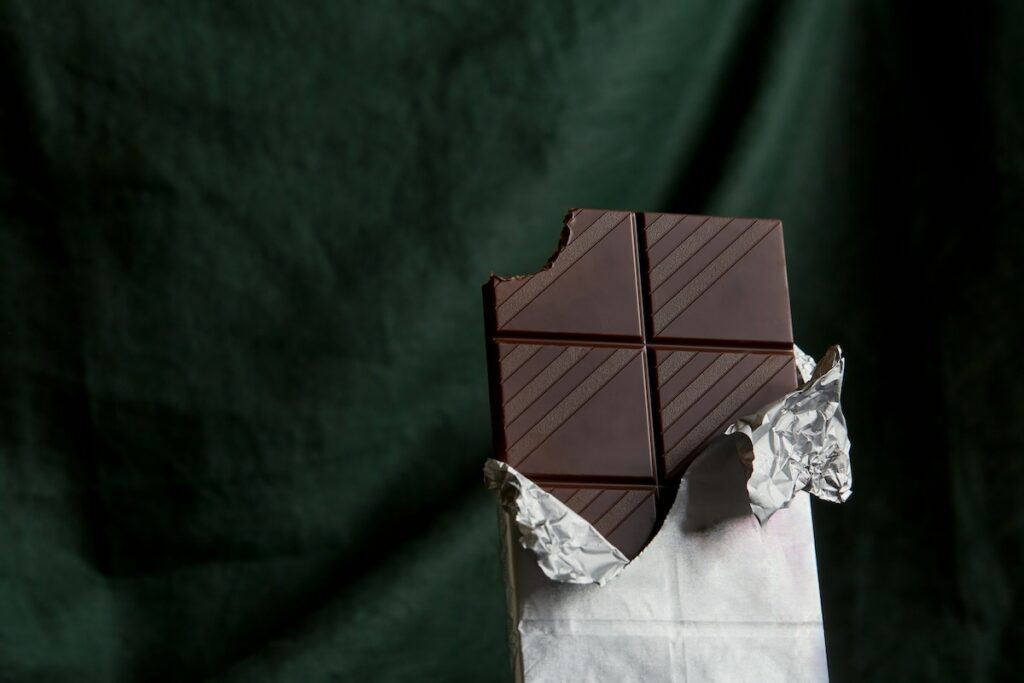
While higher theobromine correlates with slower biological aging in this study, more research is needed to establish why exactly this is the case. Until it’s established exactly why the two are linked, it’s (unfortunately) not a prescription to eat more chocolate. To get health-boosting benefits we already know about, nutritionists suggest looking for dark chocolate that contains at least 70 percent cacao and less than 8 grams of sugar. A daily serving is about one to three squares, or 10 to 30 grams, of your favorite dark chocolate bar.
Bottom Line
Since this study was observational, the results can’t definitively establish that a higher intake of dark chocolate (and theobromine) is the reason study participants saw a younger biological age than their chronological age. Essentially, it’s not yet known if the compound truly is the secret ingredient to better aging or if it’s perhaps due to overall flavanols you consume when eating dark chocolate. While dark chocolate may not be the answer to keeping your body younger — yet — you can still consume it in moderation as part of an overall healthy diet. There’s just no need to load up on the sugary stuff in an effort to pause aging.
Experts Who contributed
- Lauren Keary, NASM-CNC, reviewed this article for accuracy.
- Jordan Smith, an ISSA certified running coach, wrote this article.