PCOS Got a Better Name. So Why Is the Patient Still Running the Experiment?

Seventeen years of “your labs are normal” will turn anyone into their own doctor.
“It sounds like you know more about this than I do.”
That’s what a reproductive endocrinologist and infertility specialist (REI) at a fertility clinic said to me when my husband, Zach, and I met with her in July to discuss treatment options for my missed periods. Since I had only ovulated twice in 2026 (yes, just two months out of the seven leading up to this appointment) and we wanted to get pregnant within the year, we figured a fertility clinic was going to be a critical next step. Sadly, though, the clinic had no answers.
I’m all too familiar with leaving a doctor’s office empty-handed — but this appointment stung more than most. After 17 years of figuring out my symptoms mostly on my own, I’d finally gotten them under control, only to watch that control unravel over the six months that landed me at that fertility clinic.
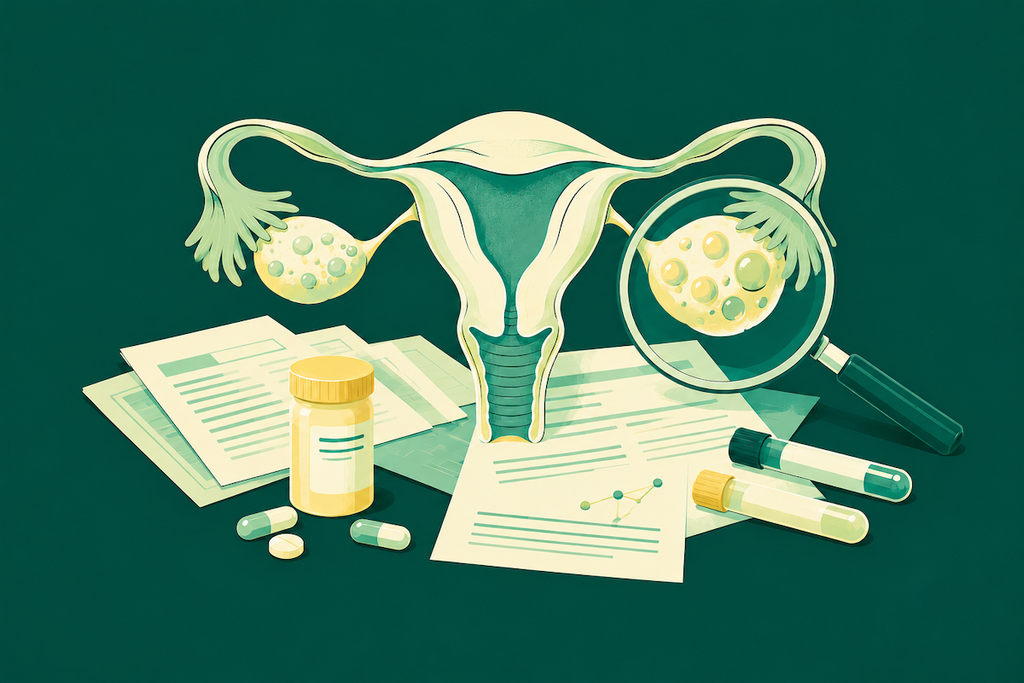
I’ve had symptoms of polycystic ovary syndrome (PCOS) — now officially polyendocrine metabolic ovarian syndrome (PMOS) — since 2009. (Throughout this piece, I’ll use whichever name the condition had at the time.) PMOS is a whole-body disorder in which both the hormones and metabolism become dysregulated (often leading to high androgens, so-called ‘male’ hormones that women’s bodies also make), causing symptoms like irregular cycles, excess hair growth, cysts on the ovaries, weight gain, acne, digestive issues, anxiety, depression, and insulin resistance.
For decades, the old name kept everyone’s focus on the ovaries when the disorder was actually disrupting the entire system. Without that distinction, it took a small army of doctors over nearly two decades to try to figure out what the hell is going on with my body — summarized: two pediatricians, seven general practitioners, six gynecologists, a gastroenterologist, and a registered dietitian (RD) specializing in hormones.
The number of hours I’ve spent chasing down doctors who I thought could help me doesn’t even hold a candle to the number of hours I’ve spent educating myself on PMOS at home, and finding real answers online that no doctor could give me at an appointment. Which is how I landed on the Modern Thyroid Clinic — the specialized thyroid-and-hormone practice that’s currently treating me. But why has no doctor ever had a real answer for my PMOS? Why has every “solution” they gave me eventually failed? Why did I have to hunt down this clinic and pay for it out of pocket even though I have really great insurance coverage? And ultimately, why am I the one running experiments on PMOS from my bedroom?
I experienced extremely heavy and painful periods starting during my junior year of high school. I even went to my lacrosse coach one day before practice that year and told her I thought I needed to go home because I was in so much pain. She told me that the hills we were running at practice would actually help. So I ran the hills. And though at the time I thought she was just mean, she wasn’t — like me, and so many of us, I’m sure she’d been told by her doctor that painful periods were a normal part of womanhood that all us girls needed to push through. But the heavy, painful periods were just the start of a long slew of symptoms I would come to learn were, in fact, not normal.
At some point during my first year of college in 2010, I stopped getting my period and didn’t get it again for a full 12 months. I told my mom toward the end of those 12 months, and she immediately scheduled me for an appointment with my pediatrician. I sat in his office, told him I had missed my period for a full year, answered his generic doctor questions about my lifestyle, and was eventually told, “You just started college. That’s a big life change that can cause you to miss your cycles. Just wait it out, and if you don’t get it back in a few months, we can reevaluate.” I got my period a couple months later, and being naive and 19 years old, I just thought, oh, I guess he was right, and moved on.
What I’ve learned since is that going that long without a period has a name — secondary amenorrhea — and clinical guidance recommends a workup after three missed months (or six, for cycles that were never regular to begin with). That same guidance describes the menstrual cycle as a vital sign, which puts it in the same category as a pulse. Mine flatlined for a whole year, and the doctor still didn’t even blink.
The next year, I gained 20 pounds. I know what most people are thinking: oh Lauren, it’s just a delayed Freshman 15, you’re fine! But I was a collegiate athlete (rowing), working out twice a day and not drinking the entire spring semester while we were in season. So it couldn’t have been the typical college Freshman 15, especially since along with the weight gain, I also became extremely constipated.
At my worst, I went two full poop-less weeks — panic-buying everything CVS sells for the problem along the way — before things finally resolved on their own just before the GI appointment I’d scrambled to book. So all that GI doc ended up saying was, “Well, it sounds like whatever it was fixed itself,” without digging any deeper. I now know my gut and my cycles were two symptoms of the same problem — women with PCOS have about twice the odds of irritable bowel syndrome as other women. But this GI doc didn’t even ask about my periods.
From 2012 to 2019, I had wildly irregular cycles — which most doctors still consider “normal” variations during a woman’s reproductive years. I would go three to four months without a period, then I’d get my period for two to three months in a row, and that pattern would repeat.
But in 2020, on a quiet night alone in my Manhattan apartment, I got this stabbing pain on the right side of my pelvis. I had to lie down on my couch to keep from passing out while I contemplated whether or not to take myself to the ER (a place no one wanted to be in 2020). After about 20 minutes, the pain dulled enough for me to get up and grab a heating pad, and after another 30 minutes with the heating pad, the stars I was seeing dissipated, and I was able to start Googling potential causes on my phone.
The first cause that came up was the predictable one: appendicitis. But I didn’t have rebound tenderness — the telltale pain-when-you-release sign (I’d Googled that, too). The second thing that came up: ruptured ovarian cyst.
This was the first moment it clicked for me. At the time, PMOS was still called PCOS, and most of the discussion around the condition involved having cysts on your ovaries. Though I had never been officially diagnosed, I realized I had a vast majority of the symptoms: irregular cycles, hair on my face, trouble with my weight, digestive issues, and now, what I surmised was a ruptured ovarian cyst.
Since I was living in New York City at the time and my regular gynecologist was back where I grew up in southern California, I reached out to my PCP to get a referral to a gynecologist in the city. Within a couple days I was booked with a completely new gyno at Mount Sinai in New York.
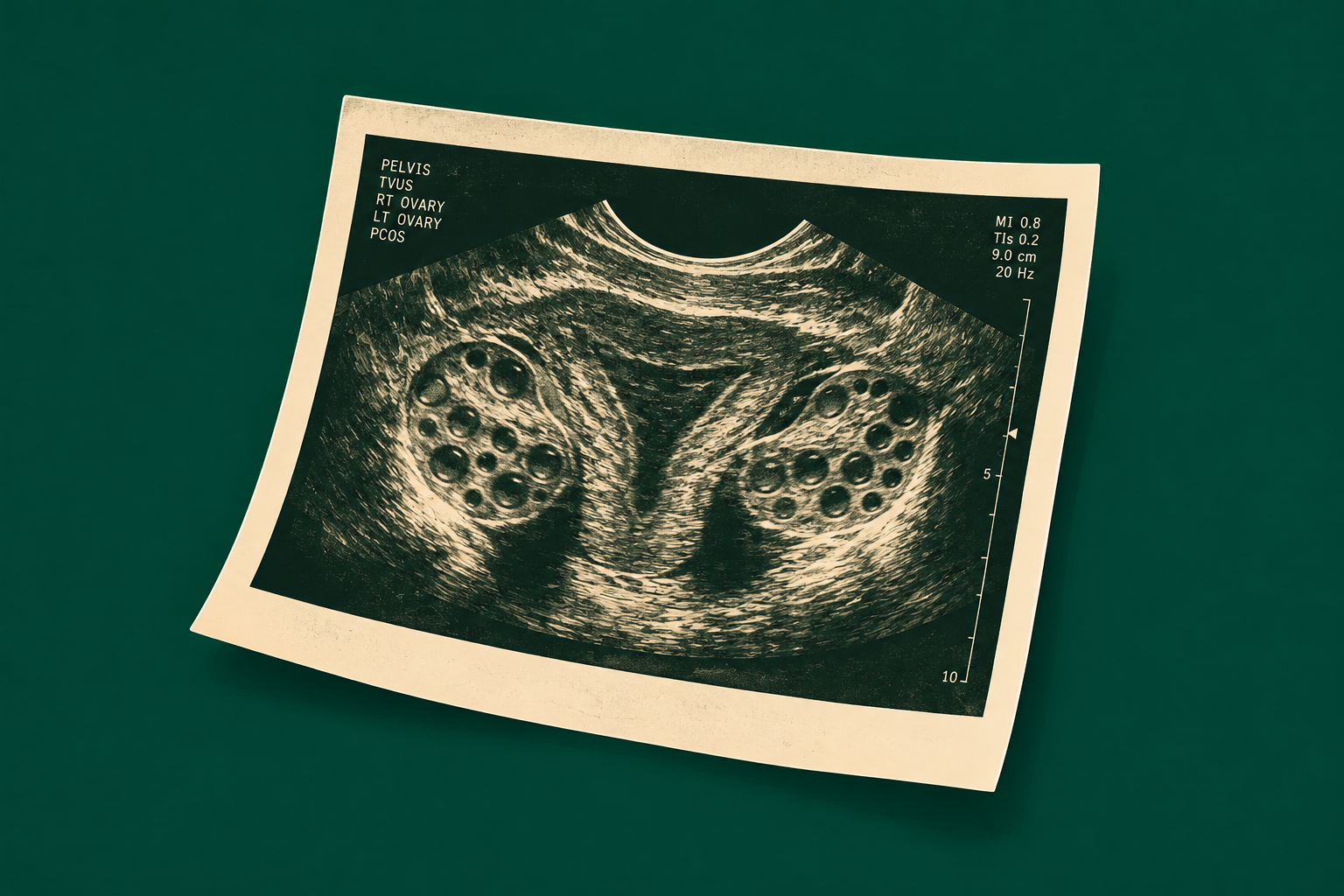
At my appointment, she scheduled me for an ultrasound, and once the results came in, the diagnosis was clear: “Multiple bilateral peripheral ovarian follicles. The appearance could be consistent with polycystic ovaries.” PCOS. Finally, after 11 years of grappling with these elusive symptoms, at least I had a diagnosis.
Eleven years, it turns out, is slow even by PCOS standards — and those standards are bleak. In a study of nearly 1,400 women across 48 countries, more than one-third of women reported waiting over two years for their diagnosis, and nearly half saw three or more health professionals before anyone could actually name what was happening to them.
“What are the treatment options for PCOS?” I asked my Mount Sinai gynecologist on our follow-up call.
“Birth control,” she replied.
Birth control is the standard PCOS treatment, or what I prefer to call the ‘PCOS Band-Aid.’ And to be fair to my big city gyno, she was following the playbook. The 2023 international guideline for managing PCOS recommends combined hormonal contraceptives as the first-line medical therapy for irregular cycles and elevated androgens. But look at the language doctors and researchers use around the pill — it “manages” the condition.
Birth control suppresses the hormonal chaos rather than resolving it, softening the symptoms while the underlying dysfunction sits untouched underneath. Stop taking it, and most women land right back where they started. So for a condition with no approved drug of its own, medicine’s best offer was to borrow one designed to prevent pregnancy, and hand it to women who, in huge numbers, would someday come back to that same office asking how to get pregnant.
Right after my diagnosis, I started researching ways to heal my PCOS naturally and reached out to my gynecologist in California, who recommended Myo-Inositol and N-Acetylcysteine (NAC) supplements (to help lower androgens and restore regular ovulation). I started both, tried going gluten- and dairy-free (Dr. Google said it may reduce inflammation that can worsen PCOS symptoms), and had my PCP insert the birth control Nexplanon — a progestin-releasing rod that sits under the skin of your upper arm. When the Nexplanon started making me bleed no matter the week about two years in, I switched to a NuvaRing, which adds synthetic estrogen to the progestin and is supposedly better for PCOS, anyway (something no doctor told me when I was initially choosing a birth control).
But I couldn’t tell if any of this was working because being on birth control produces a fake period every month — a withdrawal bleed, in medical terms. Birth control stops ovulation and keeps the uterine lining thin, so there’s nothing to actually shed. The NuvaRing was also making me incredibly emotional — to the point that when someone spilled beer on my dress after dinner at a wedding, I cried for the remainder of the night. About two months later on Christmas Eve 2023, my uncontrollable emotions flared again, but this time, I was done. I’d just spent another set of hours crying to Zach over how much hair I was losing (a PCOS symptom the birth control was not masking) and how much I hated our new apartment in northern California. So I impulsively ripped the ring out in hopes that would at least solve the depressive parts of my problems.
The following month, I signed up to work with a registered dietitian (RD) who specializes in balancing women’s hormones. It cost me $500 a month out of pocket. She overhauled my diet first — significantly more protein, at least 30 grams per meal, with my biggest meal at breakfast — then added in an adrenal cocktail (minerals in drink form that fuel the adrenals that produce your hormones), morning sunlight, blue-light-blocking glasses for work, and lower-intensity workouts. Once she felt I was generally optimized, she had me run a DUTCH test, which requires peeing on a stick of paper multiple times over a 24-hour period to see where your hormone levels are sitting throughout the day. The results showed “adrenal PCOS.”
My RD’s framework (which is common in functional medicine) breaks PCOS into four types: post-pill, inflammatory, insulin resistance, and adrenal. Insulin resistance is the most common and the most stereotypical — A1C, fasting insulin, and glucose out of range, typically in women who are overweight, which are all textbook signs traditional doctors look for when diagnosing the condition. The type she diagnosed me with, adrenal PCOS, is caused by environmental and emotional stressors that exhaust your adrenals over many years. None of these subtypes appear in the international guideline, for whatever that’s worth — but nothing in the guideline ever worked for me anyway.
And for the first time in my adult life, I felt like I finally had this thing under control.
The RD also put me on bio-identical hormones, pregnenolone and DHEA-S, for three months following the DUTCH test — a dropper of each under the tongue, three times a day — meant to regulate my hormones faster than the lifestyle changes could alone. She wasn’t wrong, though I’ll never know which piece of the protocol deserves the credit, since I’d changed everything at once. After I came off these hormones, my cycles remained regular for a year and a half, and the hair growth on my face reduced. At 33, I had never gone this long with regular cycles — not since my symptoms started at 17. And for the first time in my adult life, I felt like I finally had this thing under control.
But after my wedding and honeymoon in December of 2025, something shifted, and all the work I had done collapsed just months before we wanted to start trying to conceive.
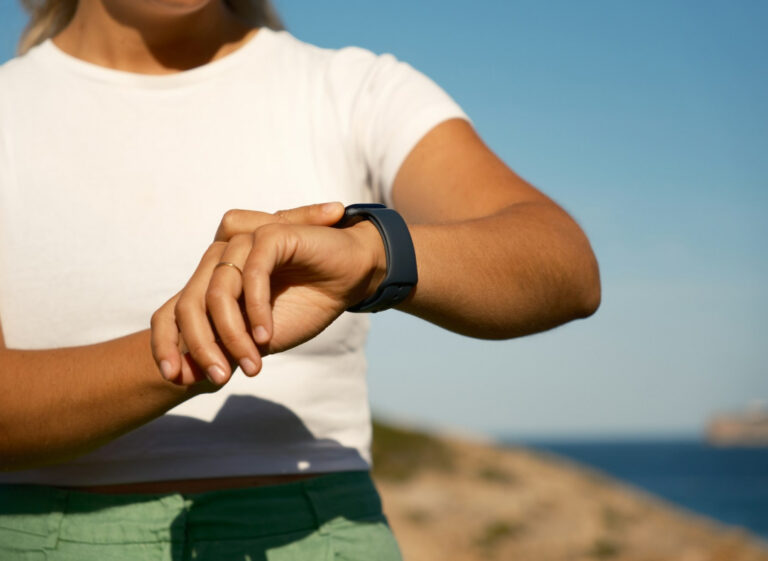
As my period dates were approaching in January of 2026, I noticed my Oura Ring data — which shows my basal body temperature, and tells me when I am likely to be ovulating — was all over the place. Read: I hadn’t ovulated that month. Alright, well I just traveled internationally for my honeymoon, maybe the travel disrupted things; surely my period would return in February, right? Nope. February passed with the same messy Oura Ring data. By March, it had been three months without a cycle, I’d gained 10 pounds in that time, and our plans to start trying were completely shot.
I have never once tried to get pregnant — I’ve spent my whole fertile life waiting to be well enough to start. And here was my body, asking me to wait again.
I found myself hyperventilating on my bed one afternoon later that month, crying to my eternal optimist of a husband, who just kept repeating that he couldn’t even see the weight gain and that my period would come back in April once our sun-less winter ended. But I’d been through this before — a little sun wasn’t going to fix it. And that afternoon wasn’t really about the weight gain, or even about my periods vanishing (yet again). It was about the months I was losing, and all the waiting I know comes with treating a root cause inside a system that doesn’t treat root causes.
I’m 34. I have never once tried to get pregnant — I’ve spent my whole fertile life waiting to be well enough to start. And here was my body, asking me to wait again. We don’t want just one child. Every cycle that didn’t come pushed baby number two further into the future — toward either not happening at all, or happening to a tired 42-year-old version of me who never planned on caring for a fresh newborn.
Before the appointment with the REI in July, I saw my PCP and three different gynecologists to try to figure out why my cycles had practically disappeared overnight. I had multiple rounds of bloodwork done, and the only measurement that had changed for me was my TSH (thyroid stimulating hormone — the hormone that tells your thyroid to work and can also affect your cycles). It was up from my normal TSH levels (it had gone from 1.2 to 3.3), though it was still technically within the “normal” range. Because of that, I had to beg my gynecologist to try levothyroxine (a synthetic version of T4, the inactive form of thyroid hormone) for “subclinical hypothyroidism.”
Because she knew we wanted to conceive and clinical guidelines recommend a TSH of 2.5 or below for conception, she eventually agreed to start me on the lowest dose (which was a huge feat in my book). It brought my TSH down to 2.1, but unfortunately, it did nothing to restore my cycles.
The next step was the REI, and by the time I met with her, I felt like a broken record re-explaining my PMOS timeline for the fifth time just that year. One of the questions I had to answer over and over again was, “When were you diagnosed with PMOS?”
My response: “When was I diagnosed or when did my symptoms start?”

The maddening part about getting a diagnosis — remember my count? Eleven years, somewhere north of a dozen doctors — is that it really should be fast. Dr. Thaïs Aliabadi — a Los Angeles OB-GYN who has spent more than two decades treating this condition, and who co-founded the metabolic supplement company Ovii — told me the diagnosis comes down to checking two of three boxes: irregular cycles, symptoms of high testosterone, and PMOS-looking ovaries on ultrasound (or an elevated AMH — anti-Müllerian hormone — blood test, if there’s no ultrasound machine handy). “It shouldn’t take more than five minutes, if you know what to look for,” she said. “Honestly, even my medical assistants know the main pillars to look for when it comes to PMOS. They’ll tell me, ‘Looks like you have a new PMOS patient.’ That’s how simple it is.”
When I asked whether my timeline for being diagnosed was common, she didn’t even pause. “The majority of PMOS patients are never diagnosed,” she said. Her practice has become a destination for these women. She calls it “the office of dismissed women,” because so many of her patients “fly from out of country, out of state, out of town, to come and just get validated for a diagnosis that they already know they have.”
Mary Alice Haney — Aliabadi’s co-founder at Ovii and at their women’s health podcast, SHE MD — hears from these women and other listeners every single day. “Over and over, we get: ‘Oh my God, I am not crazy,’” she told me, describing the listener messages that flood in after their PMOS episodes. “‘I knew that something was wrong with me, and I kept saying it, and this is it.’”
But once that five-minute diagnosis finally happens, there’s still no pill to treat the condition itself — only Band-Aids for the symptoms, birth control being exhibit A. And the moment a woman wants to get pregnant, the Band-Aid simply changes brands: birth control gets swapped for letrozole, an ovulation-induction drug that the same international guideline recommends as the first-line fertility treatment for women with PMOS. And letrozole works — it does exactly what it promises, forcing your body to release an egg into the same hormonal environment it found your body in. The miscarriage risk comes with that environment, with or without the drug. For women with PMOS, the risk runs roughly one and a half to two times higher than it does for other women — about 18% versus 11% in one recent cohort — and that remains true even for women like me with “lean PMOS,” the less common, normal-weight version of the condition.
I’ll give my REI this: at least she knew what I had. Aliabadi told me plenty of women leave fertility clinics without even that much. “I get infertile women coming to me from fertility clinics — and they’re not being diagnosed,” she said. “I have fertility doctors tell me, ‘I have a 40-year-old, and I pulled 30 eggs out of her in one cycle, but I couldn’t make an embryo.’ I’m like, ‘It’s because she has PMOS.’”
My REI didn’t stray from the books; letrozole is exactly what she recommended for me. Since I’m a committed at-home Googler before all of my appointments, I knew this is what she would want to prescribe for my situation. But I wasn’t exactly keen to test my odds at beating the elevated miscarriage risk, so I already had my mind set on something else.
“Have you read the research on GLP-1s as a fertility treatment for women with PMOS?” I asked her.
The RESTORE trial at Children’s Hospital Colorado — one of the only dedicated studies of semaglutide (Ozempic and Wegovy’s active ingredient) in PMOS, run by Dr. Melanie Cree — published early findings in Fertility and Sterility this June showing the drug may restore ovulation and improve reproductive health, with reproductive benefits emerging faster than the researchers expected. Trial participants have seen free testosterone cut nearly in half over ten months of weekly low-dose injections. And in a 2026 study of 96 women with PMOS, 52.5% of previously anovulatory women were ovulating again after six months on semaglutide — among those who were only mildly overweight, nearly all of them normalized their cycles.
The catch — and it’s the catch surrounding my whole situation — almost every one of these studies requires an elevated BMI to enroll. Women like me — normal weight, part of the estimated 25-30% of PMOS patients who don’t fit this standard — appear in almost none of this research. Aliabadi sees the cost of that stereotype in exam rooms: “You can’t just look at someone and say, you’re not overweight, so you don’t have PMOS,” she told me. “You will literally miss 25% of these women.”
“I have, actually,” my REI replied regarding the GLP-1 research. “But I can’t prescribe one to you.”
The reasons she can’t prescribe one are rational on paper, but this just felt like another door closing in an endless hallway of closed doors. GLP-1s aren’t approved for PMOS, so any prescription is off-label — and because the drug’s own label advises stopping semaglutide at least two months before a planned pregnancy, handing it to a woman who wants to start trying to conceive makes most physicians understandably nervous anyway.

So why is it that only certain subsets of the population with this condition actually end up getting included in research? PMOS affects an estimated 10-13% of reproductive-age women — and up to 70% of the women who have it don’t know it, because of that diagnosis gap Aliabadi talked me through. Yet there’s still no FDA-approved treatment for the condition. Over one recent decade, the National Institutes of Health (NIH) put about $215 million into PCOS research, while rheumatoid arthritis, lupus, and tuberculosis — conditions that each affect only 1% of the population or less — drew two to three and a half times more each.
The FDA has never established the endpoints a drug would need to hit to prove it works for PMOS at all.
This pattern still holds true today: as drugmakers race to test GLP-1s for Parkinson’s, Alzheimer’s, and substance use, neither Novo Nordisk nor Eli Lilly is sponsoring a single trial for PMOS. As obesity specialist Dr. Angela Fitch told Reuters, it’s hard to get a large pharmaceutical company interested in normal-weight PMOS when the vast majority of PMOS involves weight issues. Dr. Cree points to something else, too: the FDA has never established the endpoints a drug would need to hit to prove it works for PMOS at all. Without endpoints, the trials never get funded, and without trials, no doctor inside the system has the cover to prescribe. So my doctors could only offer what the evidence base gave them, and as it turns out, nobody ever funded the evidence.
Unless, that is, your doctor doesn’t work inside the system. When I told Aliabadi what my REI said, she stopped me before I could finish. “Your doctors can always prescribe whatever they want,” she said. “Whether it gets covered by insurance or not — that’s another issue.” And she’s right about the license. But my REI doesn’t practice on her license alone. She practices inside a large, integrated health system with its own formulary and its own internal guidelines, and it was the formulary answering for her.
Aliabadi, who owns her practice and answers to no formulary, has been prescribing these drugs to her PMOS patients since 2014 — Trulicity, back then. “It was a game changer for a lot of patients,” she told me. She’s even developed her own approach for patients like me who don’t need to lose weight: tiny doses, aimed at the chronic inflammation that runs through both PMOS and endometriosis (a condition in which tissue similar to the uterine lining grows outside the uterus), dosed low enough that her patients don’t drop a pound. “My patients come and say, my brain fog is better, my joint pain is better, I feel less bloated,” she said. The difference between her “yes” and my REI’s “I can’t” comes down to who signs the doctor’s paycheck — and it’s the reason so many women who have the means end up paying out of pocket for treatment from doctors like Aliabadi.
But not every woman has the same means, and those whose doctors are handcuffed are going around the system entirely — to telehealth prescribers and compounding pharmacies, the gray market the FDA has now sent more than 50 warning letters about. Notably, even Aliabadi — the closest thing these drugs have to a true believer — draws a hard line there: “Not compounded [GLP-1s], not on your own. Definitely prescribed, under supervision of a physician.”
I’d spent two years telling doctors my labs proved the kind of PMOS I had, and here was one of the biggest PMOS advocates in American medicine telling me my labs weren’t enough.
Aliabadi wasn’t about to let me off easy, either. When I mentioned in our interview that I’d been told I don’t have insulin resistance, she cut in: “Based on what?” My fasting glucose and A1C, I said. “You can’t always go by that,” she replied — in her experience, most lean PMOS patients still have insulin resistance, and finding it requires more thorough labs, like a glucose tolerance test and fasting insulin.
I was a little in shock. I’d spent two years telling doctors my labs proved the kind of PMOS I had, and here was one of the biggest PMOS advocates in American medicine telling me my labs weren’t enough. Apparently even the patient who knows more than the specialists still has more to learn — which is sort of the whole problem with being your own doctor.
Lucky for me, a friend of mine who also wants to conceive is getting treatment for her endometriosis at the Modern Thyroid Clinic (MTC), part of which includes a tiny dose of a GLP-1, along with other less traditional interventions. With her referral, I had an introductory call with the clinic within two weeks of that REI door closing.
When I met with the MTC for my first appointment — a full hour, which is around four times the length of a standard doctor’s visit — metformin was one of the first medications recommended to me. It’s a decades-old diabetes drug that helps with insulin resistance (that thing I just discovered I still might have), it’s well studied in PMOS, and it’s considered fine to keep taking while pregnant. In my clinician’s view, it does some of what a GLP-1 does for the ovaries, through a drug she could actually order for me.
And when I asked about GLP-1s? Still a no — the clinic requires stopping them two months before trying to conceive, in line with the FDA label. But it was the first “no” of this journey that came with an alternative plan to treat the root cause of my symptoms, rather than bandage them up. So the GLP-1 experiment is officially shelved until after baby.
Then came the most thorough thyroid rundown of my 17 years. Instead of testing TSH alone, the clinic runs a full panel — and mine showed my body working overtime to produce T4, the inactive thyroid hormone, while barely converting it into T3, the active form your cells (including the ones behind ovulation and egg quality) actually use. (A likely culprit behind the poor conversion, per my clinician: the low, but still technically “normal,” iron stores called ferritin that I’d been flagging to my traditional doctors for years.) I left with a prescription for liothyronine, a synthetic T3, microdosed twice a day.
This deep breakdown runs me $450 per appointment (plus the cost of bloodwork and prescriptions), none of it covered by my very good insurance. What that money buys, it turns out, is an hour with someone who reads all of my labs together, listens intently to my symptoms, and treats them as one big picture.
To be clear, this is still an experiment. But for the first time, someone designed it with me instead of leaving me to run it alone. Still, nobody can promise me this protocol will bring my cycles back, or bring them back in time for us to have the two children we want.
Even so, the patient experience at the MTC has been better than any I’ve had with a traditional doctor in our medical system. This clinic is the work of McCall McPherson, a physician associate who built it after her own years as a dismissed thyroid patient — when she went to her doctor at 27, barely functioning, “I was honestly gaslit,” she told me. McPherson isn’t licensed in my state, which is why her name isn’t on my prescriptions, but she trains and oversees every clinician at the practice (each one has a thyroid condition of her own), with a board-certified endocrinologist as clinical director.
And if it seems strange that my PMOS treatment is coming from a thyroid clinic, McPherson would probably say it’s the least strange part of my story. The two conditions “synergistically fuel one another,” she said, because they share core mechanisms like insulin resistance and blood-sugar dysregulation — by her count, nearly 20% of women with PMOS also have subclinical hypothyroidism, myself included, per the MTC’s ranges.
Her approach is also the reason my new T3 prescription exists. Most doctors will prescribe a T4-based medication, but they won’t touch T3 — a fear McPherson says is baked into clinical training. She can still recite it: Never use T3-based medications; if you put your patients on T3, you’re going to give them a heart attack or a stroke. But when she went digging through the literature, she found the opposite — by her reading, the large, long-term studies associate higher T3 levels with lower mortality and fewer cardiovascular events, not more.
“It almost doesn’t matter if your TSH is 3 or if it’s 27 — patients feel the same. They feel horrible,” she said. “But if you get it all tightly controlled, the light switch comes on.” Medicine, she told me, “is not in a mindset to revisit its approach to thyroid care. They’ve moved on to bigger and better things. And women [like us] are paying the price for it.”
“[In medicine], we are trained to see people in eight minutes. We couldn’t do what we do in eight minutes.”
What I really wanted from McPherson was the answer to one of this piece’s questions — why does an hour of good care cost $450 cash when I have great insurance?
“Can I go a little deep with you?” she said. “[In medicine], we are trained to see people in eight minutes. We couldn’t do what we do in eight minutes.” Billed through insurance, her clinic would collect somewhere between $38 and $75 for my hour-long visit, and it takes two employees per clinician just to process claims. Those full panels that are necessary to catch conversion problems like mine? Run them in-network, she said, and the MTC wouldn’t get 60 days in before an insurance company contacted it threatening to drop the clinic for unnecessary labs. “We could never get the outcomes we get if we operated in an insurance model.”
For what it’s worth, she wishes it were otherwise. “I hope that one day what we do is standard of care,” she said. “I hope I live long enough to see that happen.”
So do I.
And even for those who don’t have PMOS or hypothyroidism, here’s the worrisome part: this gap has sisters. Endometriosis affects an estimated 10% of reproductive-age women — about 190 million people worldwide — takes the better part of a decade to diagnose, and its standard offer should sound familiar: birth control to quiet the symptoms, surgery when it gets bad enough, and still no drug that treats the disease itself (though there is one moving into human trials, so at least we’re making strides in one realm of women’s health). PMDD (premenstrual dysphoric disorder, PMS’s severe, life-disrupting big sister) gets the same treatment — years of being told it’s “just PMS,” or a flat-out depression misdiagnosis, then birth control or antidepressants borrowed from other conditions, because no drug was ever built for this one either.
Aliabadi has a test for whether this is really about the conditions being complicated: just imagine the sexes reversed. “If men had a condition that would cause their sperm to go bad, [them] to gain weight, get bloated, have pain, have heavy bleeding, anxiety, depression, eating disorders, fertility issues — do you think the majority of them would go through the system and get dismissed?” she asked me. “No. But women are treated like we’re crazy until proven otherwise.”
The numbers back her up. In nearly three-quarters of the cases where a disease afflicts primarily one sex, NIH funding favors men. And until embarrassingly recently, women weren’t even in the data. Starting in 1977, FDA policy recommended excluding women of childbearing age from early drug trials, and it took an act of Congress — the NIH Revitalization Act of 1993 — before researchers were required to include women in clinical research at all.
My friend with endometriosis and I landed at the same out-of-pocket clinic for the same reason: we felt crazy battling with a system that only offers women Band-Aids, and we wanted — no, needed — treatments.
There’s a point where a woman stops being an empowered patient and starts being an unpaid, unlicensed stand-in for a functioning medical system.
Before I hung up with Haney, I asked her where the line sits between empowering women to become their own experts and outsourcing medicine’s job to the patient. “I don’t think there is a line,” she said. “We have no choice. The system is broken for women. Either we’re going to do it for ourselves, or we’re going to suffer and not get diagnosed for 15 years.”
I understand why she believes that — my own story is clear evidence, and from where we stand in that broken system today, I wholeheartedly agree with her. But when do we force the system to draw that line? Because there’s a point where a woman stops being an empowered patient and starts being an unpaid, unlicensed stand-in for a functioning medical system.
When that REI told me I knew more about my condition than she did, she meant it as a compliment — plus, she was probably right. But after she said it, I had to take a beat to realize what that actually meant. A board-certified specialist at a fertility clinic looked at a patient with a laptop and over a decade of her own lab results, and admitted the one with the medical degree may not be the most knowledgeable one in the room.
That knowledge came from somewhere — from the many nights I stayed up doing research the system should have been doing for me, with funding it never received, toward endpoints the FDA never wrote. Women’s health deserves better than what my 17 years got me. Women with PMOS, endometriosis, Hashimoto’s, hypothyroidism, adenomyosis, uterine fibroids, PMDD, lipedema, POTS, and chronic pelvic pain alike deserve funded trials, actual answers, doctors who truly listen, and real treatment options, paid for by someone other than the patients themselves. And maybe most importantly, they deserve to be heard outside of their private group chats commiserating with their girlfriends over the collective struggle of getting diagnosed within our medical system.
Aliabadi’s daughter recently asked her how she’d fix women’s health in two words.
“Trust her,” Aliabadi said.
When doctors don’t trust women, she explained, women eventually stop trusting themselves. I can’t say I ever stopped trusting that something felt wrong in my body no matter how many doctors dismissed me. Hell, I always had my girls in the chat backing me up. But 17 years into my personal back and forth with the medical system, I have one note: trusting women shouldn’t mean handing them the wheel. My REI trusted me right into the driver’s seat, leaving me to figure out how to get my periods back and beat the miscarriage risk on my own, using the only real tool at my disposal — money.
As for where my own experiment stands: I’m a month into the T3 microdose with metformin starting two months from now. As of writing this, my cycles are still recalibrating, Zach is still our in-house optimist, and the clock is still the clock.
I wanted to know why I’m the one running experiments on PMOS from my bedroom. Seventeen years, 17 doctors, three interviews, and two very expensive clinics later, I finally have my answer.
It’s because somebody had to.
The FDA never wrote the endpoints, the drugmakers never funded the trials, and the researchers never prioritized women’s health the same way they did men’s. Somewhere along the way, “be your own advocate” became “be your own doctor.” So somebody has to run the experiment — and for now, in expensive clinics and girl chats and supplement subscriptions across the country, that somebody is us.
As I was finishing this piece, the White House announced a new women’s health division at the NIH, alongside a presidential task force on women’s health. I hope it rewrites this story someday. As of this writing, though, the division exists only on paper: no one has been named to run it, no new funding has been attached, and NIH has 90 days to stand it up.