A Gentle Postpartum Core Workout for Rebuilding a Strong, Stable Center

You may be able to start postpartum core exercises sooner than you think — but you’ll want to choose your moves mindfully.
While postpartum typically refers to the period 12 months after delivery, it’s also true that once you’re postpartum, you’re always postpartum. Pregnancy changes both your life and body in significant ways, and, physically, you’ll never be quite the same. This doesn’t have to be a bad thing: with a mindful approach, you can return to all the activities you did pre-pregnancy and feel just as strong — if not stronger — than you were before.
The first step in getting there? Rebuilding core strength and stability with targeted postpartum core workouts. Unlike the way you may approach core training during other life stages, the focus isn’t on building maximal strength or muscle. Instead, postpartum core work involves restoring function to the core and pelvic floor after they’ve been stretched and challenged by the demands of birth and nine months of pregnancy. Keep reading to understand how pregnancy and delivery impact your core, the best way to help your body recover, and six postpartum core exercises you can try once you’ve been cleared by your doctor.
TL;DR
Postpartum core workouts should focus on gentle, deep core activation and pelvic floor reconnection — but only once you’ve been cleared by your doctor. The main goal with core workouts after pregnancy is to restore core stability, endurance, and strength to help reduce any pain or pelvic symptoms and improve physical function for everyday life.
Key Takeaways
- Postpartum core workouts should focus on gently engaging the deep core muscles and pelvic floor to restore strength, stability, and basic core function.
- You can start gentle core exercises soon after giving birth, once you’re cleared by your doctor; save more intense training for further along.
- Rebuilding your deep core after pregnancy may help ease lower back and pelvic pain, lessen incontinence, and reduce diastasis recti (ab separation).
- Start slowly and listen to your body — symptoms like abdominal doming, coning, pain, bleeding, or leaking are a sign to stop and consult your doctor or other medical pro.
What the Research Says About Postpartum Core Recovery
Pregnancy and childbirth temporarily reduce core strength and function, regardless of whether you deliver vaginally or by Cesarean section (C-section) — and those changes last longer than you might think. A small 2018 study published in Medicine & Science in Sports & Exercise found that women’s core muscles were significantly weaker and fatigued more quickly than a control group who didn’t give birth, and that these deficits can persist for at least six months.
Moreover, a large percentage of women also experience pelvic floor dysfunction (marked by symptoms like pelvic pain, or pressure and incontinence), with an estimated 35 to 73% of women affected in the months or even years postpartum.
The American College of Obstetricians and Gynecologists (ACOG) recommends gradually returning to physical activity after childbirth, with some people able to begin gentle movement within days of delivery, depending on their personal health, delivery, symptoms, and presence of complications. While any low-impact exercise appears to help reduce postpartum symptoms such as pelvic pain and incontinence (compared to no exercise at all), dedicated core and pelvic floor training offers specific benefits for pelvic floor health and diastasis recti (the separation of the rectus abdominis muscles).
Research consistently supports the benefit of deep core stability training, which focuses on teaching the deep muscles of your torso to stabilize your spine and pelvis during movement. A 2026 systematic review and meta-analysis found that this type of training significantly reduced lumbopelvic pain (lower back, hip, and pelvic pain) and improved physical function and quality of life in postpartum women.
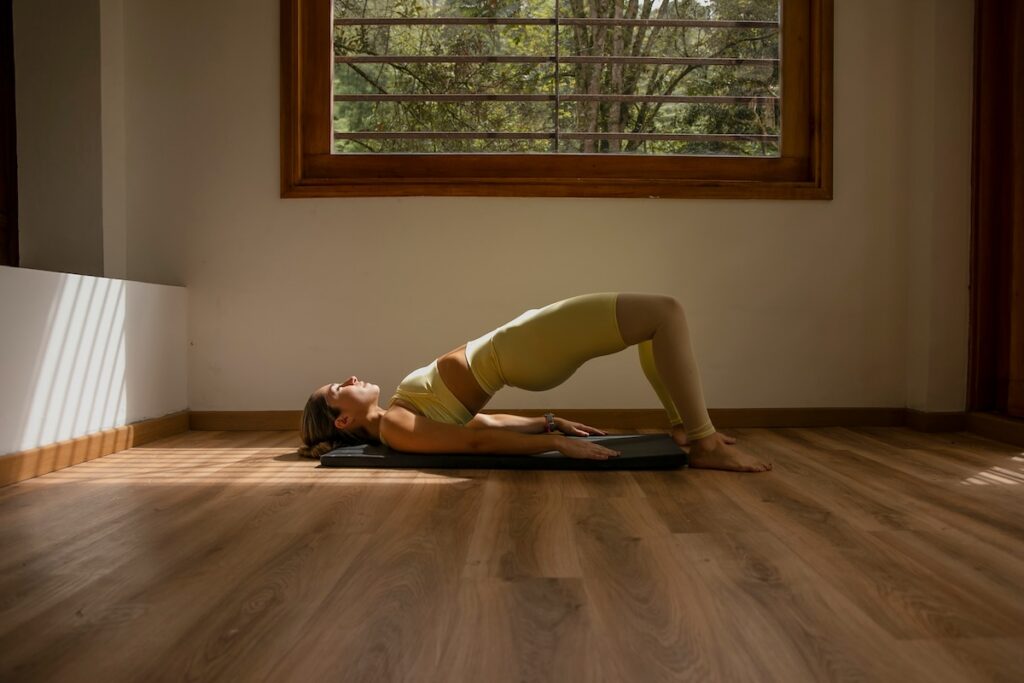
Compared with traditional ab exercises alone, a 2019 randomized controlled trial also found that adding a deep core stability program led to greater reductions in diastasis recti and larger improvements in everyday physical function. Similarly, because many Pilates exercises emphasize deep core stability, one small randomized controlled trial found that four weeks of Pilates significantly improved abdominal muscle separation and endurance in postpartum women with diastasis recti.
Taken together, these findings suggest that targeted deep core training can play an important role in postpartum recovery — though there’s still no evidence-backed postpartum exercise protocol that’s considered best for everyone.
Why Postpartum Core Recovery Works This Way
Pregnancy causes a cascade of physical changes throughout the body. Hormonal fluctuations make the joints, ligaments, muscles, and connective tissue more lax during pregnancy — and for months afterward — which can contribute to joint instability, increasing the potential for injury or pain.
Notably, during pregnancy, the uterus expands to accommodate the growing baby, stretching the abdominal muscles and connective tissue. Research shows that the abdominal muscles can stretch to approximately 115% of their resting length by the 38th week of pregnancy, and that during delivery, the pelvic floor muscles can stretch to as much as 250% of their resting length.
This stretching can cause your rectus abdominis (the “six pack” muscles that run along the front of your stomach) and the linea alba (the band of connective tissue running up the center of the rectus abdominis) to stretch apart, leading to diastasis recti, which can limit proper core function. Pregnancy also changes posture, which contributes to lower back pain that can last beyond delivery. And C-sections — which make up an estimated 32% of all US births — require even more recovery time for the abdominal wall compared to vaginal deliveries, since several layers of tissue are cut or separated during the delivery.
This is all to say, your body has a lot to recover from after you give birth. And it’s exactly why postpartum core training centers on rebuilding the strength and coordination in your deep core and pelvic floor to protect your spine, improve posture, and reduce pain so you can squat, walk, run, and lift your growing baby.
How to Do a Postpartum Core Workout
The most effective deep core exercises postpartum are gentle, breath-led, and built around reconnection rather than burn. When returning to movement after giving birth, prioritizing recovery and listening to your body is key, as is consulting with your doctor or other medical professional to ensure you’re progressing at a rate that’s safe for you. Once you’ve been cleared by your doctor, start with the breathing and pelvic floor exercises below, which are gentle enough to be done daily, and soon after giving birth.
If those feel good and you’re not experiencing any symptoms — such as doming or coning of the abdomen (when the center of your stomach barrels or bulges forward during exertion), pain, pelvic heaviness, leaking, or bleeding — you can start to incorporate the other deep core and diastasis recti exercises. If you notice any of those symptoms, feel like you’re bearing down on your pelvic floor, or think you’re dealing with severe diastasis recti, talk to your doctor or a specialized provider, like a postnatal or pelvic floor physical therapist.
As you progress through this postpartum core workout, remember: The goal is to move slowly and with intention, using your breath to engage your abdominals and pelvic floor, and cultivate a mind-muscle connection. Avoid holding your breath during any exercise.
Diaphragmatic Breathing: Lie face-up with your knees bent and feet flat on the floor, hands on your stomach. Inhale, feeling your rib cage expand in 360 degrees. Slowly exhale as if you were blowing out candles, drawing your core in from all directions, and feeling a slight lift of your pelvic floor. Do 8-10 slow breaths.
Pelvic Floor Activations: Lie face-up with your knees bent and feet flat on the floor, hands on your stomach. Find a neutral spine, stacking the ribs and hips in a line, ensuring your back isn’t arched, and your ribs aren’t flaring open. Visualize the base of your pelvis as the face of a clock. Inhale, then exhale to gently draw 6 o’clock and 12 o’clock together, and draw 3 and 9 o’clock together. Inhale to release. Do 5 slow reps, inhaling to release and exhaling to lift.
Heel Slides: Lie face-up with your knees bent and feet flat on the floor, hands by your sides. Find a neutral spine and engage your core. Keeping your hips and lower back stable, inhale to slide one heel away from your hips, straightening your leg. Exhale to slide your foot back to the starting position. Do 8 reps per side.
Heel Taps: Lie face-up with your arms by your sides and your knees bent in a tabletop position, shins parallel to the floor. Find a neutral spine and engage your core. Inhale and lower your right foot to tap the floor, keeping your knee bent. Focus on keeping your core stable, ribs down, and back pressing into the floor. Exhale to lift your right leg and return to the starting position, then repeat with the other leg. Do 8-10 reps per side.
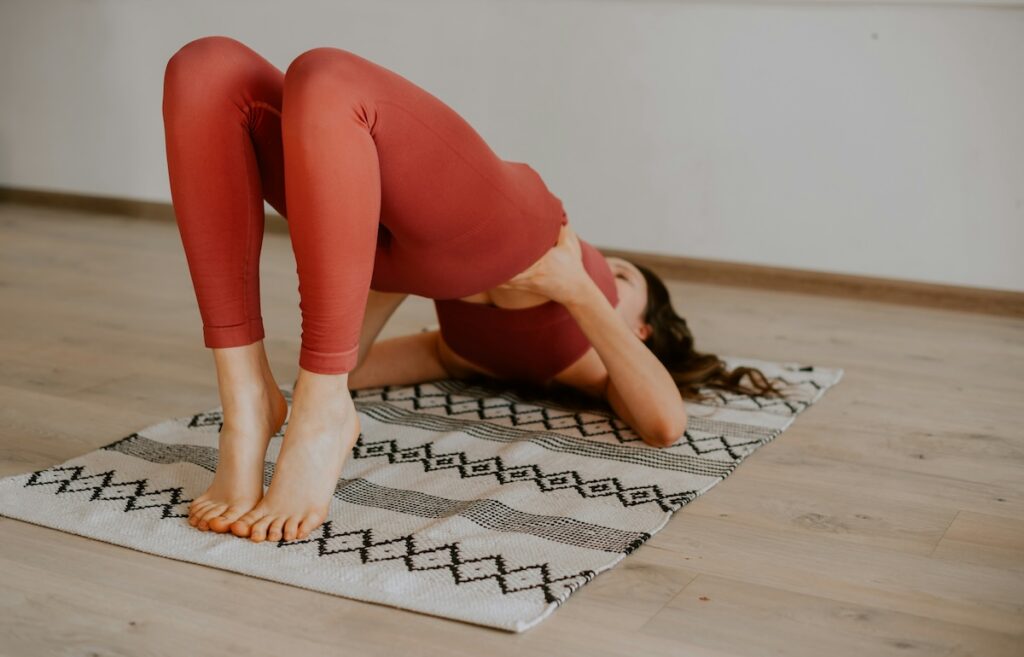
Adductor Glute Bridge: Lie face-up with your knees bent and feet flat on the floor, hands by your sides. Place a small exercise ball or pillow between your inner thighs. Engage your core and find a neutral spine. Exhale to lift your hips, squeezing your glutes, without arching your back or letting your ribs flare open. Inhale to slowly lower your hips to the floor, maintaining pressure on the ball or pillow the whole time. Do 10 reps.
Bird Dog: Start on all fours, hands under shoulders and knees under hips. Exhale to engage your core, drawing your abdominals in from all sides. Inhale and extend the right arm forward to shoulder height while lifting your left leg up behind you to hip height, knee pointing to the floor. Keep your core stable: don’t let your hips tilt or your back arch. Keep your neck long, gaze toward the floor. Exhale to slowly lower your arm and leg to the floor, then repeat with the other arm and leg. Do 6-8 reps per side.
Moves to Skip (For Now)
While you’re still newly postpartum, it’s best to skip the moves you’d find in a traditional postpartum ab workout, which can put too much strain on your recovering core. That includes: crunching movements, which can worsen diastasis recti or strengthen the rectus abdominis without properly engaging the rest of the core system; spinal extension movements (such as supermans), which can exacerbate the muscle imbalances that commonly occur after pregnancy; and weighted ab exercises, twisting or rotational movements, and planks, which can put too much pressure on the healing abdomen, according to the National Academy of Sports Medicine (NASM).
These exercises aren’t off the table forever. Once you’ve built foundational deep core strength and any damage to your abdominal and pelvic floor muscles has sufficiently healed, you can progress toward more intense core work. Continue to keep an eye out for any pain or other symptoms, which means you should scale back and potentially talk to your doctor.
What the Experts Recommend About Postpartum Core Work
While there isn’t hard-and-fast guidance on how every single person should approach postpartum core work, experts and researchers generally agree on the fundamentals: progress gradually, prioritize deep core and pelvic floor function before tackling higher-intensity abdominal exercises, and let how you’re feeling — not the calendar, or a regimented plan — guide your return to exercise.
If you’re experiencing persistent pain, leaking, pelvic heaviness, abdominal doming, or you’re unsure how to progress, ask your doctor about seeing a pelvic floor physical therapist. Although pelvic floor PT isn’t standard in the US, it’s routine postpartum care in many other countries.
Frequently Asked Questions
Some people can begin exercising — including gentle core work — as soon as a few days postpartum. However, your return to abdominal exercises (and physical activity, in general) will depend on your training level before and during pregnancy, delivery, and how you feel postpartum. If you had a Cesarean section or any complications, ask your doctor when it’s safe for you to begin exercising again.
Everyone experiences some level of diastasis recti after pregnancy. While many mild cases improve naturally within the first few months postpartum, more persistent or severe cases may benefit from physical therapy. A finger-width test (described below) can provide a rough estimate, but only a doctor can properly assess and diagnose diastasis.
Finger-width test: Lie face-up with knees bent and feet flat on the floor. Place the fingers of your left hand, fingertips facing you, just above your belly button, and place your right hand on your right thigh. Inhale, then exhale and lift your head and shoulders off the floor, sliding your right hand up your thigh. Feel your abs tighten, and use your left fingers to feel the width of the gap between the muscles on both sides. A gap of two or more finger widths may indicate diastasis recti and should be discussed further with your doctor.
Planks and crunches can be safe when you’re postpartum, but only after you’ve rebuilt adequate deep core strength with gentler exercises first. People recovering from a C-section often need to wait longer before progressing, while those with uncomplicated vaginal births may advance sooner if they’re symptom-free. Always follow your doctor’s guidance and stop if you notice doming, pain, leaking, or pelvic heaviness.
It depends. Most people notice meaningful improvements in the first few months postpartum, though rebuilding core strength and function can take 6 months to a year or longer, depending on factors such as diastasis severity, delivery, symptoms, and training consistency.
After a C-section, start with the same gentle breathing and deep-core work as anyone else, but expect a longer timeline, since the abdominal wall is surgically cut. Get your provider’s clearance first, hold off on any loaded ab workout after C-section until you’re fully healed, and stop if you feel pulling near the incision.
Bottom Line on the Postpartum Core Workout
It’s important not to rush into postpartum core workouts, no matter how badly you want to feel and move like yourself again. Your baby is one of a kind, and so is your postpartum recovery. Get your doctor’s OK before starting, then begin with gentle, deep core activations, which are crucial to rebuilding a strong foundation before attempting more intense abs exercises or workouts. Listen to your body, watch for any negative symptoms, and seek out a professional if you ever feel unsure or want additional or personalized guidance.
Experts Who Contributed
- Lauren Mazzo, CPT, wrote this article.
- Lauren Keary, NASM-CNC reviewed this article for accuracy.