
The 5 Best Exercises for Arthritis, According to Experts

It may seem counterintuitive, but regular joint movement can ease and improve the symptoms of painful, chronic arthritis.
About one fifth of all Americans over the age of 18 deal with some form of arthritis — an umbrella term that includes multiple conditions associated with inflammation, swelling, and pain in the joints. It can be debilitating and frustrating, and while there isn’t a known cure, the right kind of movement can help make daily life feel more manageable.
Resting an achy joint may seem like the obvious move, and it may even be smart to scale back your movement during a flare up. However, for many people with arthritis, too much inactivity can make the stiffness worse. Gentle, low-impact exercise helps keep joints moving, strengthens the muscles that support them, and may ease pain over time. Not sure where to start? Below, we break down the five best exercises for arthritis, plus how to make each one joint-friendly.
TL;DR
The best exercises for arthritis are low-impact movements that don’t add stress to your joints while promoting mobility of that joint and strengthening the supporting muscles. Walking, water workouts, cycling, strength training, and tai chi are all good options. Start with small doses of exercise, like two 15-minute-long workouts per week, and build up slowly from there.
Key Takeaways
- The best exercises for arthritis are activities that move your joints and build strength in the surrounding muscles without creating additional pressure on your joints.
- Walking, water workouts, cycling, strength training, and tai chi are five joint-friendly options.
- Regular movement tends to reduce arthritis pain and stiffness over time, even when resting a sore joint feels like the better choice.
- Start with short, manageable sessions and work toward 150 minutes of moderate activity per week, plus two days of strength training.
What the Research Says About Exercise and Arthritis
Arthritis covers a wide range of conditions, and there isn’t yet a known cure, but exercise is one of the most consistently recommended tools for managing symptoms. The CDC says regular physical activity — both cardio and strength training — can help people with arthritis reduce joint pain, improve function, and support mood and overall quality of life.
That guidance lines up with clinical recommendations, too. The American College of Rheumatology and Arthritis Foundation strongly recommends exercise for people with knee, hip, and/or hand osteoarthritis, while emphasizing that the right plan should account for each person’s symptoms, preferences, and other health conditions.
And there is some supporting research. A 2024 Cochrane review of 139 randomized trials and over 12,000 participants with knee osteoarthritis found that exercise probably improves pain, physical function, and quality of life in the short term. Those researchers did find, however, that the benefits were modest, and the best results still depend on the person, the program, and how consistently they can stick with the routine.
Why Movement Helps Sore Joints
Think of your body like a machine built from levers, pulleys, and hinges. Your muscles create force to move and articulate your bones, while your joints are the connection points that allow that movement. And like an actual hinge, a joint that sits still for too long can become stiff and immovable.
Gentle movement helps those joints circulate synovial fluid, liquid inside your joints that helps reduce friction and nourish cartilage. Sticking with our analogy, think of synovial fluid as nature’s WD-40, helping your joints to move more efficiently over time. Movement also strengthens the muscles around your joints, which can improve stability and reduce pressure on sore areas.
That doesn’t mean you should force movement if it hurts. Move through a comfortable range of motion (the amount of movement a joint can safely travel) and scale back during a flare, or temporary spike in symptoms.
The 5 Best Exercises for Arthritis
For the more gym-weathered people reading this article, we’re not talking about specific exercises like the bench press or deadlift. The below list is of low-impact, accessible activities that promote joint movement and slowly strengthen muscle tissue over time.
1. Walking
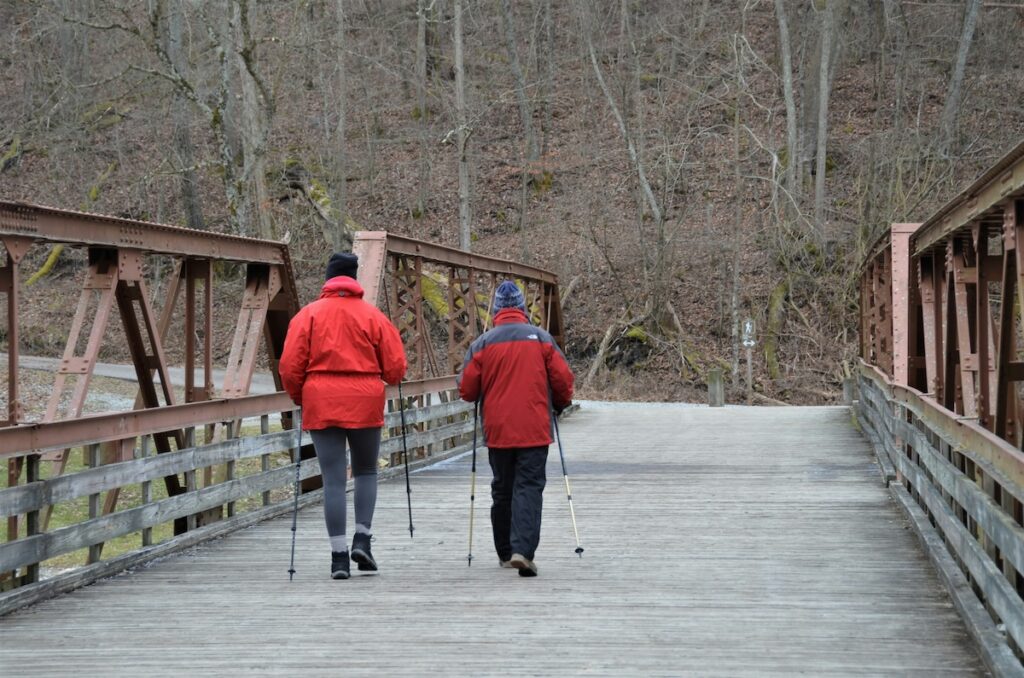
Walking is one of the easiest exercises for arthritis because it’s low-impact, accessible, and simple to scale. All you need is a pair of supportive shoes, a route, and maybe a good podcast. It also checks a lot of boxes at once. Walking supports heart health, can boost mood, and helps with weight management while reducing stress on your weight-bearing joints like the hips, knees, and ankles.
If you’re sedentary most of the day, start with a 5- to 10-minute walk on flat ground. Keep your pace slow, avoid steep hills at first, and add a few minutes each week as your joints tolerate it. The CDC recommends working toward 150 minutes of moderate-intensity aerobic activity per week, which you can break into shorter walks rather than doing it all at once.
2. Water Workouts
Water workouts are a joint-friendly way to move because the buoyancy of the water helps support some of your body weight. That can make swimming, water walking, or pool aerobics feel easier on sore hips, knees, ankles, and feet than exercising on land. Warm water may also promote circulation to easy stiffness, making it a useful option when your joints are acting up.
If you have access to a pool, look for an arthritis-friendly water aerobics class or try a simple solo workout in the shallow end. Water walking, lateral shuffles, gentle reverse lunges, arm circles, and push-ups against the pool ledge can all help you move your joints through a comfortable range of motion. Start with 15 minutes and keep the pace easy enough that you can move without sharp pain.
3. Cycling
You don’t need to ride like you’re in the Tour de France to reap the benefits of cycling. Easy cycling on a stationary or recumbent bike is low-impact aerobic exercise that encourages smooth, repetitive movement through the knees and hips. Because your feet stay in contact with the pedals, cycling avoids the repeated pounding of higher-impact activities. Building strength in your quads, hamstrings, and glutes also helps to support the hips and knees.
Start with low resistance and a comfortable saddle height. Your knee should have a slight bend at the bottom of each rotation, not locked out or aggressively bent. As cycling gets easier for you, start by incrementally adding time, then resistance.
4. Strength Training
Strength training matters because your muscles help support and stabilize your joints. When the muscles around a joint are stronger, they help absorb force, making everyday movements like standing from a chair and climbing stairs feel more manageable.
Start with light dumbbells, resistance bands, machines, or even your body weight. Basic moves like chest presses, rows, squats to a chair, hip hinges, step-ups, and curls can all be useful. Work through the fullest comfortable range of motion, and focus on keeping your form tight. Also, be sure to progress slowly by doing one extra rep, a little more resistance, or another set once the current version feels easy every couple of workouts. If you’re unsure where to start, a physical therapist or qualified trainer can help you build a plan around your specific joints.
5. Tai Chi
Tai chi is a traditional Chinese martial art built around flowing movements, controlled breathing, and maintaining a strong posture. For people with arthritis, that combination can be especially useful because it trains balance, coordination, range of motion, and body awareness.
Many people also find tai chi calming, which matters when you’re dealing with a chronic condition that can affect both your body and your mood. Look for a beginner class or an arthritis-friendly tai chi program, and start with short sessions. If standing for long periods bothers your joints, ask the instructor about seated or supported modifications. Gentle yoga can offer similar benefits for mobility and breathing, as long as you avoid poses that force painful end ranges.
How to Start Safely
If you struggle with arthritis, be sure to clear new forms of exercise with your doctor and physical therapist (if you see one). Pick one of the exercises from the list above and do two to three weekly sessions for 15 minutes each. As you acclimate to the new movement, work up to 20 to 30-minute-long sessions. Then add an extra day of exercise. The goal is to be at the CDC-suggested quota of 150 minutes of total exercise (or five, 30-minute sessions per week). If you feel intense pain, stop exercising immediately.
What the Experts Recommend About Exercising With Arthritis
You’ve probably heard the cliché that fitness is a marathon, not a sprint. Hokey? Sure. But when you’re exercising with arthritis, the sentiment is especially true. The goal isn’t to crush yourself in one workout. It’s to find the version of movement you can repeat, recover from, and slowly build on.
“A good arthritis workout should meet your current ability, not some ideal version of what you think exercise ‘should’ look like.”
As a certified personal trainer, I apply the principles below to clients of all experience levels, but they matter even more when joint pain is part of the equation.
- Start where you are: A good arthritis workout should meet your current ability, not some ideal version of what you think exercise “should” look like. That may mean a five-minute walk or a couple of sets of band rows. Anything is better than nothing, and before you know it, you’ll have the strength and confidence to do more.
- Progress gradually: To keep improving, your workouts should eventually become a little more challenging — a concept known as progressive overload. That translates to doing one more rep, adding a few minutes to your walk, using slightly more resistance, or moving with better control. You don’t, however, need to progress every variable at once, or even every session. Track what you do and look for slow, steady improvement over weeks.
- Build a routine: Exercise becomes easier to stick with when it’s baked into your day. Try walking after breakfast, doing mobility work before bed, or strength training on the same two days each week. The more automatic the routine becomes, the less you have to rely on daily motivation.
- Prioritize clean, comfortable reps: Good form helps you to move efficiently and avoid placing unnecessary stress on your joints. Move through a comfortable range of motion, keep the weight or resistance manageable, and stop if you feel pain. More reps or heavier weights are not worth it if they force you to compensate or irritate the joint.
Frequently Asked Questions
There isn’t one best exercise for everyone with arthritis. Choose activities that don’t require you to pound your joints and you enjoy enough to do on repeat. Walking, water aerobics, cycling, strength training, and tai chi are all good options.
Exercise is recommended as a way to ease the symptoms of arthritis, so, no, it won’t make your condition worse. That said, if you pick activities that are hard on your affected joints — like running on pavement, high-intensity strength training, and anything that requires twisting and jumping — you can cause painful flare ups.
High-impact or jarring movements can irritate sore joints, especially during a flare — think running on hard surfaces, jumping, heavy twisting, and high-intensity lifting. You’re not necessarily forbidden from doing them, but approach them with caution and notice how your joints respond afterward.
Start with what feels manageable, even if that’s five to ten minutes at a time. Over time, aim for the CDC’s general goal of 150 minutes of moderate-intensity aerobic activity per week, plus two days of strength training. You can split that into short sessions throughout the week.
Gentle hand movements can ease stiffness and protect your grip. Try slowly making a fist and opening it, bending each finger toward your palm, spreading your fingers wide, and doing easy wrist circles. Move only through a comfortable range, and stop if anything turns into sharp pain.
Bottom Line on the Best Exercises for Arthritis
Experts conclude that exercise can help to ease and improve the symptoms of arthritis, but you’ll want to choose activities that are low-impact on your joints — like walking, tai chi, and anything in the water. Joint movement promotes the release of synovial fluid, which lubricates your joints, so aim to move consistently. Start with a couple 15-minute sessions per week and then work your way up to 5, 20-to-30-minute-long workouts. And always consult with your doctor and consider working with a personal trainer before starting a brand new routine.
Experts Who Contributed
- Andrew Gutman, NASM-CPT, wrote this article.
- Lauren Keary, NASM-CNC, reviewed this article for accuracy.