How to Target Glutes on the Leg Press: What Actually Works

When it comes to maximizing muscle growth, small changes can make a big difference. Here’s how to get a lot out of a little on the leg press.
Everyone says the leg press builds your glutes, but it can be hard to believe if you don’t feel them working. If you’ve been stuck wondering how to target glutes on the leg press, there are two things you need to know.
First, that “feeling the burn” doesn’t always mean you’re getting a good workout. Second, there are a few frictionless changes you can make to your leg press technique that can help your glutes get in the game and take some load off your quads.
TL;DR
To target glutes on the leg press, place your feet high and wide on the plate. This shifts more range of motion to your hips, which stretches and engages your glutes. Remember to initiate the movement by squeezing your glutes and driving through your heels.
Key Takeaways
- You can shift emphasis onto or away from specific muscles by changing your form.
- Placing your feet high and wide may help you target your glutes on the leg press.
- Form adjustments can change how an exercise physically feels, but may not affect the way it works your body to the same degree.
- A deep, controlled range of motion reliably brings your glutes into the movement, whatever your stance.
What the Research Says About Targeting Glutes on Leg Press
Physical training is a marriage of art and science. Real-world experiences spark questions we hope to answer conclusively with science — prescriptions for targeting glutes on leg press depend on both.
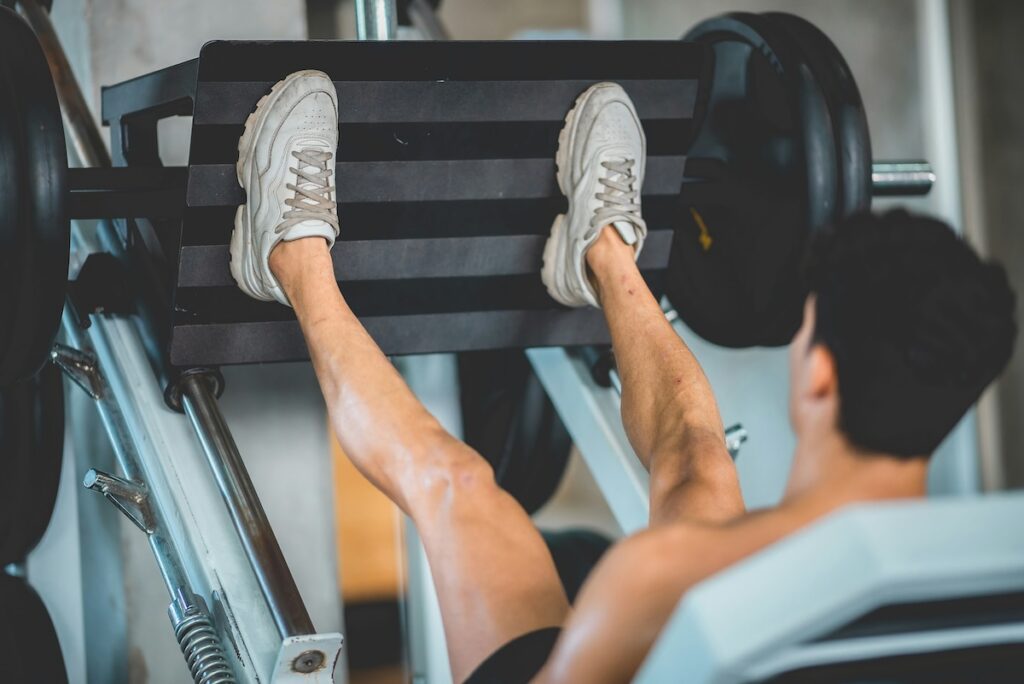
Why does this matter? Because “foot placement” actually covers two different things — how high you set your feet on the plate, and how wide you stand or how far you turn your toes out. One of them changes how much your glutes work. The other mostly doesn’t. Here’s what two studies found.
One study had 14 women press with three different foot positions on the plate.
- They used high, low, and standard (45°) foot placement.
- Researchers recorded muscle activation, including the glutes.
What they found: Glute activation was greater with high foot placement than with low — enough that the researchers pointed to a higher foot position for building the glutes.
What it means: Sliding your feet higher on the plate increases hip flexion (which stretches your glutes) and pulls more of the work onto them, while a low foot position keeps it in your quads.
Another study looked at how stance width and toe angle affect glute engagement on the leg press.
- Subjects performed leg presses with a narrow or wide stance, and toes forward or turned out.
What they found: Stance width and toe angle made no real difference to muscle activation, but pressing with more speed and effort did.
What it means: Changing your form doesn’t always shift the emphasis of an exercise, but increasing your effort does help recruit more muscle fibers in your glutes.
Put together, the picture is fairly clean: how high your feet sit changes glute involvement, while stance width and toe angle are more about comfort. That said, a systematic review from 2020, which pools findings across studies, concluded that high foot placement tends to favor leg press glute activation — while cautioning that the overall evidence on these tweaks is still not all that compelling.
The takeaway: Changing foot position affects the mechanics of the leg press, and likely leads to more glute engagement if you find the sweet spot.
Why Foot Placement Changes What You Feel
Feelings are complicated. Yes, we’re still talking about the gym. The sensations you experience on the leg press — the deep burn in your quads and glutes — come from your brain recognizing the effort your body is putting in.
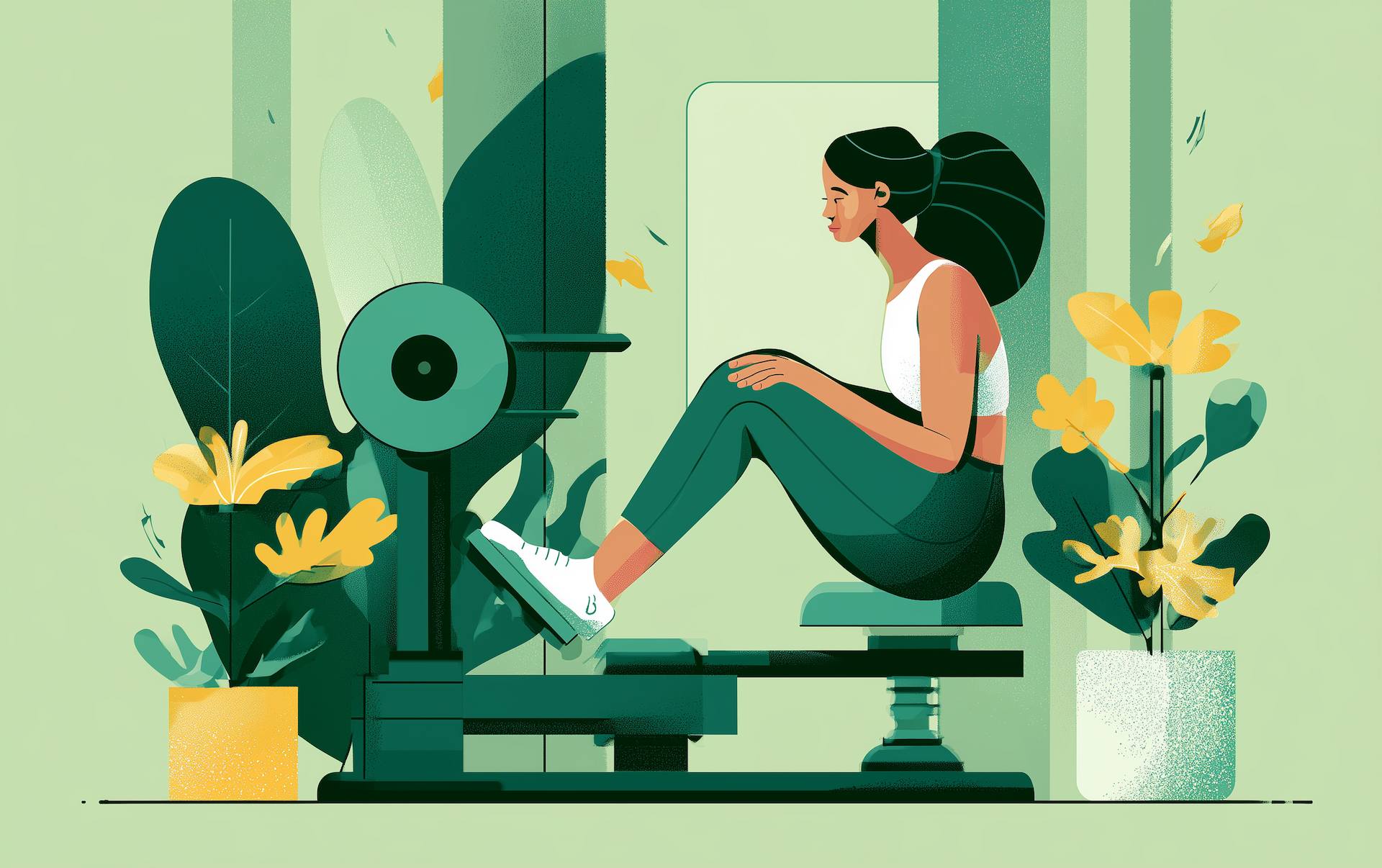
Muscles act on joints which open and close. On the leg press, moving your feet up the plate reduces the amount of bend in your ankles and knees, while increasing hip flexion (how close your thighs get to your stomach).
It’s a bit like a see-saw; flexing your knees more and hips less shifts the load onto your quads and slightly away from the muscles that affect your hip, and vice-versa.
This is also why some people find the leg press intuitive while others find it painful or awkward. To maximize glute engagement on the leg press, you need to be able to place your feet high up and go deep.
- Some people’s hip anatomy simply won’t let them, so they always feel most of the work in their quads.
- Others can open their hips up until their knees basically wedge into their armpits. Those individuals will naturally feel a lot of glute on the leg press.
Technique, structure, and effort all play a role in how an exercise feels — and what you can get out of it.
Where to Put Your Feet on the Leg Press for Glutes
To target your glutes specifically, you need to place your feet high and wide on the plate, and drive through your heels. That’s the gist. But for a step-by-step, here’s how to target your glutes on the leg press, from setup to execution.
- Sit into the station with your spine flush against the backrest.
- Place your feet high and wide on the plate.
- Check your hips. If your pelvis is curling under and coming off the seat, your feet are too high.
- Push the plate off the safeties and grab the handles for stability.
- Lower the plate down as deep as you can without your back coming off the pad.
- Drive through your heels — not your toes — to press the plate back up, and squeeze your glutes at the top without slamming your knees straight.
- Repeat at a controlled tempo for about 3-4 sets of 8-12 reps.
New to this? The leg press isn’t as scary as it looks. There’s a safety lever you can pull at any time to stop the plate. When using the leg press for the first time, start light (you don’t even need to put weight plates on if you don’t want to), so you get a feel for the movement. If you’ve got knee or lower-back issues, check with a trainer or PT before loading it up.
Common Mistakes That Keep It in Your Quads
Foot position: “Low” feet require you to bend your knees more and hips less, shifting some emphasis to the quads and away from the glutes.
Heels up: If your feet are too low, your heels might come off the foot plate due to limited ankle mobility. This is a reliable signal that you need to move your feet higher.
Shallow range of motion: Your glutes will be most active in the bottom half of the leg press, when your knees are closest to your torso. Don’t short-change your reps or ego lift.
Hips rounding: At the bottom, if your pelvis curls under and your lower back lifts off the pad, you’ve gone past your usable range. Stop a hair higher so your hips stay anchored and the glutes keep the tension.
What the Experts Recommend About Glute-Focused Leg Press
The leg press catches a bad rap. Sure, it’s not as complex as a barbell squat or as functional as a lunge. What both those exercises lack in accessibility, the leg press has in spades.
“When it comes to targeting glutes specifically, don’t get too caught up in the minutiae of muscle activation. Hard work beats execution every time.”
There’s no better way to target your glutes than lifting heavy (with good technique). The leg press lets you work hard without having to spend weeks working on form, and you can find one in basically every gym.
When it comes to targeting glutes specifically, don’t get too caught up in the minutiae of muscle activation. Sure, the science says you may be able to shift some emphasis off your quads and onto your glutes by shuffling your feet around — these changes shouldn’t replace consistent effort, though. Hard work beats execution every time.
Frequently Asked Questions
To target glutes on leg press, put your feet high up on the plate. A slightly wider stance can help too, though the research suggests toe angle makes little difference — so point them wherever feels stable.
Yes, the leg press works your glutes — mostly in the bottom half of the exercise. If you’re not letting your knees come toward your torso, you’re missing out on the part of the range of motion where the glutes do the most work.
You may not feel your glutes on leg press if your feet are too low on the plate, too close together, or you’re skipping the bottom half of the range of motion.
On paper, high foot placement is better for glutes on leg press. However, you should use whatever stance is comfortable and sustainable for you. Over time, effort returns more gains than technique.
Aim for about 3 to 4 sets of 8 to 12 reps, resting a minute or two between them. That’s enough volume to challenge your glutes without frying your lower back. If glutes are the priority, treat the leg press as one piece of the puzzle and pair it with a hip hinge like a Romanian deadlift.
Bottom Line on Targeting Glutes on the Leg Press
Feeling the muscle isn’t the goal of lifting weights — training it is. Targeting your glutes on the leg press is about finding the right technique for your body and goals, and then applying effort through that specific range of motion. Neglecting one at the expense of the other means leaving gains on the table.
To cover your glute bases on the leg press, set your feet high and take a stance that feels stable — toes straight or slightly turned out, whatever lets you sit deep. From there, make sure you take every rep as deep as you can go without sacrificing form.
Experts Who Contributed
- Jake Dickson BS-EXS, NASM-CPT, wrote this article.
- Lauren Keary, NASM-CNC, reviewed this article for accuracy.