Is Meditation the Key to Happiness? Researchers Say It Might Be

Here’s what 60,000 hours of meditation does to your brain.
If you’ve ever considered what might make you the happiest person in the world, you’re not alone. Whether this conjures up images of unlimited vacations, a fully stocked home library, early retirement, health, or something else, the answer might actually be right in front of you. Research may have found the key to happiness: a lot of meditation. Here’s what the science says about meditation after studying the brains of people who do it for a living, and the results of brain imaging research from one who may just be considered the happiest man in the world.
What You Should Know About the Happiness Research
In the past few decades, researchers have been digging into the benefits of meditation and the effects on happiness by studying those who spend a lot of their time meditating: Buddhist monks.
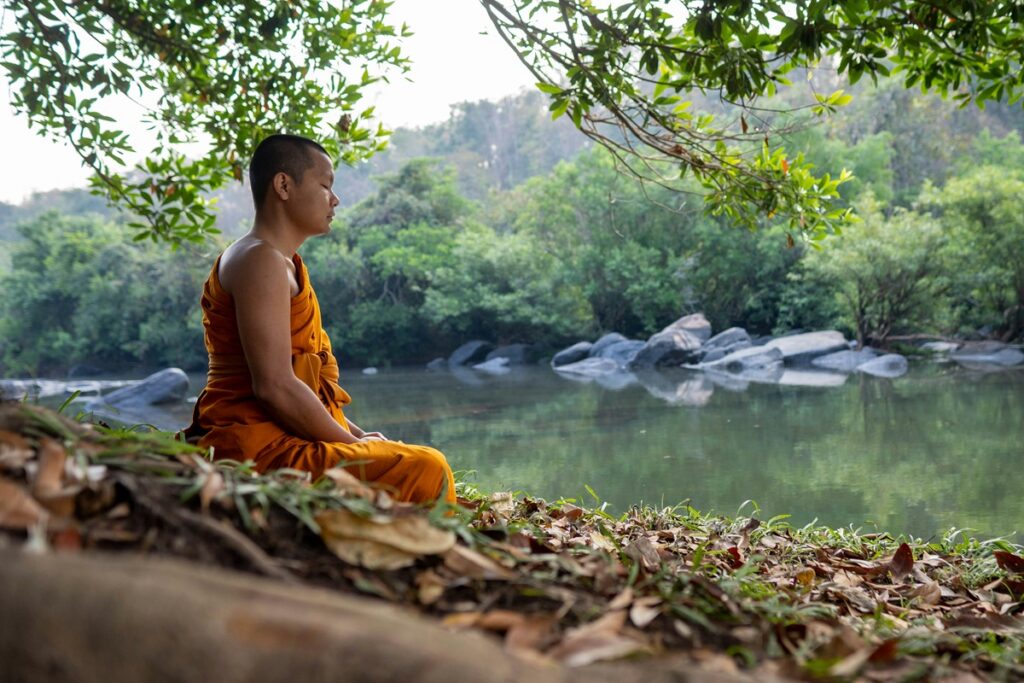
Recently, researchers looked at the brain of Tibetan Buddhist monk Yongey Mingyur Rinpoche, a meditation practitioner and teacher who has meditated for more than 60,000 hours. At the time of the study, Mingyur was 41, but his brain resembled that of a 33-year-old. The research, published in Neurocase, found his brain was aging slower than those who don’t meditate extensively. The researchers from the UW–Madison’s Center for Healthy Minds started working with Mingyur in 2002 to study the effects of long-term meditation, and collected info for the next 14 years.
“It raises the possibility that meditation practice may slow the rate with which the brain ages,” according to study author Richard Davidson. However, there are more benefits to meditation than just brain age. When studying brains of those who are frequent meditators, it appears their brains have been wired for happiness.
It’s worth a reality check here: “happiest man in the world” is a media nickname, not a scientific ranking. What the brain scans actually show is that years of trained attention leave measurable marks on the brain — not that monks have unlocked some happiness others can’t reach.
Previous research pointed to another monk, Matthieu Ricard, as one of the world’s happiest men. When researchers studied his brain while he was meditating, he produced gamma waves never before reported. Researchers also saw a lot more activity in his brain’s left prefrontal cortex than its right, signaling he has an abnormally large capacity for happiness and a reduced tendency for negativity.
Going Deeper on the Lessons
While you likely don’t have time to spend tens of thousands of hours becoming a master meditator, there are some lessons you can take away from those who do. Here’s how to zen your way to happiness.
Embrace change: “Up to now, we have this ancient lineage of meditation in Buddhism, so what we believe is that everybody can transform, everybody can change,” Mingyur told the Center for Healthy Minds at the University of Wisconsin-Madison.
Be grateful: Mingyur told the researchers his goal for meditating isn’t to halt aging, but rather to promote insight and happiness. And the research agrees — there are tons of happiness-boosting benefits of meditation. One study published in Mindfulness found those who engaged in daily meditation over nine weeks had significant gains in positive emotions. And more specifically, a 2026 review of mindfulness research pointed to gratitude as an especially promising focus for getting more out of the practice.
Be bored: For some, it can be hard to mediate because sitting in silence evokes feelings of boredom, something we often turn to scrolling to alleviate. Embracing boredom, whether through meditation or just sitting with it, can actually be a positive for your happiness. Research in the Creativity Research Journal found that people who did a boredom-inducing task beforehand were measurably more creative afterward — the kind of novelty that can nudge your mood up when it leads you to a new hobby or interest.
Help others: Giving back to your community will have a positive effect on those around, but also on you, research suggests. Whether you donate your time or make monetary contributions, researchers are finding these generous acts help people make connections. Further research in the journal Emotion found that people who practiced small acts of kindness reported feeling less down, anxious, and lonely over time.
The Takeaway
While research suggests those who spend their lives meditating are the happiest among us, there are some small things we can do to make a big impact on our happiness. Spending a little time meditating daily — and focusing on gratitude while you do it — can help change your outlook. Additionally, opening your mind to both change and boredom can help boost your mood, and you may even find a new, exciting hobby.
Bottom Line
Researchers found that over the course of many years, trained attention (like meditation) has measurable changes on brain activity. Adding a little meditation and gratitude into your wellness routine will go a long way to boosting happiness.