
Is Watermelon Low Calorie?

If something seems too good to be true, it probably is. But is watermelon the exception to the rule for dieters?
When it comes to counting calories, most people relate flavor to cost. Flavorful, delectable foods are often high-calorie — which is partially why people view calorie-controlled diets as restrictive. Most of the time, it’s a good rule of thumb.
But all rules have exceptions. Fruits are both sweet and healthful (in moderation). Watermelon in particular can feel like a cheat meal. Is watermelon low calorie? Yes, but that doesn’t necessarily mean you shouldn’t think twice about a third or fourth slice.
TL;DR
Yes, watermelon is low in calories. One diced cup has about 46 calories and is more than 90% water, so you can eat a generous bowl for very little. Most of those calories come from natural sugar, so portion and timing still matter more than the number itself.
Key Takeaways
- A cup of diced watermelon (about 152 grams) has roughly 46 calories, and it's more than 90% water.
- Is watermelon low calorie? Yes, but portion and timing matter.
- Watermelon's glycemic index is high (~72), yet its glycemic load per serving is low (~4–5).
- Most of watermelon's calories come from natural sugar, so a very large serving can still add up.
What the Research Says About Watermelon’s Calories and Nutrition
Shocking, but true: Watermelon is mostly water. In fact, over 90% of its mass comes from water content. The remaining 10% is almost entirely carbohydrates, fiber, and plant tissues like cellulose and pectin that give it physical structure.
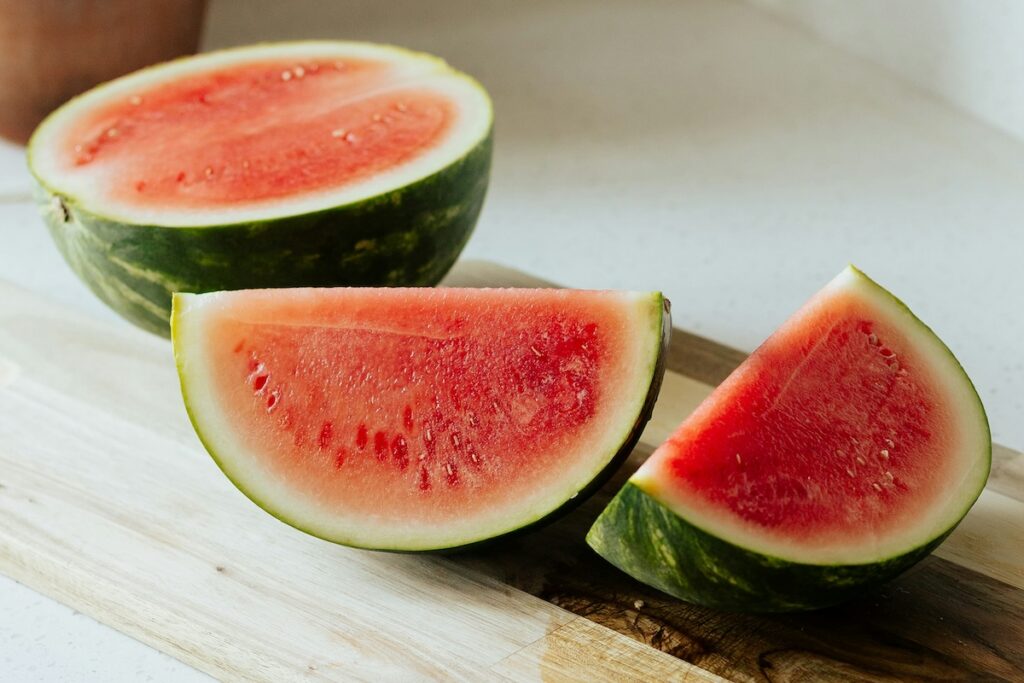
According to the USDA, a standard 100-gram serving of watermelon contains:
- Calories: 30
- Protein: 0.6 grams
- Carbohydrate: 7.6 grams
- Sugar: 6.2 grams
- Fiber: 0.4 grams
- Fat: 0.15 grams
If you’re having trouble visualizing, 100 grams of watermelon is about the size of a computer mouse. The calories in prepared desserts swing dramatically recipe-to-recipe, but just for context, a standard 100-gram serving of cheesecake has about 320 calories.
The sugar question: Watermelon’s glycemic index — a measure of how fast a food raises blood sugar—sits around 72, which sounds high. But the glycemic index only describes speed, not magnitude.
Glycemic load factors in the actual amount of carbohydrate in a real serving. Because watermelon is mostly water, a cup carries very few digestible carbohydrates. Watermelon’s glycemic load lands around 4 to 5, squarely in the low range.
In other words, that scary-sounding number softens once you account for how little sugar is actually in a serving.
Why Watermelon Is So Low in Calories
For the calorie-conscious, large portions of sweet treats are generally off-limits. Watermelon is the outlier; it’s flavor-rich and, relatively speaking, low-calorie. For anyone working hard to avoid calorie-laden desserts, watermelon is kind of like a cheat meal without the consequences.
And it’s due to a confluence of factors:
- Calorie Density: Watermelon is 90% water, and water has no calories. The calories in the fruit are thus dispersed across a large amount of food mass.
- Acidic Properties: Watermelon contains both malic and citric acids, which add a slight, tart “pop” to its flavor profile.
- Preparation: Watermelon is typically served cold out of the fridge.
And then there’s the psychology of it all. Watermelon has a reputation of being a delicious and refreshing summer fruit — a reputation that precedes itself in your brain.
Studies tell us that our expectations around food shape the experience of eating. Our pre-conceived thoughts about a food’s purpose, or even basic factors like shape, color, and price, literally influences our perception of taste.
Put plainly: We think of watermelon as a refreshing treat, so our brains go out of their way to perceive taste in a way that aligns with that expectation.
How Watermelon Compares to Other Fruits
Watermelon may be low calorie compared to sweetened desserts, but how does it stack up against other fruits? Here’s what 100 grams of different fruit get you in terms of caloric content:
- Banana: 90 calories
- Cantaloupe: 34 calories
- Mango: 60 calories
- Grapes: 69 calories
- Orange: 47 calories
Why is watermelon low calorie compared to other common fruits? It’s down to density. Banana, for instance, has much lower water content than watermelon.
This isn’t a tier list: Watermelon isn’t strictly better than banana unless you are only concerned about caloric content. Sure, you’ll save calories picking watermelon over banana, but different fruits have different nutrient profiles. Choosing a banana instead “costs more” in terms of calories, but you get far more of things like folate, niacin, and vitamin B6.
How To Enjoy Watermelon the Calorie-Smart Way
Your calorie intake determines the amount of weight you gain, lose, or maintain over time. However, tracking calories isn’t the only thing that affects the experience of losing or gaining weight.
First, remember that “low-calorie” is a contextual label. Watermelon has a low number of calories in a standard serving compared to processed foods made mostly of sugar. This makes it a great pick to snack on between meals, since you can eat a large amount and only add 100-300 more calories to your daily intake.
But you can overdo it with watermelon and potentially derail your weight loss efforts all the same. This balancing act applies to watermelon and cheesecake alike; you can just eat a lot more of the former before it makes an impact on your calorie deficit.
Here’s how you can make watermelon a regular part of your diet without going overboard on calories or upsetting your blood sugar too much.
Stick to a reasonable portion: Sugar adds up quickly. You don’t need a lot of it to satisfy your sweet tooth. If you’re using watermelon as a snack between meals, keep it to 500g or less. You’ll get more fruit than you think for less than 200 calories.
Prioritize whole fruit: Watermelon-flavored juices often mix in extra sugar and other additives. If you’re craving watermelon, go for the fruit itself if possible. This ensures you’re only getting natural sugars plus the water, fiber, and micronutrients.
Pair with protein: You can blunt the blood sugar-disrupting effects of high-GI carbs by eating watermelon with other macronutrients — protein in particular. Greek yogurt and granola both pair nicely with watermelon and provide a zap of protein as well.
Curious about other snacks people second-guess? See whether hummus is low-calorie.
If You’re Watching Your Blood Sugar…
Glucose, which your body synthesizes from the carbohydrates you consume, is your body’s preferred fuel source. You can technically do without glucose from food, sure — that’s the backbone of diets like keto or Atkins.
A normal serving of watermelon won’t send your blood sugar on a roller coaster. The low glycemic load sees to that. Eat a very large amount in one sitting, though, and you can get a bigger spike followed by a dip. Research suggests those dips are worth paying attention to.
A 2021 Nature Metabolism study that tracked blood sugar in more than 1,000 people found that larger post-meal glucose dips predicted increased hunger, a shorter wait until the next meal, more food at that next meal, and more total calories over the following 24 hours.
The spike itself is a normal insulin response. The crash that follows is the part that can quietly nudge you toward eating more.
What this means for you: Watermelon is a great between-meal snack. It’s low calorie and hydrating. If you’re trying to lose weight and struggle with managing hunger, avoid consuming too much watermelon at once, and ideally, have a balanced, high-fiber meal shortly after.
Frequently Asked Questions
One cup of watermelon (about 152 grams) contains about 46 calories. It’s more than 90 percent water, so a pretty sizable bowl still stays light.
Watermelon can be good for weight loss in moderation. It’s a relatively low-calorie fruit, making it a great option for a snack between meals. The high water content also hydrates you, which can help you feel fuller.
Yes, watermelon has a lot of sugar, relatively speaking. The vast majority of its calories come from simple carbs like fructose. That said, as it is generally low in calories, you’re only eating about 10 grams of sugar in a 152-gram cup.
Yes, watermelon is okay to eat if you have diabetes, but you should be mindful of how much and how often. Its glycemic index is high, but the glycemic load per serving is low, so a normal portion has a modest effect on blood sugar. Always check with your care team to be safe though.
There’s no fixed limit, but a snack-size portion of around 500 grams keeps you under 200 calories while still feeling generous. Research suggests watermelon works best for weight loss when it replaces a denser, sweeter snack rather than adding to what you already eat.
Bottom Line on Whether Watermelon Is Low Calorie
Watermelon, like most fruits, is low-calorie. The high water content and large mass make it an efficient choice for anyone who is trying to monitor calories while keeping their sweet tooth in check.
Eating large amounts of watermelon, or any high-sugar food, will temporarily spike your blood sugar. The subsequent “crash” may make you feel hungrier or more irritable than you’d otherwise be, so be judicious about how often you reach for a slice.
There’s nuance to food preferences, but the golden rule still applies: Everything in moderation.
Experts Who Contributed
- Jake Dickson BS-EXS, NASM-CPT, wrote this article.
- Lauren Keary, NASM-CNC, reviewed this article for accuracy.