High-Protein Overnight Oats: Get 30+ Grams Without the Guesswork

Make breakfast a breeze with these high-protein overnight oat recipes.
Nothing sets up a successful day like a proper breakfast, and nothing kills your chances faster than having to spend a lot of time in the kitchen before you head out the door. Overnight oats check both boxes; they require almost no prep and you can customize them to suit your nutritional needs.
If your protein intake is a priority (and it should be), high-protein overnight oats belong in your breakfast rotation. Oats, protein powder, and the toppings of your choosing — prepping the right protein oatmeal prior to waking up takes feeding friction off your plate in the morning. Here’s how to get it right.
TL;DR
High-protein overnight oats are the easiest way to bank 30 to 40 grams of protein before you’re even fully awake. Start with rolled oats, milk, and a scoop of protein powder, then stir in Greek yogurt, cottage cheese, chia, or nut butter. Prep a few jars and breakfast handles itself.
Key Takeaways
- High-protein overnight oats recipes can deliver up to 40 grams of protein with the right combination of ingredients.
- Greek yogurt, whole milk, and whey powder do most of the heavy lifting.
- Chia seeds, nut butter, and cottage cheese add protein and have staying power, while brown sugar or honey are there purely for flavor.
- You can prep overnight oats up to 5 days in advance.
How to Make High-Protein Overnight Oats
The idea behind meal prepping overnight oats (and meals in general) is simple: It’s easier to cook when you aren’t on the clock. Rushing through a meal is a sure-fire way to get sloppy about your ingredients. For the health-conscious, this can mean falling short of getting enough essential nutrients, like protein.
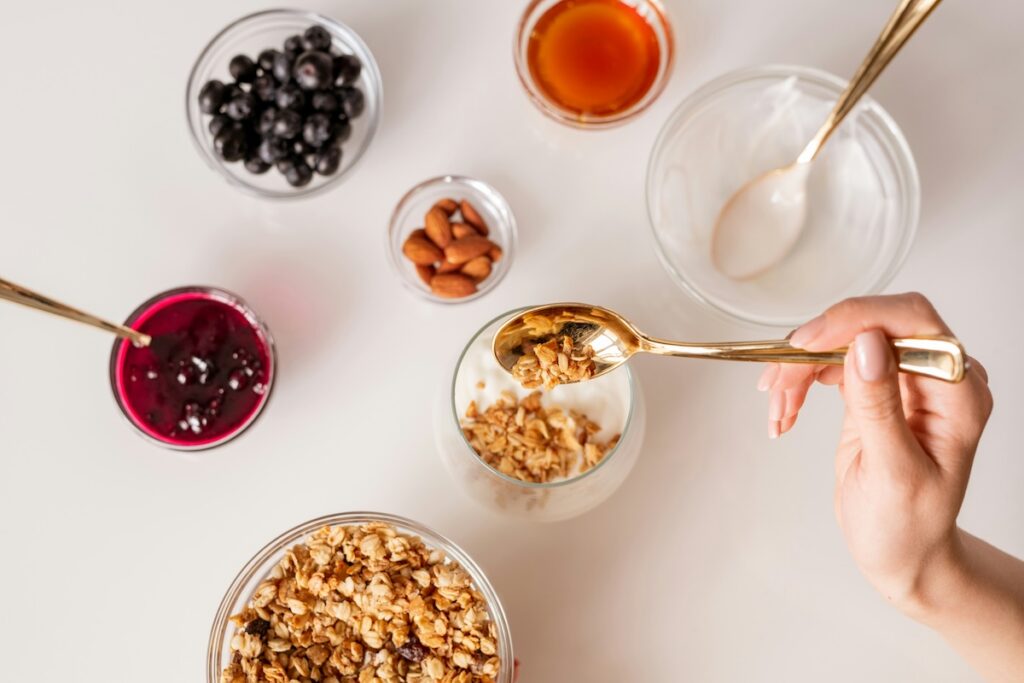
What you need: Half a cup of rolled oats, up to a cup of your preferred milk, and a scoop of protein powder. Mixing these three together in a jar or bowl lands you between 30 and 40 grams of protein — and that’s before any extras.
Double down: You can further increase the protein content of your overnight oats by adding one or more of the following:
- Greek yogurt does double-duty; it adds another 10-ish grams of protein, and it can also serve as a milk substitute if you like a thicker consistency.
- Cottage cheese does the same thing and is just as protein-dense — around 7 grams per quarter cup, or 13-plus grams for a half-cup scoop.
- Chia seeds inject another 3 or so grams, plus micronutrients like zinc and iron.
- Nut butter like peanut or almond butter piles on another 7 grams or so per two tablespoons, plus healthy fats that slow digestion and help keep you full.
For flavor: Brown sugar, sugar-free syrup, honey, and cinnamon are popular choices. You can also go with fresh mixed berries and turn your overnight oats into something closer to a protein parfait.
Putting it together: Add your oats, milk, and protein powder to a jar or airtight container, along with any mix-ins you’re using. Stir well — protein powder likes to clump, so make sure it’s fully dissolved — then seal it and refrigerate for at least 6 hours, or overnight. In the morning, give it a stir, add any toppings, and eat it cold straight from the jar.
On texture: Protein powder, whole milk, Greek yogurt, cottage cheese, and nut butter all thicken the consistency. As does refrigeration — if your oats come out of the fridge too dense, splash some milk on top and stir thoroughly.
High-Protein Overnight Oat Flavor Variations to Try
Peanut Butter Banana Overnight Oats: Keep the base recipe and add a tablespoon of peanut butter plus a chopped banana.
Berry Vanilla Overnight Oats: Go for vanilla protein powder, add a teaspoon of vanilla extract, and sprinkle mixed berries on top.
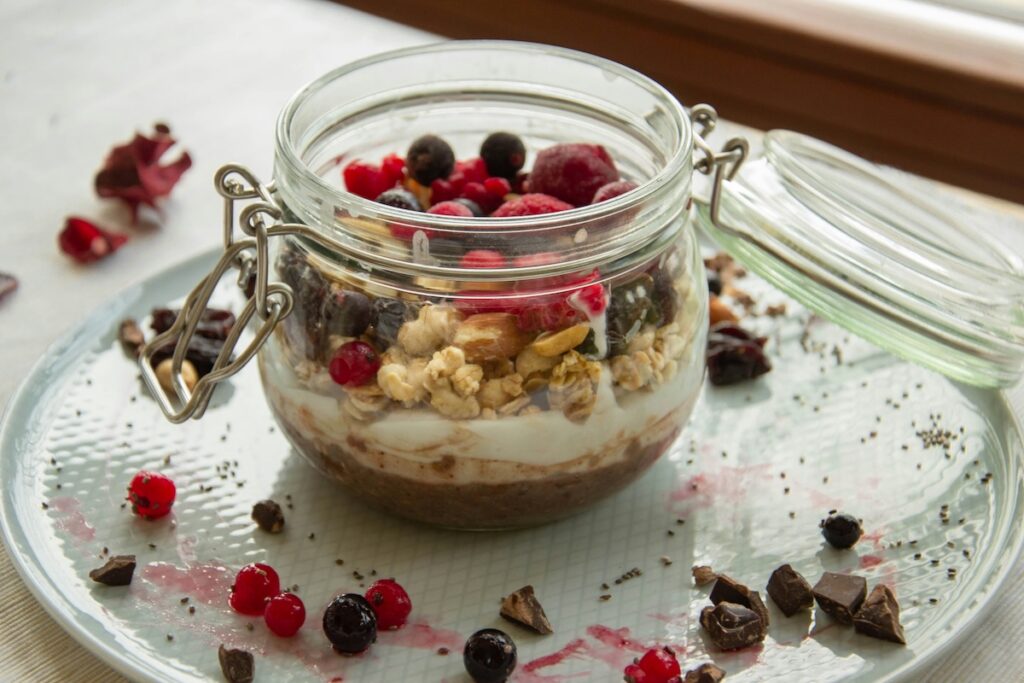
Chocolate Overnight Oats: Use chocolate or fudge-flavored protein powder. To make it taste more like dessert than breakfast, chuck a few chocolate chips on top, or lightly drizzle chocolate syrup.
Apple Cinnamon Overnight Oats: Flavorless protein powder works best, but vanilla won’t clash. Slice or chop up a green apple and mix, then sprinkle cinnamon powder and brown sugar on top.
The beauty of high protein overnight oats is in its customizability. You can basically make them taste however you want by swapping ingredients you probably already keep in your fridge or pantry.
Frequently Asked Questions
You can make overnight oats high in protein by using protein powder as a base ingredient. This immediately injects 20+ grams of protein into the dish. From there, using milk, cottage cheese, Greek yogurt, or a combination levels up the protein content further.
High-protein overnight oats contain between 30 and 40 grams of protein depending on how you prepare them. With protein powder as a base ingredient, you’re already starting between 20 and 30 grams.
Yes, you can add protein powder to overnight oats. In fact, protein powder should be a base ingredient in high-protein overnight oat recipes if you want to guarantee 30+ grams of protein per serving.
The best protein to add to oats is protein powder, if you’re concerned about sheer protein content. If you’re just looking to add a bit more protein and can’t stand the taste or texture of powder supplements, go for Greek yogurt or cottage cheese instead. You can also add these alongside the protein powder if you want to up your protein content even more.
Bottom Line on High-Protein Overnight Oats
Too many people skip breakfast because they don’t have the time to make something before they’re out the door in the morning. A couple of smart add-ons (protein powder, Greek yogurt, cottage cheese, chia seeds, nut butter, etc.) to a bowl of oatmeal turn a breakfast staple into a genuinely filling, high-protein meal you can prepare the night before and not have to worry about while you’re rushing out the door. High-protein overnight oats are a great go-to breakfast meal-prep option for anyone who typically finds themself on the go first thing in the morning. And once breakfast is handled, these high-protein lunch ideas keep the streak going.
Breakfast handled? Our high-protein lunch ideas cover the next meal, with eight options that each clear 25 grams.
Experts Who Contributed
- Jake Dickson BS-EXS, NASM-CPT, wrote this article.
- Lauren Keary, NASM-CNC, reviewed this article for accuracy.