
The Early Signs of Hearing Loss — and the Surprising Link to Dementia

Hearing loss was found to be linked to dementia, according to a new study.
Our ears weren’t originally designed to withstand headphones, crowded public transportation, and Travis Scott concerts. And the reality is that hearing loss is no longer a symptom of old age. Noisy environments — of which there are plenty in the modern world — chip away at our hearing, and signs of an issue aren’t always obvious.
Aside from asking others to repeat themselves more often than you’d like, new research shows that deteriorating hearing can affect your brain health. Here’s what you need to understand the synergistic relationship between your ears and brain, and how to spot and prevent hearing loss early.
What You Should Know About Hearing Loss
This isn’t a small problem. More than 50 million Americans have some degree of hearing loss, according to the Hearing Loss Association of America (HLAA) — making it the third most common chronic physical condition in the country, and what the group calls a growing public health crisis. Yet many people wait years to do anything about it. On average, those who treat their hearing loss wait about nine years to get their first hearing aid, partly because of the stigma around hearing aids and partly because the damage can be so subtle.
That subtle damage can be as simple as often asking others to repeat themselves, turning the TV up louder than you used to (or than your partner is comfortable with), or feeling like you can’t hear well in moderately noisy places like a restaurant or a train. If you’re not sure where you stand, ask friends or family whether they’ve noticed — and if you feel like you’re consistently the only one struggling to hear in a group, that’s a good sign to get your ears checked.
Going Deeper: The Brain Connection (and How to Protect Your Hearing)
Sound enters through your ears, but it’s processed in your brain. When your ears are damaged, your brain may not get enough sound — and over time, that can lead to what’s called auditory deprivation.
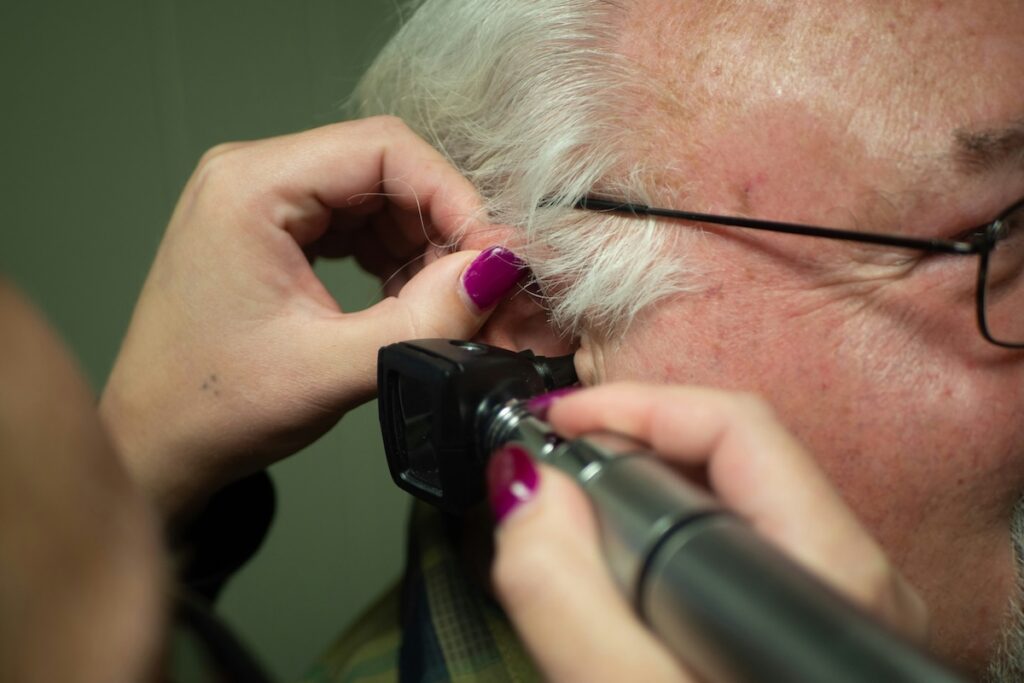
Credit: Unsplash/Anthony Camerlo
A JAMA Network Open study of Framingham Heart Study participants found that hearing loss was associated with smaller brain volume, poorer executive function, and a 71% greater risk of dementia. For people who carry a genetic risk factor for Alzheimer’s (the APOE ε4 gene), that association was even stronger. Researchers theorize that when the brain gets less auditory input, it works harder to process the sounds it does receive. Hearing loss can also lead to social isolation and depression, which is itself a risk factor for dementia.
Audiologists generally suggest a baseline hearing test in your 30s or 40s, especially if you’re around a lot of noise for work (like construction) or fun (like frequent concerts). From there, testing every couple of years is reasonable, with yearly checks if you already have trouble hearing.
As for what you can do to protect yourself day-to-day:
- Don’t listen to headphones at a volume above 60% or for longer than 60 minutes.
- Wear earplugs around sustained loud noise — concerts, fireworks, power tools, motorsports, and yard work all qualify.
- Don’t stand close to speakers, and stand at least 500 feet away from concert speakers.
- If you’re in a loud environment, take a break and walk away for a few minutes. And if your ears start ringing, it’s time to leave (if possible).
The Takeaway
Your ability to hear is precious, and research is revealing that it may also play an integral part in keeping our brains healthy and young. Implement those small habits now and occasionally check in with an audiologist to ensure your ears are in good shape. It’s worth treating your hearing like your heart health or your vision — something to check before there’s an obvious problem.
Bottom Line
Hearing loss is one of the most common chronic conditions in the United States and is tied to cognitive and social decline. Though the link to dementia is an association, and you shouldn’t let it keep you awake at night, be proactive about protecting your hearing and seek help if needed.