Does Cycling Build Glutes — and If Not, What Does?

Cycling does a lot for your lower body, but that doesn’t mean it’s a direct route to glute gains.
If you’ve ever hit up an indoor cycling class or done a lengthy ride on a road bike, you’ll know from experience — and soreness — that cycling puts your whole lower body to work. With each pedal stroke, you might even be able to feel your quadriceps, calves, hamstrings, and glutes engage to propel you forward or through the next song in class. Given all that effort, you might assume that you’re strengthening and building muscle in all those areas — but that’s not necessarily the case, especially when it comes to the glutes.
So, does cycling build glutes? It can, but it’s not guaranteed. While your glutes are firing to help you pedal, cycling doesn’t offer the best stimulus for glute muscle growth. Why, and what can you do to intentionally grow your glutes? Answers to all your questions, ahead.
TL;DR
Cycling does work your glutes with every pedal stroke, but it’s not the most effective way to make them bigger. Adding resistance, hills, sprints, and standing efforts can increase the demand cycling places on your glutes, but it’s still not as effective as strength training for building muscle mass. If you want to grow your glutes, incorporate targeted resistance training into your workout routine.
Key Takeaways
- Cycling works your glutes, but it tends to build lower-body muscular endurance rather than add noticeable size.
- Research shows that cycling can build quadriceps muscle over time, but there isn’t much evidence that it can substantially grow glutes.
- During cycling, glute activation tends to increase as you produce more power and during standing efforts, sprints, and very steep climbs.
- How much muscle you gain from cycling depends on factors like your training status, workout intensity, consistency, and genetics.
- Progressive resistance training is the most reliable way to build noticeable glute muscle and can complement cycling in your workout routine.
What the Research Says About Cycling and Glute Activation
Cycling engages the entire lower body, including the glutes, but it places particularly high demands on the quadriceps (aka quads) — a group of four muscles on the front of your thigh that extends your knee and produces much of the force created during the downstroke. As a result, most research on cycling and hypertrophy (i.e., muscle growth) has measured the thighs or quads rather than the glutes.
Research suggests that cycling can build thigh muscle, but it tends to happen slowly: Measurable growth was more common in studies that included at least 40 training sessions. There’s also some observational evidence that long-term cycling may help maintain glute muscle mass. In a small 2023 study, recreationally trained middle-aged male cyclists had larger gluteus maximus and medius muscles than their inactive peers. That said, it’s not possible to prove that cycling alone caused those differences.
In general, though, resistance training is the more reliable approach for building muscle. One small trial conducted in untrained men directly compared lower-body resistance training with a progressive program of moderate- and high-intensity cycling, and found that 10 weeks of resistance training measurably increased quadriceps size, whereas cycling did not. Caveat: This can’t tell us how the two types of training might compare for glute growth, specifically.
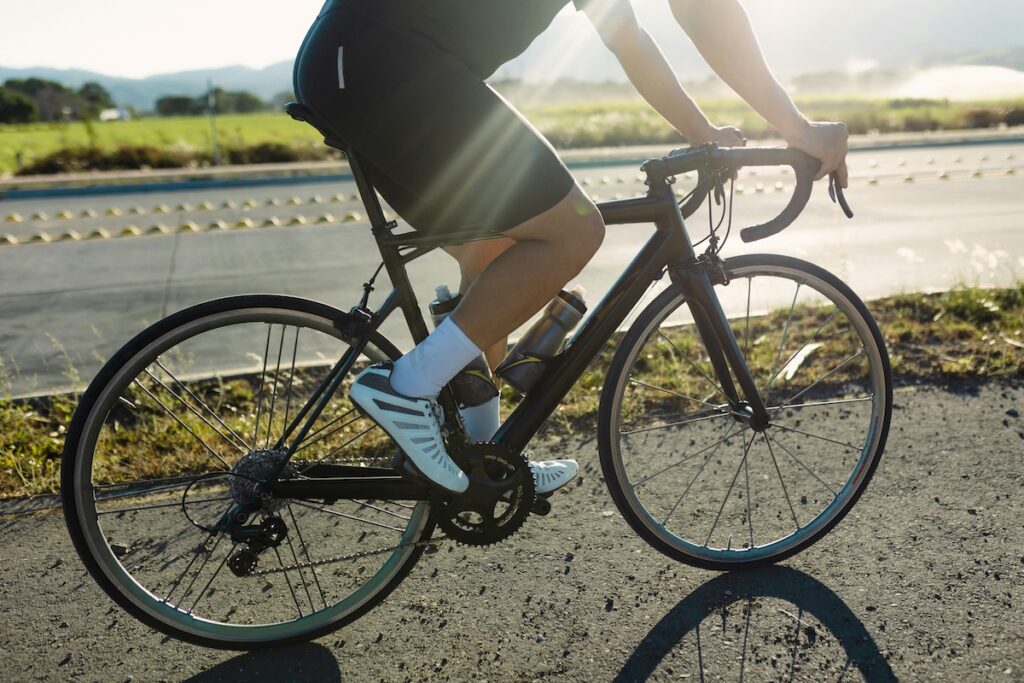
Some cycling variables can increase how strongly and how long the glutes are activated, although research hasn’t established whether those changes translate into meaningful glute growth. As cyclists produce more power — the combination of how hard they push against the pedals and how quickly they turn them — glute activation tends to increase, so high-power efforts such as sprints can make your glutes work harder than easy, steady pedaling. Shifting your position from sitting to standing can also make a difference.
A small 1998 study found that when cyclists pedaled on an 8% incline, standing produced greater and more prolonged glute activation than pedaling the same uphill while seated. A later 2008 study reached a similar conclusion: When trained cyclists rode on 4%, 7%, and 10% inclines, standing increased the intensity and duration of gluteus maximus activation, while changing the slope did not. If you hit a steep enough hill, however, your glutes may start to feel it; in a 2012 study of trained mountain bikers, gluteus maximus activity was 12% higher while cycling on a 20% incline than on level ground. Meanwhile, no change was found at a 10% slope.
In other words, your glutes are certainly working when you ride — and they work harder when you stand, sprint, or tackle especially steep hills. However, greater muscle activation doesn’t necessarily mean greater muscle growth, and there isn’t enough evidence to know how cycling impacts glute muscle gains for sure.
Why Cycling Works the Glutes (Up to a Point)
The primary job of your gluteus maximus (the largest glute muscle) is to extend your hips: meaning, it straightens and opens your hips, pulling your leg backward or moving your torso away from your thighs. Imagine standing up from a deadlift or kicking your heel backward while standing upright — that’s your gluteus maximus working.
When you’re cycling, your glutes are typically working the hardest from just before the very top of your pedal stroke through roughly the first two-thirds of the downstroke, helping to push the pedal down and away from your body. But they share that job with several other lower-body muscles, including your quads, hamstrings, and calves. As a result, most cycling workouts don’t challenge the glutes as directly as strength training does, which is why they’re better at building endurance than noticeable strength or size.
As with any workout, though, your body needs to be sufficiently challenged to make fitness gains. That’s where intensity comes in. If you’re pedaling leisurely without much resistance or speed, your glutes won’t be working very hard (or any other muscles, for that matter). Increasing your effort by switching to a harder gear, going up a hill, moving your legs faster, or pushing harder on the pedals will increase the demand on your glutes. Think of it like lifting a 1-lb weight; you probably won’t feel challenged, and as a result, your muscles don’t get the push they need to level up.
How to Cycle for Stronger Glutes
There are some small adjustments you can make to help tap into your glutes during every ride. These tips can help you recruit your glutes more effectively and make them work harder with every pedal stroke.
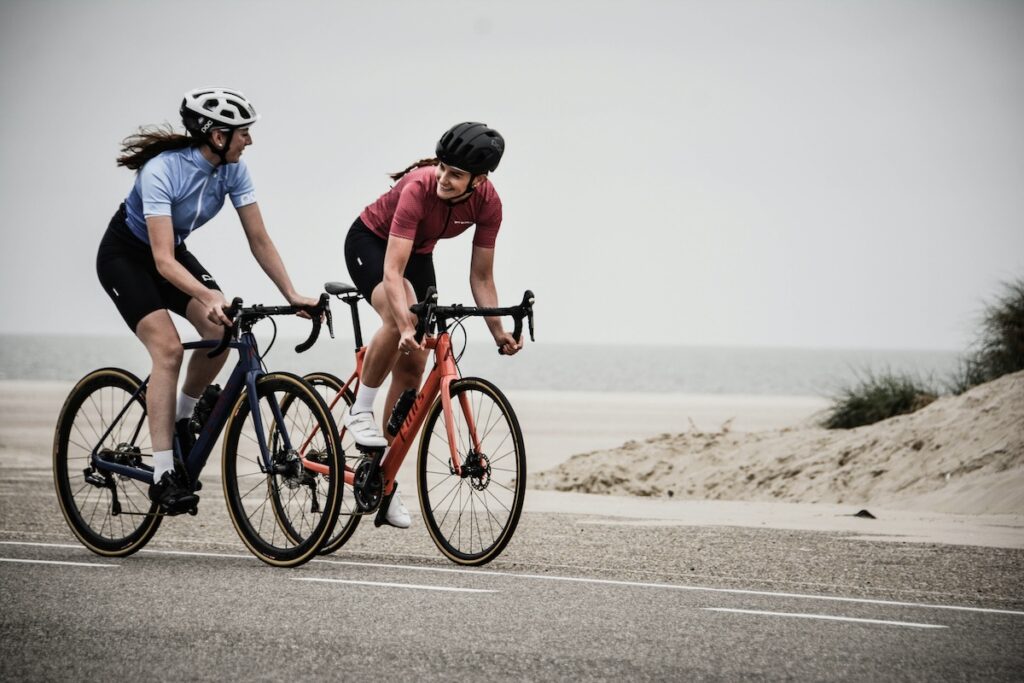
- Warm up with glute activation drills, such as clam shells, glute bridges, and donkey kicks. They can help you focus on engaging your glutes and warm up the muscles before your ride.
- Watch your posture. Aim to keep your pelvis and spine in a stable, neutral position rather than rounding your lower back or tucking your hips under, which can make it harder for your glutes to contribute effectively to each pedal stroke.
- Add resistance to increase your power production, which is linked to increased glute activation. Increase the gear or resistance level while maintaining a sufficient cadence (pedaling speed) to keep your power output high.
- Climb very steep hills, which recruit the glutes to a greater degree than riding a flat road.
- Sprint during interval workouts, using enough resistance and cadence to produce a high-power effort.
- Stand out of the saddle on climbs to increase glute activation compared with staying seated.
If you’re new to cycling, don’t try all this at once. Get comfortable riding and build a base of strength and endurance, gradually increasing your effort before you layer in sprinting work, steep climbs, heavy resistance, or riding out of the saddle. For more guidance, consult a cycling coach or other fitness professional who can help you progress.
How to Actually Build Bigger Glutes
If your main fitness goal is to grow bigger glutes, you’ll want to focus on resistance training (aka strength training), which is the most effective way to promote muscle hypertrophy. This doesn’t mean you have to ditch cycling completely; it can complement your strength work and help you reach the recommended amount of cardio exercise (150 minutes of moderate-intensity or 75 minutes of vigorous aerobic activity) per week.
To encourage muscle growth, the American College of Sports Medicine (ACSM) recommends targeting each muscle group with about 10 sets per week, ideally spread across two or more strength sessions. You’ll want to prioritize moves that target your glutes, including squats (particularly deep squats) and hip thrusts, which have been demonstrated to promote gluteal hypertrophy. Other research studying glute activation during common strength training exercises found that step-ups, barbell hip thrusts, split squats, lunges, traditional deadlifts, barbell squats, and stiff-legged deadlifts all demonstrated high levels of activation — though, remember that activation doesn’t directly equate to muscle gains.
To continue to see growth, the key is to progressively challenge your muscles by increasing the number of sets, reps, weight you’re lifting, or difficulty of the exercises you’re doing over time. It’s not necessary to pick up super heavy weights, but it is important that you feel challenged by the strength work that you’re doing. (A handy rule of thumb: You should finish each set feeling like you could only do a couple more reps with good form.)
And to ensure you’re building balanced, functional strength, don’t only resistance-train your glutes. The ACSM recommends targeting all major muscle groups in your body at least twice per week, whether with your bodyweight, resistance bands, weights, or another form of resistance. Finally, stick with it. In the glute-specific studies mentioned above, measurable growth occurred after about nine to 10 weeks of consistent training.
What the Experts Recommend About Cycling for Glutes
Just because cycling isn’t the optimal training method for building glutes doesn’t mean it can’t challenge them, build lower-body endurance, and contribute to a more functional — and muscular — lower body.
If you’re untrained (meaning, you’re a beginner or returning to exercise after a long break), you may see some lower-body muscle gains from cycling alone, as long as you’re sufficiently challenging yourself. However, if you’re already exercising and want to achieve serious, visible muscle gains in your glutes, you’ll want to include at least two strength-training days per week in your routine and slot your cycling workouts around them.
Frequently Asked Questions
Cycling may make your butt look slightly bigger if it helps to build some glute muscle, especially if you’re new to training or regularly riding at a high resistance — but substantial muscle growth isn’t guaranteed. If cycling helps you lose body fat, it could also have the opposite effect.
Yes, a stationary bike can effectively work your glutes. Cycling can improve muscular endurance throughout your lower body and help build some strength, especially if you’re not already exercising regularly. Standing efforts, high-power sprints, and steep climbs can increase glute involvement while also boosting cardiovascular fitness.
Cycling does work your glutes, but it’s not the most reliable way to build substantial muscle. To do that, prioritize progressive strength training, aiming for about 10 challenging sets per week targeting your glutes, and gradually increasing the load, reps, sets, or exercise difficulty as you get stronger.
Both. Every pedal stroke recruits your glutes along with your quads, hamstrings, and calves, so it’s more than a leg workout. But your quads do the biggest share, which is why cycling tends to develop the thighs more noticeably than the glutes unless you add resistance and standing climbs.
Bottom Line on Whether Cycling Builds Glutes
Cycling is unlikely to build substantial muscle in your glutes, but it can still give them a meaningful workout and support lower-body endurance. To increase glute activation during your next ride, you can pursue high-power efforts and stand up out of the saddle, though strength training is a more reliable way to build your glutes than cycling alone. For more help chasing specific fitness goals, seek out a personal trainer or other fitness professional who can help create a plan that’s personal to you.
Experts Who Contributed
- Lauren Mazzo, ACE- CPT wrote this article.