What Is Hormonal Weight Gain? Signs, Causes, and How to Lose It

Excess fat around your midsection might be due to an imbalance of hormones rather than calories.
Most people assume belly fat is caused by eating too many calories or not performing enough crunches. While the former is possible and the latter is unlikely, it might be neither. The extra padding in your midsection might be due to a hormonal imbalance.
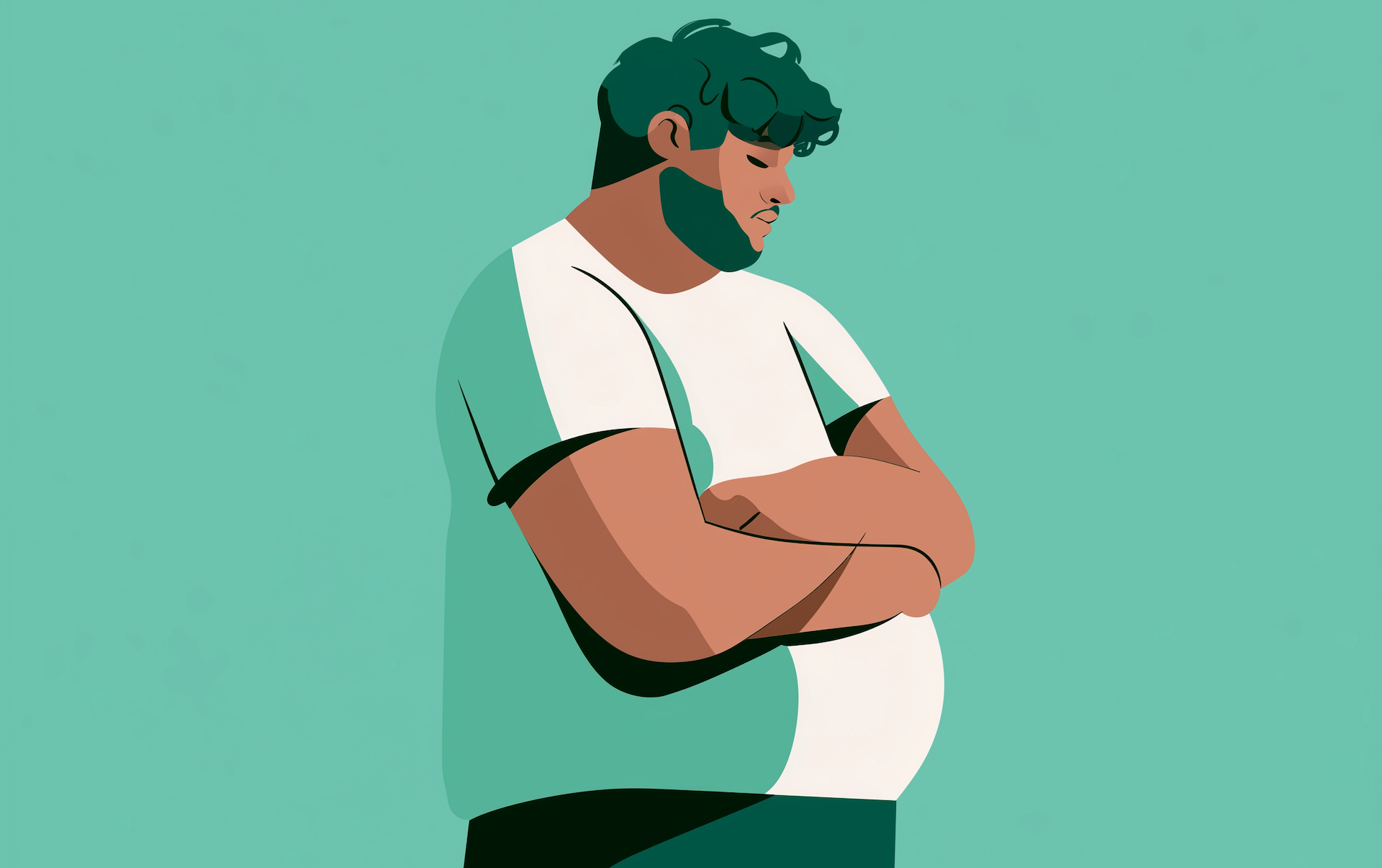
Hormonal weight gain is a real thing, though it is more accurately referred to as abdominal fat redistribution or visceral adiposity. In the simplest terms, hormonal weight gain — sometimes called a hormonal belly — is when fat accumulates in the midsection rather than around the periphery of the body (e.g., hips, thighs, glutes). There are downsides to accumulated fat in the midsection, such as increased cardiovascular risk, but which type of fat is there matters to determine likely health outcomes.
Want to know which hormones are driving your weight gain? The All Healthy Hormonal Profile takes just a few minutes and shows you which of your hormones may be steering fat toward your midsection.
What You Should Know About Hormonal Weight Gain
Hormonal weight gain often shows up as a shift in body composition, typically indicated by lower lean body mass, skeletal muscle mass, and body water, in addition to increased fat in the midsection. There are two types of fat, and their relation to hormonal belly needs to be understood.
The first is subcutaneous fat, the adipose tissue that lies just beneath the skin throughout the body. It’s the kind that you can grab with your hands or pinch with forceps to broadly calibrate body fat percentage. Subcutaneous fat insulates the body from heat and cold, among other functions.
Excess subcutaneous fat can have adverse effects, including higher blood pressure and cholesterol, but it is generally considered less harmful than excess visceral fat.
Visceral fat sits deep in the intra-abdominal cavity and wraps around the organs (e.g., stomach, spleen, small intestine, pancreas, etc.). You might know of visceral fat from its negative branding, but that’s primarily when there is an excess of it.
Visceral fat cushions those organs and connects the endocrine system, which comprises the glands that secrete hormones into the bloodstream, and the immune system. When there is too much of it, however, there is an increased risk of heart disease, type 2 diabetes, and inflammation.
Visceral fat is more dangerous than its subcutaneous counterpart because the former drains free fatty acids and inflammatory substances into the liver. Too much of that can lead to fatty liver disease and other health complications.
All that is to say, hormonal weight gain may be something you can identify by appearance, but it is not a clinical diagnosis. What ultimately matters for your health is identifying what is causing the hormonal belly in the first place.
Going Deeper on What Drives Hormonal Weight Gain
You have likely heard of cortisol and know it’s undesirable. It’s not a reach to suggest that it’s better to reduce “the stress hormone” where possible. Elevated cortisol levels can drive hormonal weight gain for several reasons.

Panminerva Medica suggests visceral fat builds up as the body’s adaptation to chronic stress. And it may run both ways — older work in Obesity Research argues visceral fat itself feeds the cycle, since it’s tied to a tangle of endocrine aberrations (read: hormones out of whack).
Estrogen plays a role, too. As women move through perimenopause and menopause, estrogen drops, and that shift nudges fat storage from the hips and thighs toward the midsection. The menopausal transition is tied to a measurable rise in abdominal fat, even when overall weight stays fairly steady.
Insulin is another driver. When the body becomes insulin resistant, it stores more fat centrally, around the organs — exactly the visceral fat that defines a hormonal belly. It’s part of why blood-sugar swings and midsection gain often show up together.
Thyroid problems and polyendocrine metabolic ovarian syndrome (PMOS — previously polycystic ovary syndrome or PCOS) can factor in as well. An underactive thyroid can slow metabolism and drive weight gain, and PMOS is linked to insulin resistance and central fat storage. These aren’t things to self-diagnose — if you suspect either, get bloodwork and talk to a doctor.
If you have unusual fat gain in your midsection despite steady sleep and otherwise normal day-to-day habits, during an extended period of unusually high stress, or during perimenopause, if you notice heavier fatigue or stronger cravings, it’s possible that you are enduring a hormonal imbalance. Getting it checked is a worthwhile safety measure.
You can’t spot-reduce belly fat — no amount of crunches targets that area on its own. Losing fat overall through training and smart eating does shrink visceral fat, but if a hormone is genuinely out of balance, that piece may need a doctor’s help too.
The Takeaway
Higher stress can disrupt your hormone balance, which could lead to excess visceral fat around your midsection. Since targeting that belly fat through localized training is impossible, focus on easing the drivers of the hormone imbalance in the first place: stress management, quality sleep, strength training alongside daily movement, and a protein- and fiber-forward diet to stabilize blood sugar. Consistency over the long-term will likely yield the best results.
Bottom Line
Your hormones guide where your body stores fat. Your body composition could very well be more influenced by how well you sleep and how stressed you are than by how many hours you spend in the gym or how many calories you cut in the kitchen.
Hormonal weight gain will differ from person to person because each person’s hormone levels are different. The fixes are gradual habit changes and are best identified with a doctor’s help. And as always, this article is for informational purposes and isn’t a substitute for medical advice — always speak with a physician if you have concerns about weight gain in your midsection.
Your hormones are personal, and your plan should be too. Take the All Healthy Hormonal Profile to pinpoint your own hormone drivers and get a tailored starting point for reaching your goals.