How to Build Your Upper Glutes: 5 Exercises for the Shelf

You cannot completely isolate your upper glutes, but the right mix of hip extension, abduction, and progressive overload can shift more work there.
Lots of women — and men — want rounder, stronger glutes. They help you fill out a pair of jeans, but also produce the hip drive you use to run, climb, jump, and lift. Building bigger glutes generally comes down to progressively overloading exercises like squats, deadlifts, hip thrusts, and leg presses. Still, it can be frustrating to train those movements consistently and find that the upper, outer part of your glutes remains relatively flat.
Learning how to build your upper glutes requires a slightly more targeted approach. That upper “shelf” is shaped largely by the gluteus medius and the upper fibers of the gluteus maximus, which contribute to moving your leg out to the side and stabilizing your pelvis. Research suggests that certain exercises can place more emphasis on those regions, even though you cannot completely isolate them. Ahead, we’ll explain what the evidence actually shows and how to build a more well-rounded workout for more well-rounded glutes.
TL;DR
To build your upper glutes, combine progressively overloaded squats, deadlifts, hip thrusts, and leg presses with hip abduction exercises that move your leg out to the side. Those movements can place more emphasis on the gluteus medius and upper fibers of the gluteus maximus, helping create a fuller upper “shelf.”
Key Takeaways
- To build your upper glutes, combine exercises that extend your hips with movements that raise your legs laterally to emphasize the gluteus medius and upper glute-max fibers.
- Research suggests that exercise choice can bias different regions of the glutes, although regional activation does not guarantee regional growth.
- Hip abductions, frog pumps, single-leg Romanian deadlifts, and clamshells provide more direct upper glute work than squats alone.
- To build fuller upper glutes, you still need progressive overload, challenging sets, adequate recovery, and consistent training over time.
What the Research Says About Building the Upper Glutes
There’s enough research to comfortably say that different exercises can emphasize different regions of the glutes. A 2020 systematic review and meta-analysis of EMG studies, published in the International Journal of Sports Physical Therapy, found that exercise selection influenced which segments of the gluteus medius and minimus were most active. A smaller controlled laboratory study also found that exercises involving hip abduction and external rotation recruited the upper portion of the gluteus maximus more strongly than its lower fibers.
So, yes, you can place more emphasis on different areas of your glutes — but there are important caveats. These studies measured short-term muscle activation, not long-term muscle growth. EMG (electromyography) can tell researchers that a muscle or region is working during an exercise, but it cannot prove that repeatedly performing that movement will make that exact area grow more effectively over time.
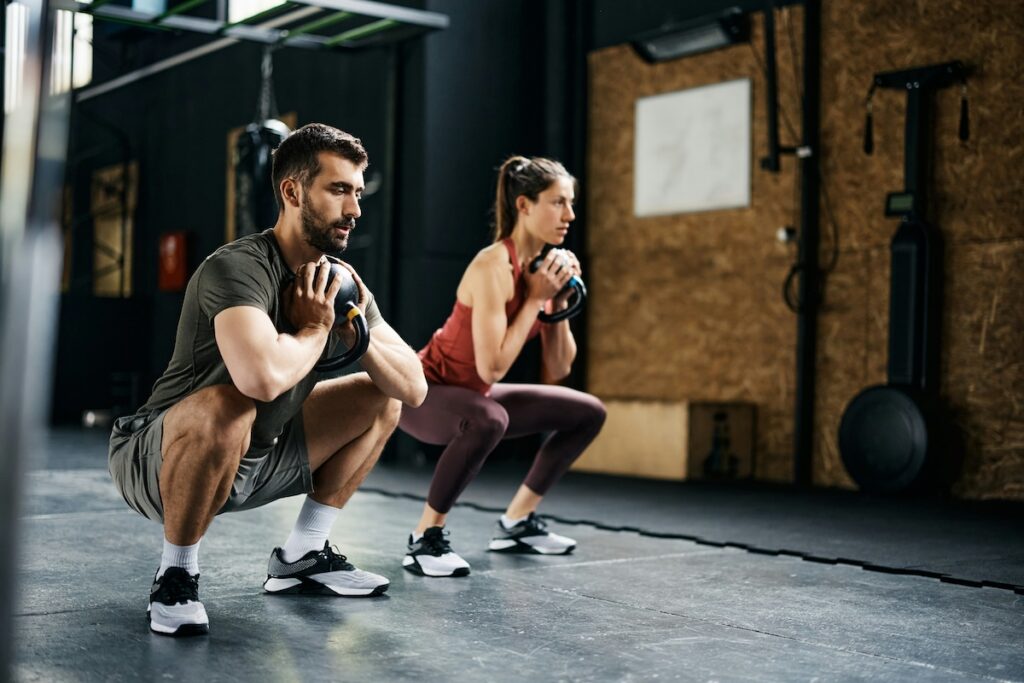
It would also be inaccurate to suggest that skipping abduction and hip rotation exercises guarantees less upper-glute growth. Compound movements such as squats, deadlifts, hip thrusts, and leg presses still train the gluteus maximus, including its upper fibers. A 2025 systematic review and meta-analysis of resistance-training studies found that several loaded lower-body exercises can increase gluteus maximus size, reinforcing that progressive overload remains the foundation of glute growth.
In other words, you cannot completely isolate your “upper” glutes, but smart exercise selection can place a bit more of the work toward that region. Build your program around progressively overloaded compound exercises, then add one or two upper-glute-focused movements to emphasize the upper, outer area. Genetics will still influence your final shape and how pronounced that “shelf” becomes.
Why the Upper Glutes Need Their Own Moves
Your glutes are composed of three muscles: the gluteus maximus, gluteus medius, and gluteus minimus. The gluteus maximus is the largest and produces much of the hip drive used during deadlifts, hip thrusts, and squats. The smaller gluteus medius and minimus sit toward the outer hip and help stabilize your pelvis and perform hip abduction, which means moving your leg away from your body’s midline.
The upper “shelf” is shaped largely by the gluteus medius and the upper fibers of the gluteus maximus. Squats, hinges, and hip thrusts help build the larger central mass of your glutes, while exercises that directly challenge hip abduction place more emphasis on that upper, outer corner.
That does not mean compound lifts train only the gluteus maximus or that clamshells and machine abductions exclusively isolate the gluteus medius. Your glute muscles work together, but their contribution changes depending on the movement, joint position, and load.
If you have been progressively overloading squats, deadlifts, and hip thrusts but still feel flat in the upper glutes, adding dedicated abduction exercises may help round out your routine. A complete glute program should train hip extension and hip abduction rather than relying on one movement pattern alone.
How to Build Your Upper Glutes
The best upper-glute workout combines direct hip abduction work with loaded hip extension exercises. Use the following movements to train the gluteus medius, the upper fibers of the gluteus maximus, and the larger gluteal muscles that contribute to overall size and shape.
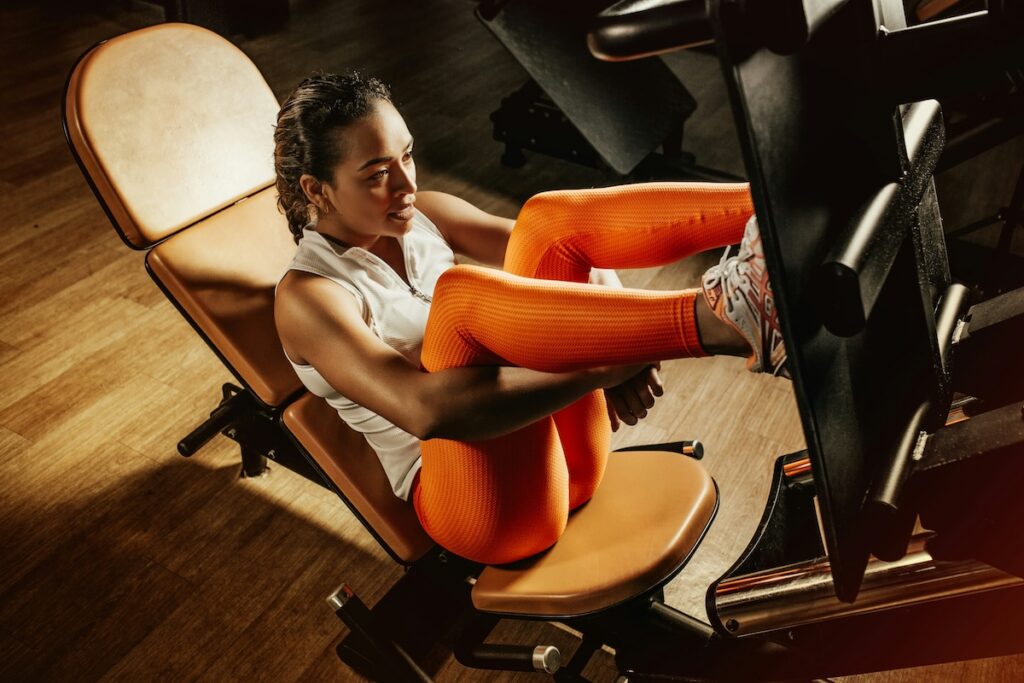
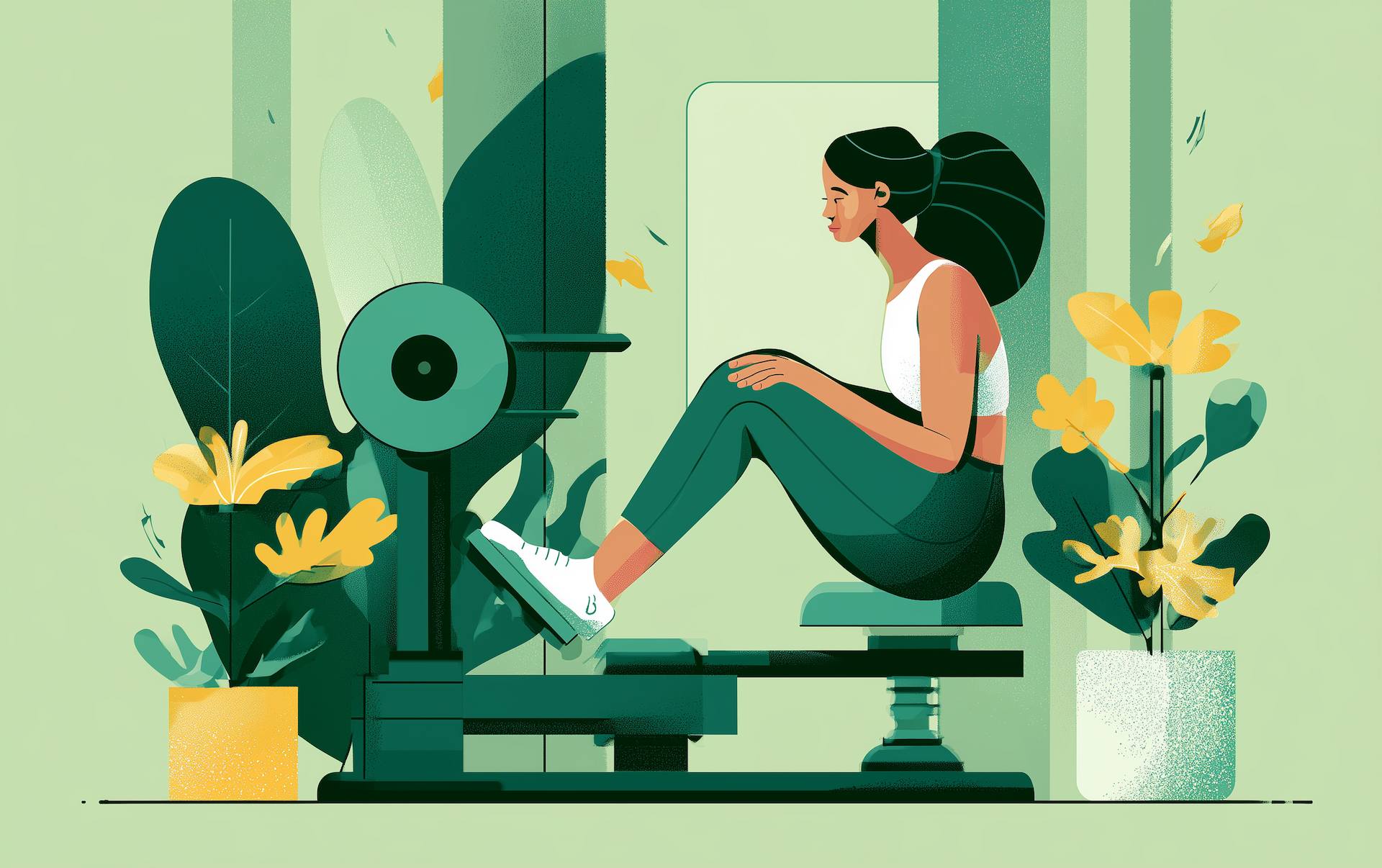
- Machine Hip Abduction: Sit tall, brace your core, and push your knees outward against the pads. Lean your torso forward slightly — about 10 to 15 degrees. That position may help you feel more tension in your glutes without rounding your back. Perform 3 sets of 12 to 15 reps.
- Banded Standing Hip Abduction: Loop a resistance band around your ankles or just above your knees. Stand tall, bracing one hand against a wall, and lift one leg out to the side under control, keeping your torso still instead of leaning away from the working leg. Perform 2 to 3 sets of 12 to 15 reps per side.
- Frog Pumps: Lie on your back with the soles of your feet together and your knees spread wide. Drive your hips upward and squeeze your glutes hard at the top without arching your lower back. Perform 3 sets of 15 to 20 reps.
- Single-Leg Romanian Deadlift: Stand on one leg with a slight bend in your knee, push your hips backward, and lower the weight while keeping your pelvis square to the floor. The standing-side glute works to extend your hip and stabilize your pelvis. You can also perform these with just your body weight and/or while bracing your non-working hand against a pole or wall. Perform 3 sets of 8 to 10 reps per side.
- Clamshells: Lie on your side with your knees bent, your feet together, and your hips stacked. Open your top knee as far as you can without rolling your pelvis backward. Perform 2 to 3 sets of 15 reps per side.
Train these exercises two to three times per week as part of your regular lower-body sessions or in a short upper-glute workout. You do not need to perform all five in every workout. Choose one or two loaded hip-extension exercises and one or two abduction movements, take most sets within one to three reps of failure, and gradually add resistance, repetitions, or sets over time. Leave at least one day between hard glute sessions so the muscles have time to recover.
If you’re new to this, start with bodyweight or a light resistance band, so you can learn the movements and feel the upper glutes working. Add resistance once you can complete the prescribed reps with control.
Common Mistakes That Stall Upper-Glute Growth
Glute training isn’t particularly complicated, but a few common mistakes can limit your progress. Here’s what to watch for and how to correct it.
- Skipping hip abduction entirely: The glutes help extend and rotate your hips, move your legs out to the sides, and stabilize your pelvis. Squats, deadlifts, and hip thrusts train hip extension well, but they do not challenge hip abduction as directly. Add one or two exercises such as machine abductions, standing band abductions, or clamshells to place more emphasis on the upper, outer glutes.
- Not using enough resistance: Muscle growth generally improves when working sets are taken close to failure. A useful target is to finish most sets feeling as though you could perform only one to three more repetitions with good form. To reach that point within a prescribed range — say, eight to 12 reps — you need to choose enough resistance to make the final few reps genuinely challenging.
- Failing to progressively overload: Progressive overload means gradually asking your muscles to do more, usually by adding weight, repetitions, sets, or band tension over time. You do not need to improve during every workout, but your training should become more demanding over the weeks and months. If the same weight and rep count always feel equally easy, your glutes have little reason to keep adapting.
What the Experts Recommend About Building Your Upper Glutes
The best advice I can give as a certified personal trainer is: don’t lose the plot. If your goal is to grow your glutes, build your program around hard, progressively overloaded hip-extension and squat-pattern exercises, such as deadlifts, hip thrusts, back squats, and leg presses.
Then add one or two dedicated hip abduction exercises and train them with the same intent. Choose enough resistance to make the final reps challenging, control the movement, and gradually add weight or repetitions over time.
Over several months, that combination can help you build more total glute muscle while placing extra emphasis on the upper, outer area.
Frequently Asked Questions
Combine progressively overloaded squats, deadlifts, hip thrusts, and leg presses with exercises that directly train hip abduction. Perform upper-glute work two to three times per week, take your working sets close to failure, and gradually add resistance or repetitions as you become stronger.
Machine or cable hip abductions, standing band abductions, lateral band walks, clamshells, and single-leg Romanian deadlifts can emphasize the gluteus medius and upper glute-max fibers. Hip thrusts and other loaded hip extension exercises should remain in your routine to build overall glute size.
You can emphasize different glute regions, but you cannot completely isolate them. Exercise selection and hip position can change which fibers contribute most during a movement, while several glute muscles still work together. Treat upper-glute training as a regional emphasis within a complete glute program.
You may be relying only on squats and deadlifts, using too little resistance during abduction exercises, or failing to progressively overload them. Recovery, protein intake, total calories, and genetics also influence muscle growth. Track your training for several months before deciding that your program is not working.
The “glute shelf” is the upper, outer curve of your backside, shaped largely by the gluteus medius and the upper fibers of the gluteus maximus. You can’t build it from nothing — genetics set the ceiling — but adding hip abduction work to progressively overloaded hip thrusts and squats can help round it out.
Bottom Line on Building Upper Glutes
Building your upper glutes requires more than simply adding a few light band exercises to the end of leg day. Pair direct hip abduction work (lifting your legs away from your body) with challenging hip extension exercises, then progressively increase the resistance, repetitions, or training volume. Abduction can emphasize the upper region of your butt, but genetics will influence how much your shape changes and how visible the “shelf” becomes. Follow a complete glute program — or work with a certified personal trainer — to match your exercise selection and weekly volume to your goals.
Experts Who Contributed
- Andrew Gutman, NASM-CPT, wrote this article.
- Lauren Keary, NASM-CNC, reviewed this article for accuracy.