How Many Different Exercises Should You Do Per Workout?

When it comes to making gains in the gym, the devil is in the dosage.
You’ve heard that exercise is medicine — and it is. But any doctor will tell you the only difference between medicine and poison is the dose, and the same goes for your training. So how many exercises should you do per workout? Walk into any gym and the instinct is that more equals better, so people keep piling on moves. But the research says what drives your results is actually your weekly dosage — the total challenging volume each muscle gets over a week — far more than how many moves you cram into one session. Get the dose right and you can often do less and still progress.
TL;DR
How many exercises should you do per workout comes down to your experience and goals — but most people need only about four to eight per session. What matters more is your total weekly volume: the challenging sets you do per muscle group each week. Past a point, extra moves add fatigue rather than results.
Key Takeaways
- Most people should do between 4 and 8 unique exercises per workout.
- The number of exercises in your workout, plus how often you hit the gym, amounts to your weekly “volume.”
- There’s a volume sweet spot that’s different for everyone depending on goals and experience level.
- Packing your workouts with viral trends won’t accelerate your progress. You’ll end up just spinning your wheels.
How Your Body Adapts to Workouts
Most people think of their weight training workouts the wrong way. It’s not a checklist; one move for arms, one for shoulders, knees, toes…workout volume is about calibrating the appropriate dosage of physical activity for your goals.
To find out how many exercises you should do per workout, you need to get your head around how your body engages with and adapts to stress. Lifting weights is a significant physical stressor, and not just on your muscles.
Your connective tissues (tendons, ligaments) need to endure the forces generated by muscular contractions, your nervous system needs to coordinate those contractions, and your heart needs to pump blood to the muscles. Hitting the weights is a stress test for your body inside and out.
Luckily, the body is resilient. If you give it a reasonable challenge, it’ll adapt and bounce back — bigger, stronger muscles, more robust cardiovascular capacity, stronger neural adaptations.
Throwing too many exercises into the mix overwhelms these systems, preventing adaptations. That’s how you get injured or burnt out in the gym.
What the Research Says About Workout Volume
Doctors calibrate therapeutic doses of medicine — you should do the same in your workouts. But instead of milligrams or cubic centimeters, you should measure by the number of difficult sets per week divided across the exercises you perform during each workout.
The good news: There’s less guesswork than you think. Researchers have studied how different volumes affect progress for years. Here’s what we know:

- More is more, up to a point: A 2026 meta analysis, which looked at data from 67 individual studies, found that both strength and muscle gains suffer diminishing returns from adding volume.
- But it depends on the person: Some people tolerate volume better than others, so said researchers in 2025 who compared the response of trained athletes to novices.
- The right dose?: Some scientists have planted their flags on 10 to 20 challenging sets per muscle group, per week, as the “optimum standard recommendation.”
How this works: Think of your favorite dessert. The first few bites are heaven, but the closer you get to finishing it, the less tasty it is. It may even turn your stomach — those are diminishing returns, and they apply to workout volume the same way. But what if you had a whole week to clean your plate?
Why the Number of Exercises Matters Less Than You Think
Your body adapts to and grows from accumulated stress over time. The timescale depends on how long it takes to recover from a tough workout. Most people can bounce back within 72 hours. This means you can fit two “doses” in per week without too much trouble.
Let’s lay it all out:
- You want to grow and strengthen your legs.
- You need to perform about 15 sets per week for “optimal” progress.
- You could do all 15 sets in one day, or divide it up across two workouts.
Dividing your training volume — remember, that’s the number of difficult sets, not warm-ups — across two sessions lets you focus harder and apply more effort in a shorter amount of time. Your leg days become sprints, not marathons.
As for the exercises: It’s mostly personal preference. You could technically do 8 sets of leg extensions on day one and seven on day two and meet your volume quota for quads.
How to Decide How Many Exercises to Include
Within a single session, about 5 to 10 sets per muscle group is the sweet spot, with returns dropping off past roughly eight — another reason a session doesn’t need many exercises to work. How many exercises per muscle group you should do per workout does matter, but it’s more of a logistical concern than a physiological one. Let’s stick with leg day as an example — your legs have several large muscle groups like your quads, hamstrings, and glutes, as well as smaller muscles like your adductors and calves which play supporting roles.
- Identify your volume target. Beginners should start at the lower end (10-12 weekly sets per major muscle).
- Divide those sets across however many workouts you hit the target muscle. Twice per week is more efficient than once, but do what fits your schedule.
- Allocate more sets to “bigger” exercises. Squats, deadlifts, and lunges are foundational, productive movements that recruit the large and small muscles in your legs alike.
- Add exercises on an as-needed basis to target weak points or if you notice progress stalling with lower volumes.
- Factor in your split. A full-body workout needs fewer exercises per muscle than a dedicated leg or back day, since you’re spreading your weekly volume across more sessions.
Remember: You don’t need to hit the 10-20 range for every single individual muscle, just the major players.
Here’s how this looks in practice.
Day 1
- Squat (Quads, Glutes): 3 sets of 6
- Deadlift (Glutes, Hamstrings): 3 sets of 6
- Lunge (Quads, Glutes): 2 sets of 10
- Leg Extension (Quads): 2 sets of 15
- Leg Curl (Hamstrings): 2 sets of 15
- Calf Raise (Calves): 4 sets of 10
Day 2
- Leg Press (Quads, Glutes): 3 sets of 6
- Deadlift (Glutes, Hamstrings): 2 sets of 6
- Hip Thrust: 2 sets of 8
- Split Squat: (Quads, Glutes): 3 sets of 10
- Leg Curl: 3 sets of 10
- Calf Raise: 4 sets of 10
These workouts get you at or above the 10-set threshold for all major leg muscles (except calves, which are a small muscle and may not be a priority for most gymgoers). You don’t need to do lunges if you don’t want to — you can add that volume to squats, leg presses, or even throw in two new exercises for your quads and glutes respectively.
If you’re new to this: Keep it simple and stay on the low end of the range. Four to five total sets targeting your quads on the first day, split up across one or two movements, is a blueprint worth adhering to.
How the Number Changes by Goal
You can reallocate your weekly volumes across different exercises to target specific goals. A gym rat who wants to bring up their quads might put their posterior chain on the backburner and incorporate more squats, lunges, or leg extensions.
It all depends on what you’re looking for from your workouts.
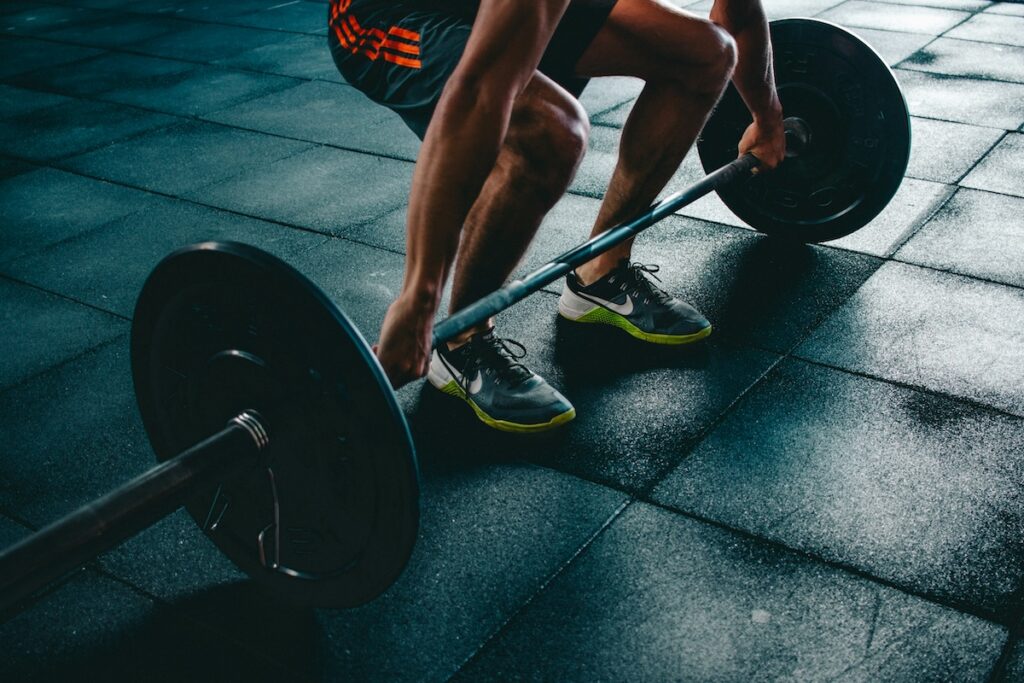
- For max strength: Prioritize compound, multi-joint exercises (like squats or deadlifts) that allow you to lift heavy. Do more sets of these with lower reps, heavier weight, and don’t go crazy with accessory work.
- For muscle growth (hypertrophy): Work with moderate to heavy loads across a variety of exercises that target the muscles from different angles or with different equipment.
- For general fitness: Variety is king. Switch up your exercise selection regularly, stick to the lower end of the volume range, and focus on good form.
The devil is in the dosage: How many exercises you do per workout is a parameter. Parameters shift over time. Beginners can get more value out of less work in the weight room (as long as they try hard). People with a few years under their belts need to up the ante to drive progress long-term.
What the Experts Recommend About Exercise Selection
Like just about everything else in health & fitness, how many exercises you do per workout is a personal decision. If you’re serious about making progress and achieving your goals, don’t short-change yourself by blindly following someone else’s workout plan.
- Beginners should pick 1-2 compound exercises and 1-2 isolation or accessory moves.
- Experienced gymgoers should do 2-3 compound exercises and 1-3 accessory moves.
And remember, the most important factor to consider when selecting exercises for your workout is comfort. You don’t have to do barbell squats, bench presses, or any move that doesn’t fit your body type. Make it easy to work hard by leaning into exercises that suit your body type, goals, and limitations.
Frequently Asked Questions
You should do between 4 and 8 exercises per workout, depending on your experience level. Newer gymgoers can get away with doing less work, while folks with more experience generally need higher volumes.
Up to a point, yes, doing more exercises is better for building muscle. However, you can have too much of a good thing. If your workout gets too long, you run the risk of slacking off toward the end, or overloading your body and potentially injuring yourself.
Start with 2 to 3 exercises per muscle group per workout. Perform 2 to 4 sets of each. The more exercises you include in your gym session, the fewer sets of each you need.
Yes. Beyond risking injury, too many exercises in a workout spreads your effort thin. It’s better to attack a small handful of movements than turn your gym sessions into marathons.
Aim for around 10 to 20 hard sets per major muscle across the week, which usually works out to a handful of sets per muscle in any single session. A full workout often lands around 15 to 25 total working sets, depending on how many muscle groups you’re training that day.
Bottom Line on How Many Exercises Per Workout
The number of different exercises you do per workout depends on your goals and experience level. That said, most people should stick between 4 and 8 moves per workout. The more exercises you include in your session, the fewer sets of each you need to do.
Packing your workouts full of fancy or gimmicky exercises won’t accelerate your results. You’ll just dilute your work ethic and possibly make worse gains as a result. If you aren’t sure how to design a workout plan that seamlessly aligns with your needs, hit up a qualified coach or trainer.
Experts Who Contributed
- Jake Dickson BS-EXS, NASM-CPT, wrote this article.
- Lauren Keary, NASM-CNC, reviewed this article for accuracy.