Dumbbell Core Workout: 6 Moves to Train Abs That Actually Work

Give up on sit-ups and let dumbbells do the dirty work.
Most people still slave away at their abs with endless crunches. And look, bodyweight ab work is fine for beginners — it’ll get you started. But a dumbbell core workout is what builds abs that can actually brace and stabilize, the way your core works in real life. Your core’s real job was never curling your ribs toward your hips a few hundred times. It’s keeping you steady when you’re hauling a heavy grocery bag up the stairs or twisting to grab something out of the back seat. That’s your core resisting load, and a crunch never asks for it.
But you don’t need a gym or a single fancy machine to train this. One or two dumbbells and about 15–20 minutes a couple times a week gets it done, whether you’re at home or killing time in a hotel room. The six moves below load your core through the exact patterns it uses all day, so you spend less time grinding out reps you’ll be bored of by Tuesday and more time building a midsection that actually helps out when it counts.
TL;DR
You can build a serious core with dumbbells — a core workout with weights forces your abs to work against resistance the way bodyweight moves can’t. A focused dumbbell core workout of about 15–20 minutes, two to three times a week, builds a stronger, more stable midsection than endless crunches. Form beats heavy weight every time.
Key Takeaways
- A dumbbell core workout loads your abs with resistance, which builds strength faster than bodyweight crunches alone.
- The biggest payoff comes from anti-movement work, where your core fights to resist twisting and side-bending rather than to create it.
- You can do these dumbbell core exercises at home with one or two dumbbells and about 15–20 minutes, two to three times a week.
- Good form beats heavy weight — bracing hard and moving slowly does more than grabbing the heaviest dumbbell.
What the Research Says About Loaded Core Training
It’s well established that muscle grows in response to mechanical tension, the primary driver of strength and size, and your abs follow the same rules as any other muscle. Adding load with a dumbbell is one of the simplest ways to create that tension.
Where it gets interesting is how you load the core. Your abs and obliques don’t only curl your torso up and down — their bigger job is resisting motion, keeping your spine from twisting or bending under load. That’s anti-movement training, and it’s where dumbbells shine. EMG research measuring activation during anti-rotational and rotational core exercises shows these patterns strongly recruit the obliques and deep stabilizers, often more than a basic crunch.
What’s still debated is whether weighted core work meaningfully beats bodyweight for the average person — the activation data is mixed, and effort and form matter as much as the tool. But to keep progressing, you have to keep adding challenge. In other words, your abs get stronger when you make them resist a force rather than just curl up and down.
Why Adding Dumbbells to Core Work Matters
So, we know muscles grow and adapt to greater challenges. In resistance training, that governing principle is called progressive overload. You can apply progressive overload with anything, so why dumbbells?
Convenience. Dumbbells are among the most common pieces of fitness equipment out there. You can find them in every commercial or hotel gym on the planet. You may even have a pair collecting dust in your garage right now.
And…
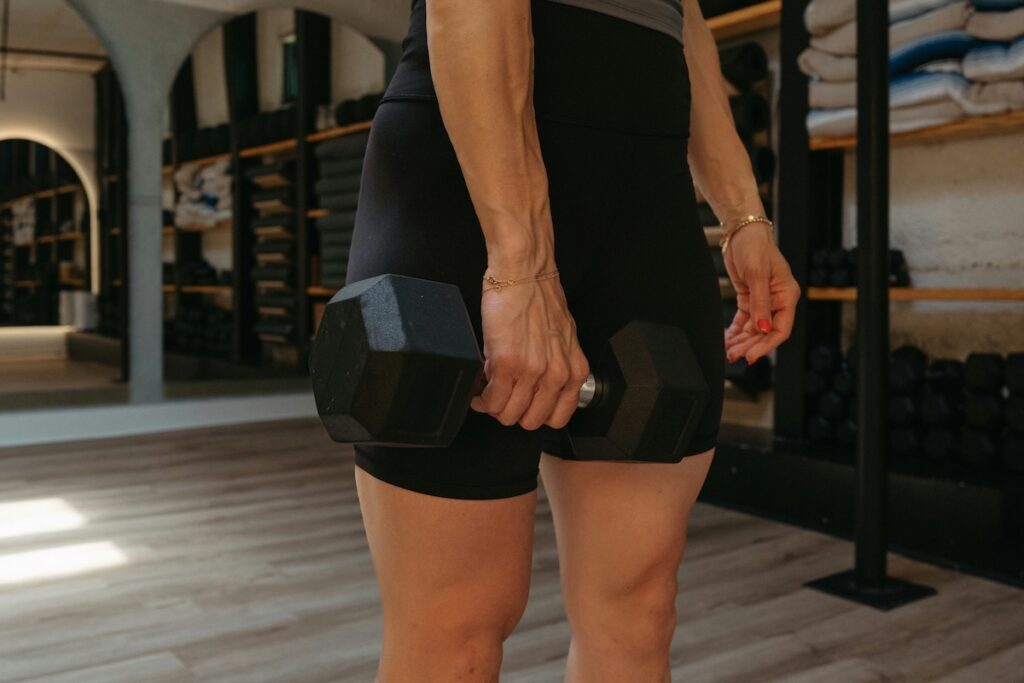
Applicability. Compact free weights like dumbbells allow you to conveniently add load to your core’s many functions. You can crunch, twist, brace, curl, extend, all while holding a dumbbell in-hand or against your torso.
A stronger core also stabilizes your spine every time you lift a suitcase or a kid, and helps protect your lower back. And just like you wouldn’t build your biceps with endless empty-handed air curls, your abs need something to push back against.
The best dumbbell exercises for core strength cover all of it, from a hard brace to anti-rotation. Dumbbells aren’t the only way to train your core — but, all considered, they’re the easiest.
How to Do a Dumbbell Core Workout
There are plenty of configurations for a dumbbell core workout. We recommend this circuit; you’ll perform 2 to 3 rounds, resting 45 seconds between rounds.
As for frequency, research tells us that hitting a muscle group at least twice per week produces better results. New to weighted core work? Start light — 5 to 10 pounds — and nail the bracing before adding load. If you have back pain or are postpartum, check with a doctor or physical therapist first.
Exercise 1: Suitcase Carry (Anti-Side-Bend)
- Hold one dumbbell at your side. You can hold your other arm aloft or place your hand on your hip.
- Brace your stomach as though you were expecting to be knocked off balance.
- Step slowly and deliberately.
Reps: 20 paces per side
If you’re new: Step slower than you think and focus on not letting the weight tilt your body to one side. This exercise is about posture and stability rather than covering distance quickly.
Exercise 2: Weighted Dead Bug (Anti-Extension)
- Lie down on your back with your legs up in the air, knees bent.
- Hold a dumbbell straight up at arm’s length.
- Lower your other arm, and the opposite leg, down toward the floor.
- Perform all repetitions on one side, then switch hands.
Reps: 8-10 per arm
If you’re new: Brace your core hard by pushing your lower back into the floor. There shouldn’t be a gap — keep it planted while your limbs move.
Exercise 3: Renegade Row (Anti-Rotation)
- Set up like you would for a push-up, but holding two parallel dumbbells on the floor rather than planting your palms on the ground.
- Brace your core hard and squeeze your quads to lock your knees.
- Row one dumbbell at a time, alternating, up and back toward your hip.
Reps: 6-8 per side
If you’re new: The renegade row is not a back exercise; you’re just doing a row to add some dynamic stability. Use very light dumbbells and focus mainly on not letting your torso twist.
Exercise 4: Half-Kneeling Wood Chopper (Rotation)
- Kneel on one knee, planting your other foot firmly in front of you.
- Hold one dumbbell with both hands at your side, like you’re about to draw a sword from a sheath.
- Swing the dumbbell diagonally up and across your torso without bending your arms.
Reps: 12 per side
If you’re new: Keep your arms mostly locked. Think of the movement like a reverse golf swing. Allow your torso to twist, don’t just move your arms.
Exercise 5: Side Bend (Obliques)
- Stand upright with a moderate to heavy dumbbell held in one hand.
- Place your other hand on your hip, or clasp your palm behind your head.
- Brace your core like you’re about to be punched in the stomach.
- Tilt to the side of the dumbbell, allowing it to gradually slide down your leg toward your knee.
Reps: 12 per side
If you’re new: Don’t hold two dumbbells at once. They don’t cancel each other out necessarily, but the objective of this exercise is to provide lopsided resistance. It’s also one of the simplest dumbbell oblique exercises you can load up.
Exercise 6: Glute Bridge March (Deep Core + Anti-Rotation)
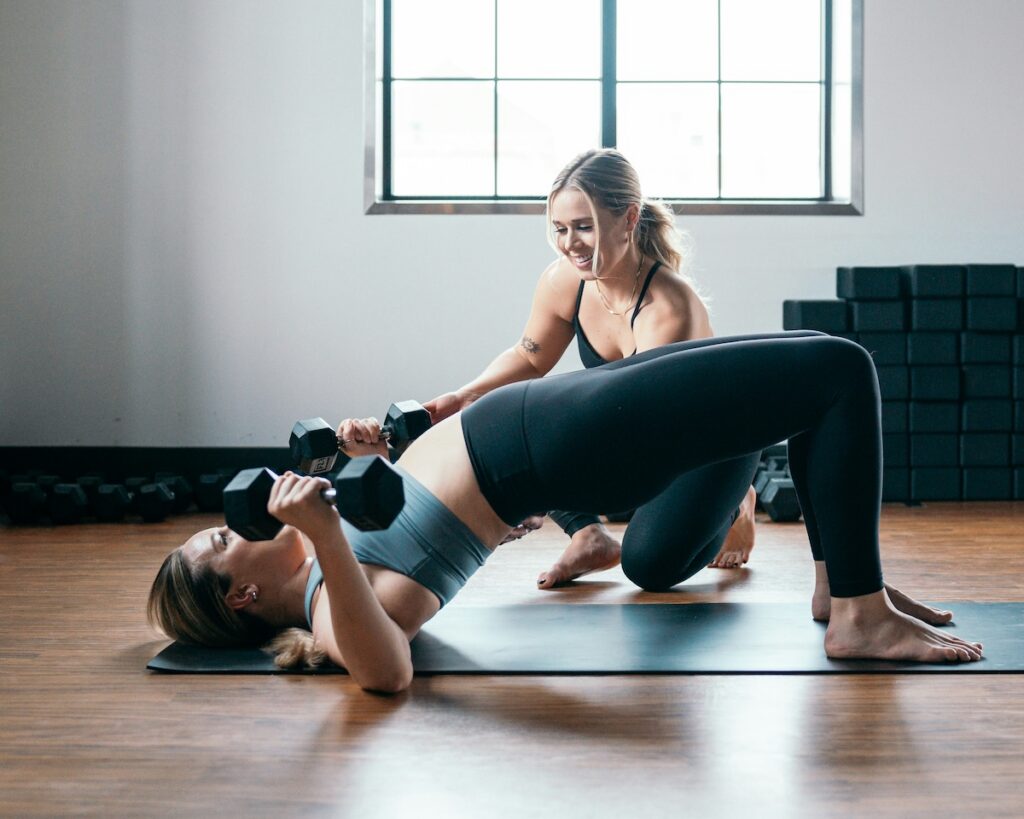
- Lie down on your back, holding a dumbbell in your lap with your hands.
- Bridge your hips, driving them up to the ceiling by squeezing your glutes.
- Lift one leg up and down at a time without moving your hips.
Reps: 8 per side
If you’re new: Use your arms to hold the dumbbell against your hips. The objective is to lift and plant your legs without dropping your hips or shifting from one side to the other.
Common Form Mistakes to Avoid
Going too heavy: Your core doesn’t need a lot of weight, especially if you’ve never done a dumbbell core workout before. Start lighter than you think, so you can focus on form.
Arching your back: On overhead and anti-extension moves, your core’s job is to keep your ribs down and spine stable, not to let your lower back pop off the floor. On the dead bug, press your lower back into the ground and keep it there as your limbs move.
Holding your breath: Bracing doesn’t mean holding your breath. On isometric exercises like the dead bugs, exhale and take in new air between reps. For dynamic moves like side bends, inhale as you lower the weight and exhale as you contract your muscles.
What the Experts Recommend About Short Core Workouts
People tend to overcomplicate core training. Dumbbell core workouts are great because they’re quick, dirty, and effective. You use your abs and lower back all day — they don’t need to be thrashed in the gym, too.
“People overcomplicate core training. You use your abs and lower back all day — they don’t need to be thrashed. Dumbbell core workouts are great because they’re quick, dirty, and effective.”
Another thing — your spine is built to move, and controlled bending or rotation under light load is normal. Bracing is what keeps that movement safe and effective. That said, if you have a history of back injuries or are concerned about safety, check with your doctor before trying any new workout.
Frequently Asked Questions
Yes, you can train your core with just dumbbells. Your body doesn’t differentiate between the type of resistance, only how hard it’s working. Dumbbell core workouts are great because you can find dumbbells anywhere and don’t need heavy weights.
Yes, dumbbell core exercises are effective. Adding load makes your abs work harder than they do during bodyweight crunches, and that extra tension is what drives strength. A dumbbell ab workout also trains the anti-movement patterns — resisting twisting and bending — that build real stability. But you won’t reveal visible dumbbell abs from training alone, since that comes down to diet and overall body fat.
How heavy your dumbbells should be for core work depends on your strength levels. If you have limited or no experience using weights for abs, you don’t need heavy dumbbells — anything up to 20 pounds will work just fine, even if you exercise regularly. Heavier weights allow you to progressively overload over time, but you can also accomplish this by adding reps, sets, or reducing rest.
You should do dumbbell core workouts one to three times per week. Two times is the sweet spot for recovery while maximizing gains, but don’t overthink it. Your core recovers quickly.
A weighted core workout is not necessarily better than bodyweight crunches; the best workout is the one you can stick to. On paper, using weights allows you to challenge your body to a greater degree than you can get with just bodyweight, meaning more progress in less time.
Bottom Line on the Dumbbell Core Workout
Dumbbell core workouts aren’t magic; they’re sensible. Bodyweight training will only take you so far, and spamming crunches ignores a majority of what your core is actually designed to do. Progression is necessary for growth. That’s true in the gym, true in life, and definitely true when it comes to ab training. Dumbbells allow for practical progression without needing to dedicate hours per week to training your abs.
A dumbbell core workout works because it makes your abs resist real load, building strength and stability that crunches can’t. What’s solid is that loaded, anti-movement training strongly activates the deep core; what’s still debated is exactly how much weighted beats bodyweight for the average person. Treat it as the simplest way to progress. And if you’re working around an injury, loop in a trainer or physical therapist before loading up.
Experts Who Contributed
- Jake Dickson BS-EXS, NASM-CPT, wrote this article.
- Lauren Keary, NASM-CNC, reviewed this article for accuracy.