The Best Breads for Steady Blood Sugar

Good news, you don’t have to quit bread for steadier blood sugar.
Here’s some good news for anyone who’s been told to swear off the bread basket: you probably don’t have to. Finding the best bread for blood sugar mostly comes down to which loaf you choose. Some breads barely touch your glucose, while others — including a few marketed as wholesome — send it climbing. The difference comes down to how the bread is made.
What You Should Know About Bread and Blood Sugar
Many carb-conscious eaters think bread and blood sugar spikes go hand in hand, and that all breads are created equal. But the key player here is the glycemic index, or GI, which is a measure of how quickly a food raises your blood sugar. White bread lands pretty high on that scale, with a GI of around 71, but the type of bread and how it’s prepared change that number. A fermented sourdough loaf and a highly-processed white one sit in completely different places on the GI scale, even with the exact same number of carbs — which means the seemingly healthy “whole wheat” loaf made with finely milled flour could sky-rocket your blood sugar, while the right loaf leaves your glucose untouched.
Going Deeper on the Best Breads for Blood Sugar
Registered dietitian Lauren Panoff made the case for lower-GI breads over at Verywell Health, and the research backs a handful of loaf types that stay gentle on your glucose. Here are the ones worth swapping in for a standard white loaf, and why each one behaves the way it does:
- Real sourdough: The long fermentation process here lowers the blood sugar response. Sourdough lands around a GI of 54 vs. white bread’s 71. The live bacteria create acids that slow down digestion regardless of the flour used.
- 100% whole wheat: “Whole wheat” only counts if the grain is still intact — look for loaves where you can spot actual oat groats or cracked wheat berries, not something milled to powder. Whole kernels digest slowly, so the sugar trickles in instead of coming in all at once.
- High-protein or grain-free: Loaves built on nut or legume flours — almond and chickpea, say — or spiked with pea or soy protein trade away some digestible carbs for extra protein, so each slice hits your blood sugar softer.
- Sprouted-grain bread: Sprouting pre-digests some of the starch before the bread is even baked, so there’s less starch remaining to convert to sugar.
- Oat or barley: Oats and barley are loaded with beta-glucans — a soluble fiber that goes gel-like in your gut and slows how fast sugar reaches your bloodstream.
- 100% rye (or dark rye): Look for dark rye, not light (light rye often sneaks in refined flour). It’s a heavy, close-crumbed loaf with more soluble fiber than plain wheat, which stretches digestion out.
- Seeded multigrain: The fiber and fat in the seeds temper the rise in blood sugar.
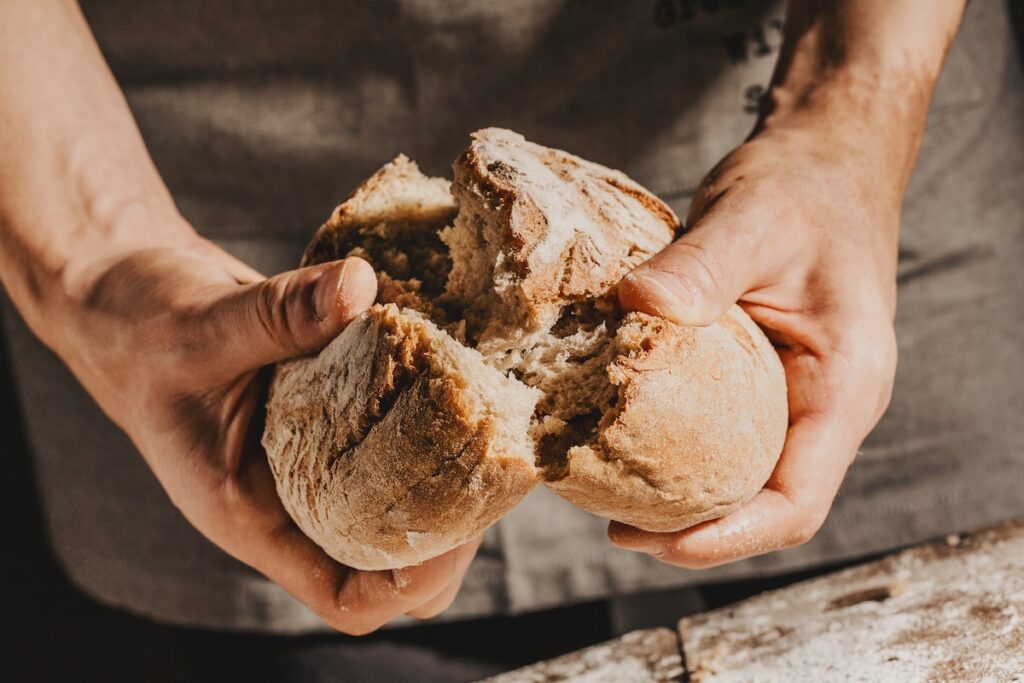
Some grocery store “sourdough” skips actual fermentation and just adds vinegar for that tangy flavor though, so be careful if you’re looking for sourdough at your local market. To find sourdough with the blood-sugar benefit, look for “naturally leavened” on the label or buy from a traditional bakery.
The Takeaway
Experts say to reach for genuinely fermented breads like real sourdough, or a dense 100% whole-grain loaf. Pairing your slice with protein and fiber — like eggs or avocado, rather than jam alone — slows the rise even more. And portion still counts, no matter the quality of the bread.
Reading the label beats trusting the front of the bag. Aim for a slice with 5-plus grams of protein and a few grams of fiber, and make sure a real whole grain — not “enriched” or plain “wheat flour” — is at the top of the ingredient list. Then you want any added sugar sitting near the bottom of that list, and it’s worth checking whether the nutrition numbers cover one slice or two, since brands aren’t consistent about it.
Bottom Line
Different types of bread affect your blood sugar in different ways. And continuous-glucose data shows people can even react differently to the very same loaf of bread. GI values are lab averages that won’t perfectly predict your personal response, and labels can be misleading. Bread can absolutely slot into a blood-sugar-friendly diet — it’s mostly a matter of which one ends up on your plate.