Vegan Tofu Kimbap


Jamie is a recipe developer, content creator, and registered dietitian with expertise in food allergies. She is passionate about food and behaviors that affect people's health and strives to encourage people to become more nutritionally-informed, utilize ingredients effectively and sustainably, and form a positive relationship with food. In her free time, she enjoys playing piano, hiking, and trying new foods!
- Dinner
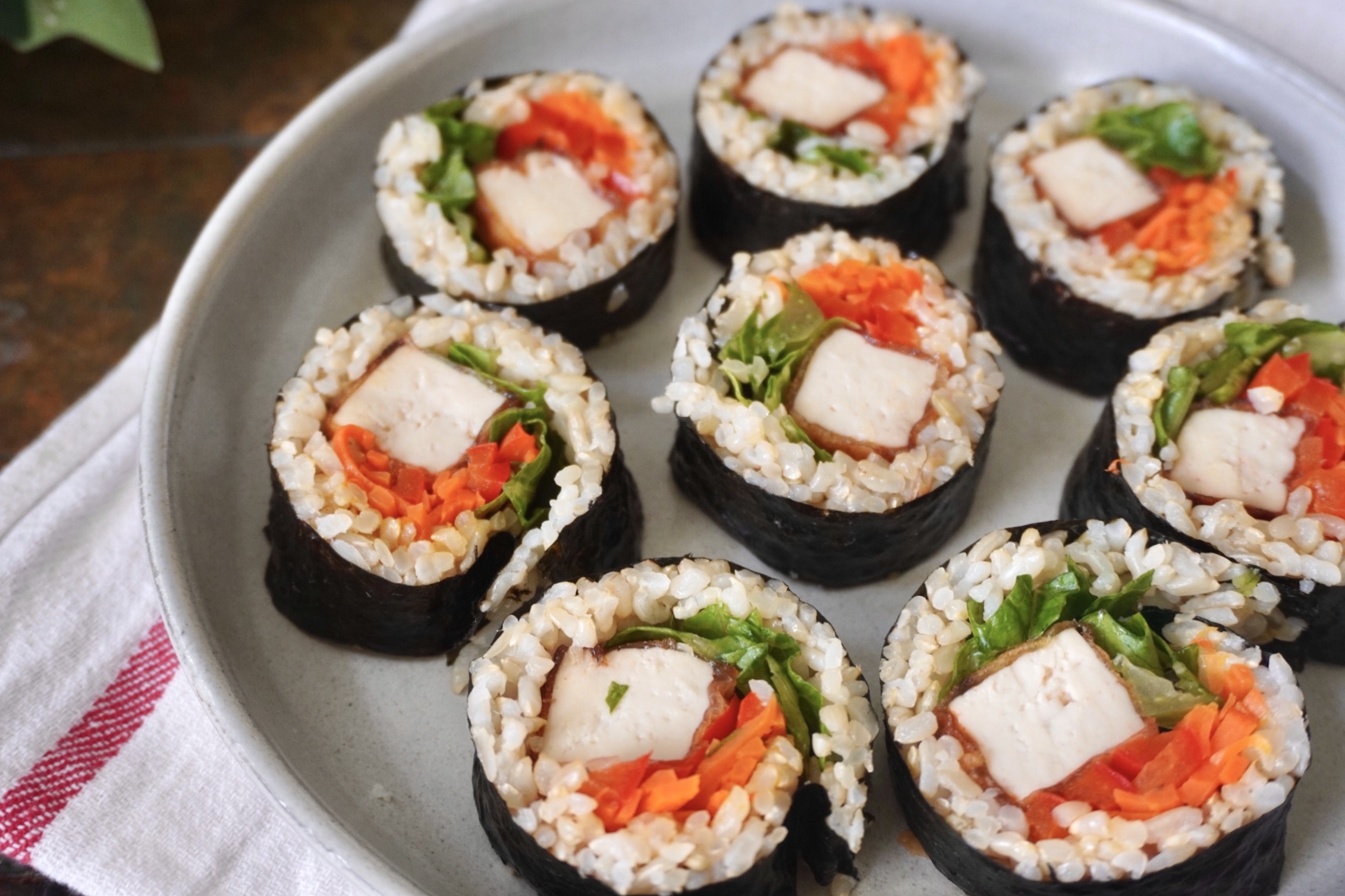
Crispy gochujang tofu and crunchy veggies rolled into vegan Korean-style kimbap — 14g of plant-based protein per serving.
With 14 grams of plant-based protein and 347 calories per serving, this vegan kimbap is a satiating and balanced meal that’s also a good source of fiber, vitamins, and antioxidants. It’s an excellent dish for lunch or dinner, and because each kimbap roll is sliced into individual bite-sized pieces, it is a great dish for picnics, on-the-go meals, gatherings, and more.
Kimbap, or gimbap, is a Korean-style seaweed and rice roll commonly stuffed with colorful ingredients such as carrots, egg, daikon, and more. It is similar to Japanese sushi but has distinctly different flavors. This version skips the egg and fills the rolls with crispy pan-fried tofu instead. If desired, this dish can easily be made gluten-free with simple swaps — see the notes below.
Why This Works
All the ingredients work together in this dish to provide nutrients and satiation. Tofu packs a punch of protein, and vegetables with nori add fiber, vitamins, and antioxidants that elevate a simple rice roll into a complete meal.
Nutrition (per serving)
| Calories | 347 |
|---|---|
| Protein | 14g |
| Carbs | 54g |
| Fat | 10g |
Ingredients
| Extra-soft cooked brown rice | 1½ cups |
|---|---|
| Extra-firm tofu | ½ block |
| Brown sugar | 2 tsp |
| Soy sauce | 1½ tbsp |
| Gochujang (Korean chili paste) | 1 tsp |
| Vegetable oil | 1 tsp |
| Sesame oil | 1 tsp |
| Bell pepper strips | ½ cup |
| Shredded carrots | ½ cup |
| Salt | ⅛ tsp |
| Sushi seaweed (nori) | 2 sheets |
| Chopped romaine lettuce | ½ cup |
Step-by-Step Instructions
1 Press the tofu
Press the tofu for 30 minutes using a tofu press or manually. To do so, place a piece of tofu on a cutting board next to the sink and place a small cutting board on top of the tofu.
2 Weigh it down
Place a heavy item (like a cast iron skillet) on the cutting board. Water will seep out onto the cutting board, which you can pour into the sink.
3 Marinate
Combine brown sugar, soy sauce, and chili paste in a shallow and wide bowl. Cut the tofu into ½ inch thick strips and marinate in the sauce for at least 30 minutes.
4 Cook the vegetables
Heat sesame oil in a skillet over medium heat. Add bell peppers and carrots in the pan. Season with salt and cook for 3 minutes. Remove from the heat.
5 Crisp the tofu
Heat vegetable oil in a skillet over medium heat and pan fry the marinated tofu on all sides for about 3 minutes, or until crispy.
6 Assemble
Lay down a piece of seaweed on a sushi mat (if available) and spread half of the cooked rice on top. Add two strips of tofu, and half of the bell peppers, carrots, and romaine lettuce.
7 Roll
Roll the kimbap tightly (you may use a sushi mat). Repeat for the other roll.
8 Slice and serve
Spray oil on a knife to prevent sticking and slice each roll into 8 slices. Serve with soy sauce.
Notes & Tips
- The kimbap can be stored in an airtight container in the fridge for up to 3 days.
- It cannot be frozen.
- The kimbap can be made gluten-free by using tamari instead of soy sauce and using a gluten-free gochujang instead of regular gochujang.
- The brown rice can be substituted with short-grain white rice.
Jamie is a recipe developer, content creator, and registered dietitian with expertise in food allergies. She is passionate about food and behaviors that affect people's health and strives to encourage people to become more nutritionally-informed, utilize ingredients effectively and sustainably, and form a positive relationship with food. In her free time, she enjoys playing piano, hiking, and trying new foods!