This Is What’s Really Hiding in Bottled Water

Noppadon Manadee/Unsplash
A Warning: We’re consuming more than just water when we drink from single-use plastic bottles: microplastics. New research published in the Journal of Hazardous Materials found people who drink bottled water ingest 90,000 more microplastic particles each year than those who don’t.
The Study: Researchers from Concordia University in Montreal reviewed 140 scientific articles about microplastics. They found people ingest an average of 39,000 to 52,000 microplastic particles per year, but bottled-water users consume 90,000 more particles than those who drink tap water.
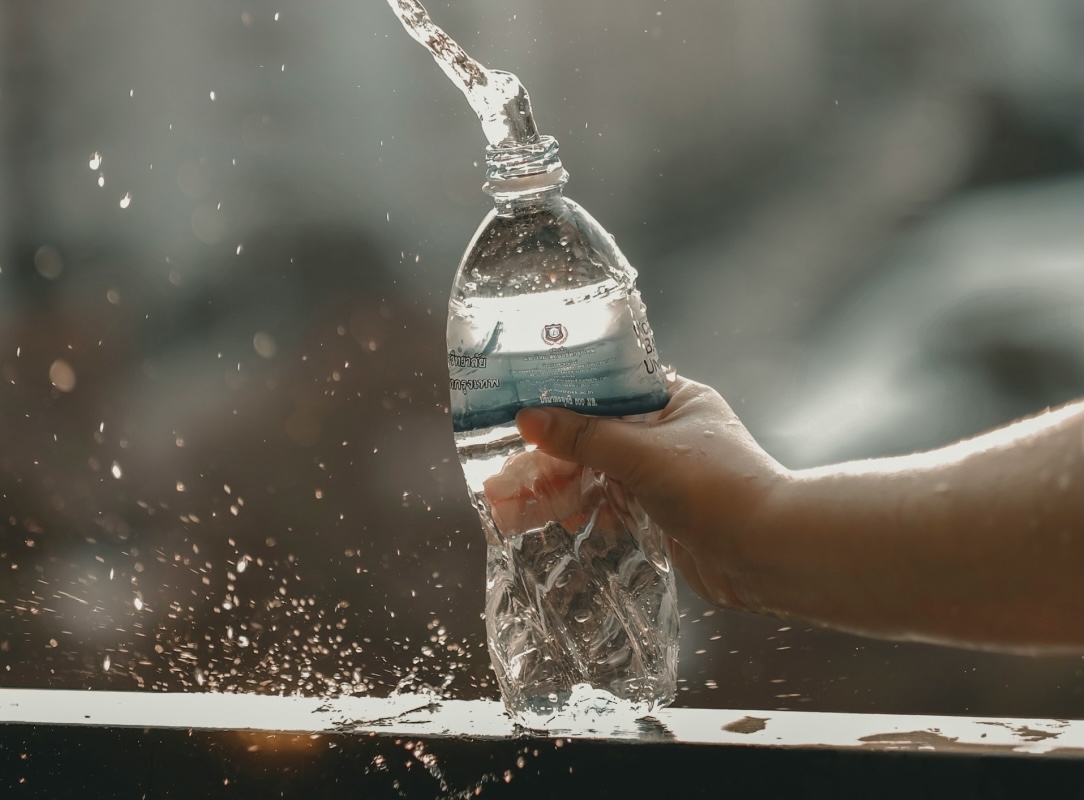
The Takeaway: Single-use water bottles are usually made from cheap, low-quality plastic. Any time they’re manipulated or exposed to heat or sunlight — when they’re being manufactured, transported, squeezed, or left out in the sun or inside a hot car — microscopic bits of plastic from the bottle leach into the water. Once inside the body, microplastics don’t ever leave. They travel through the bloodstream, collect in organs, and even cross the blood-brain barrier (I mean just look at this). They’ve been linked to chronic inflammation, hormone disruption, neurological disorders, and other health problems.
Keep in Mind: More research is needed to fully understand the long-term health effects of microplastics. But the more you can limit your exposure by refilling and sipping from non-plastic reusable bottles, the better.