Mediterranean Tomato and Feta Dip


Sasha Goreshtein is a Montreal-based home cook who calls hosting her love language and cooking her therapy. She grew up watching her mom cook, and now, as a mom herself, she's finding that spark again through experimenting with new flavors and gathering people around her table.
- Side
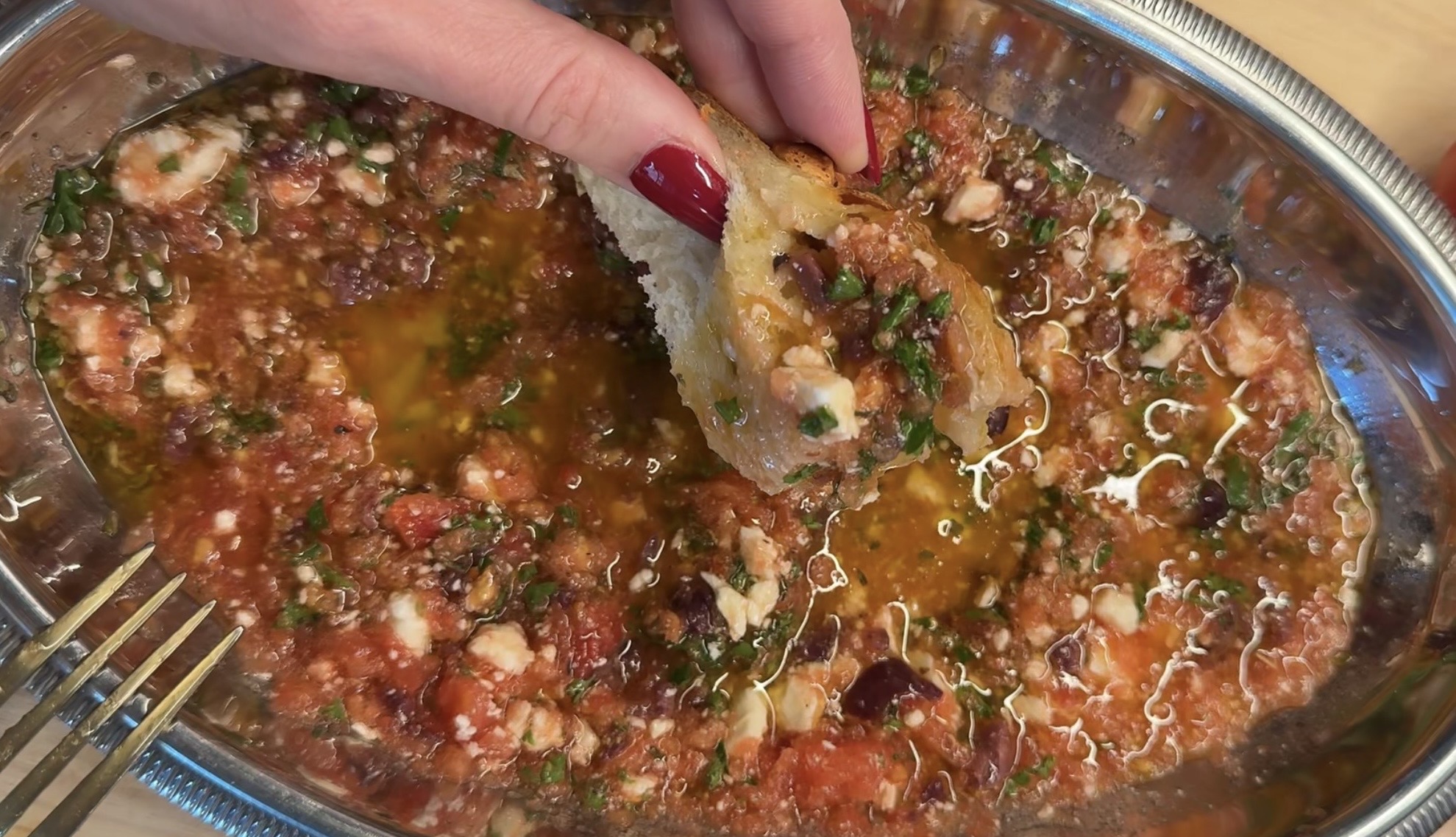
One bowl, no cooking, and 15 minutes — grated tomato, crumbled feta, and Kalamata olives loosened with good olive oil and red wine vinegar.
The trick here is grating the tomato instead of chopping it. A chopped tomato sits in the bowl in cubes and weeps water around those cubes. A grated one collapses into pulp and juice that thins the olive oil into something closer to a dressing, so the whole thing turns glossy and pink and clings to bread instead of sliding off it. Everything else goes in around it — crumbled feta, chopped Kalamata olives, a lot of parsley, red wine vinegar, lemon, and a spoonful of whole-grain mustard to hold the oil and acid together. There are as many versions of this as there are cooks, some with dill instead of parsley, some with lemon instead of vinegar. Nothing gets cooked, and the bowl you mix it in is the bowl you serve it in.
Why This Works
Most of the 170 calories here come from olive oil, which is also what makes the tomato worth eating. Olive oil and olives bring monounsaturated fat and polyphenols, the combination that sits at the center of most Mediterranean-diet research. The feta earns its place on flavor more than nutrition — a quarter cup adds a couple of grams of protein and some calcium, along with most of the dish’s salt, which is worth knowing if you’re watching sodium. At 4 grams of carbohydrates a serving, this stays light enough to sit next to almost anything else on the table.
Nutrition (per serving)
| Calories | 170 |
|---|---|
| Protein | 2g |
| Carbs | 4g |
| Fat | 7g |
Ingredients
| Extra-virgin olive oil (good quality) | ¼ cup |
|---|---|
| Tomato, grated | 1 large |
| Feta, crumbled | ¼ cup |
| Kalamata olives, chopped | ¼ cup |
| Fresh parsley, chopped | ¼ cup |
| Dried oregano | 1 tbsp |
| Red wine vinegar | 1 tbsp |
| Lemon juice | 1 tbsp |
| Whole-grain mustard | 1 tsp |
| Salt | To taste |
| Freshly cracked black pepper | To taste |
Step-by-Step Instructions
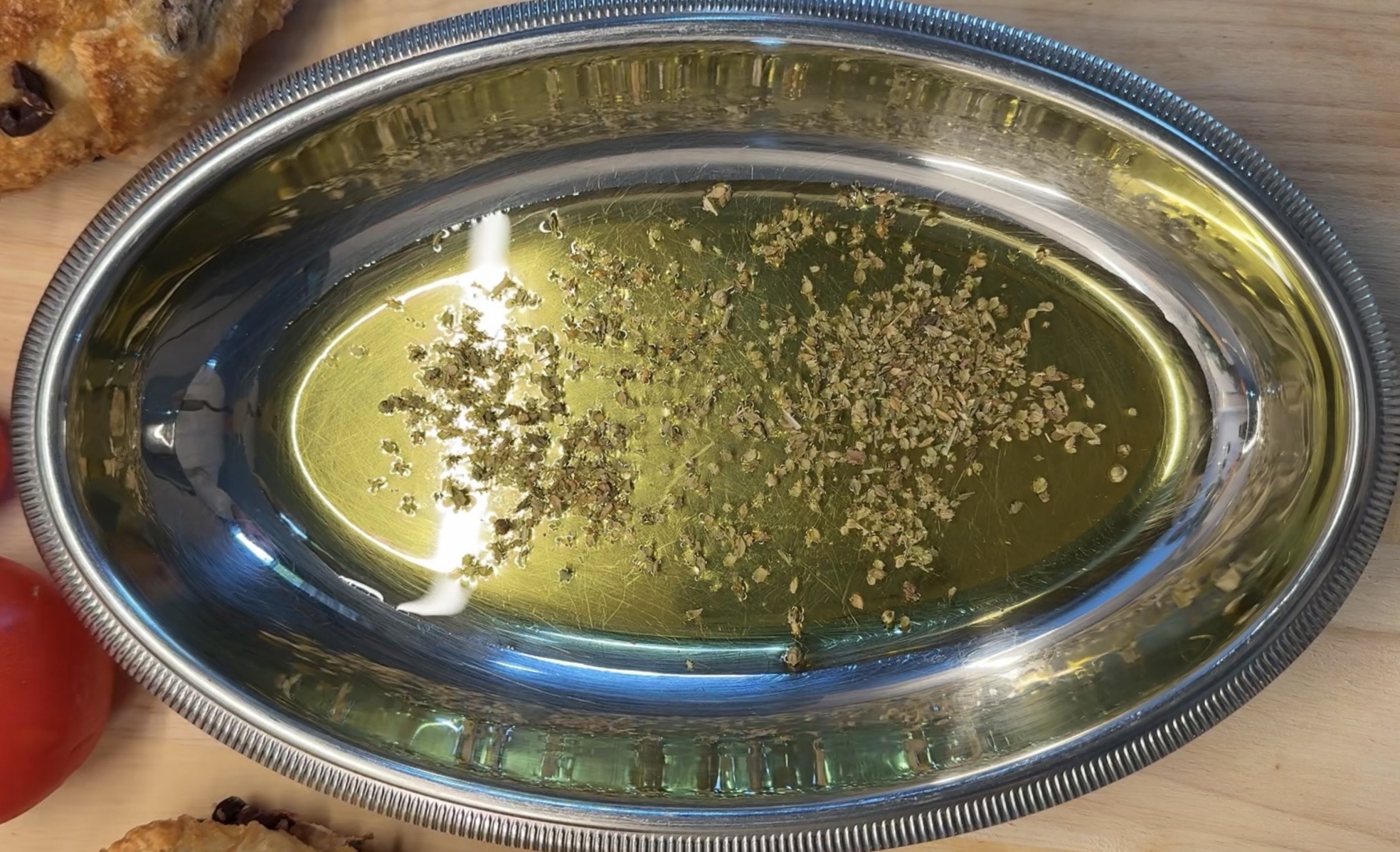
1 Start with the oil
Pour the olive oil into a shallow serving bowl and sprinkle the oregano over the top.
2 Grate the tomato
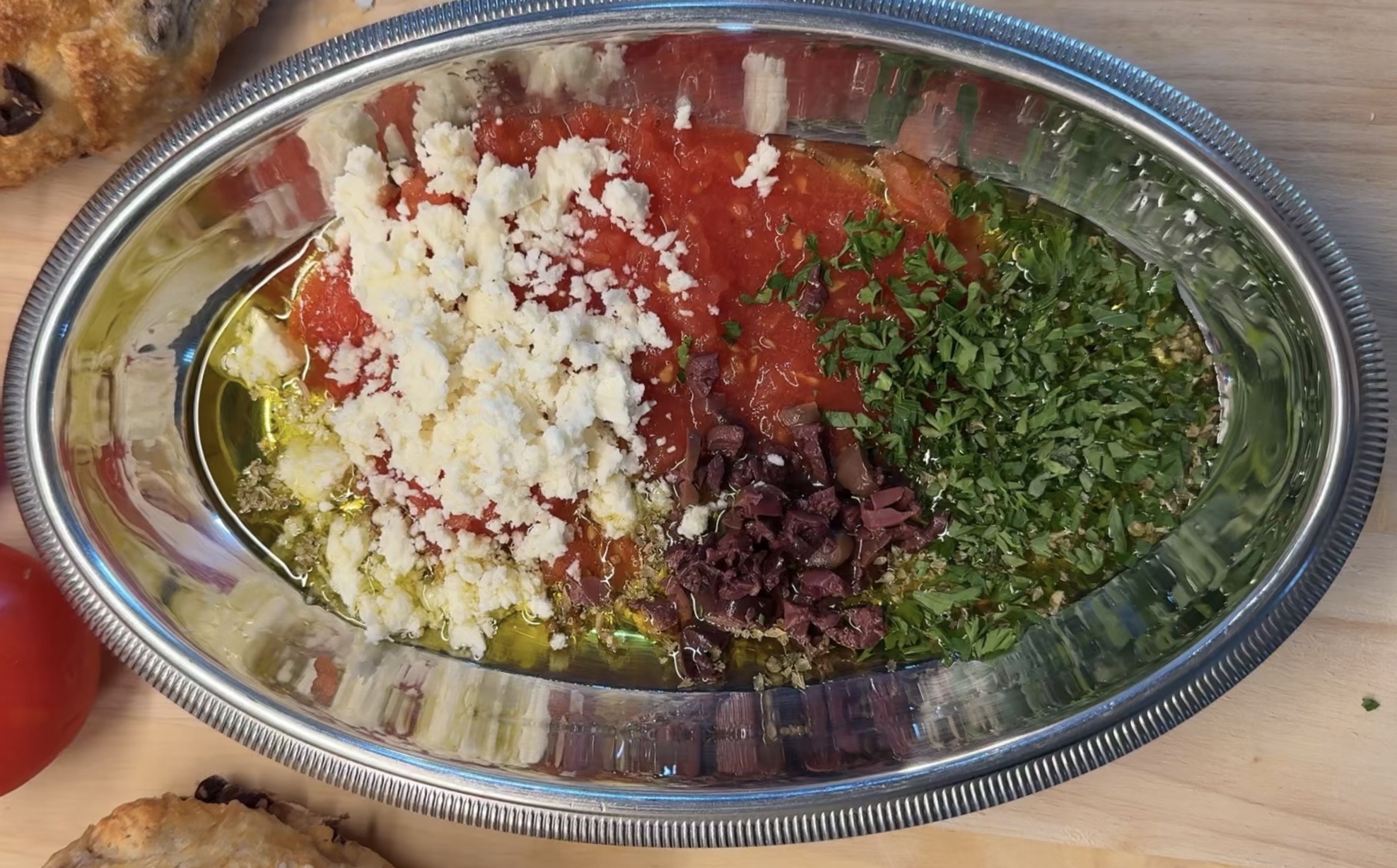
Grate the tomato on the large holes of a box grater directly into the bowl, so all the juice goes in with the pulp. Discard the skin.
3 Add the mix-ins
Add the parsley, crumbled feta, and chopped olives.
4 Add the acid
Pour in the red wine vinegar and lemon juice, then add the whole-grain mustard.
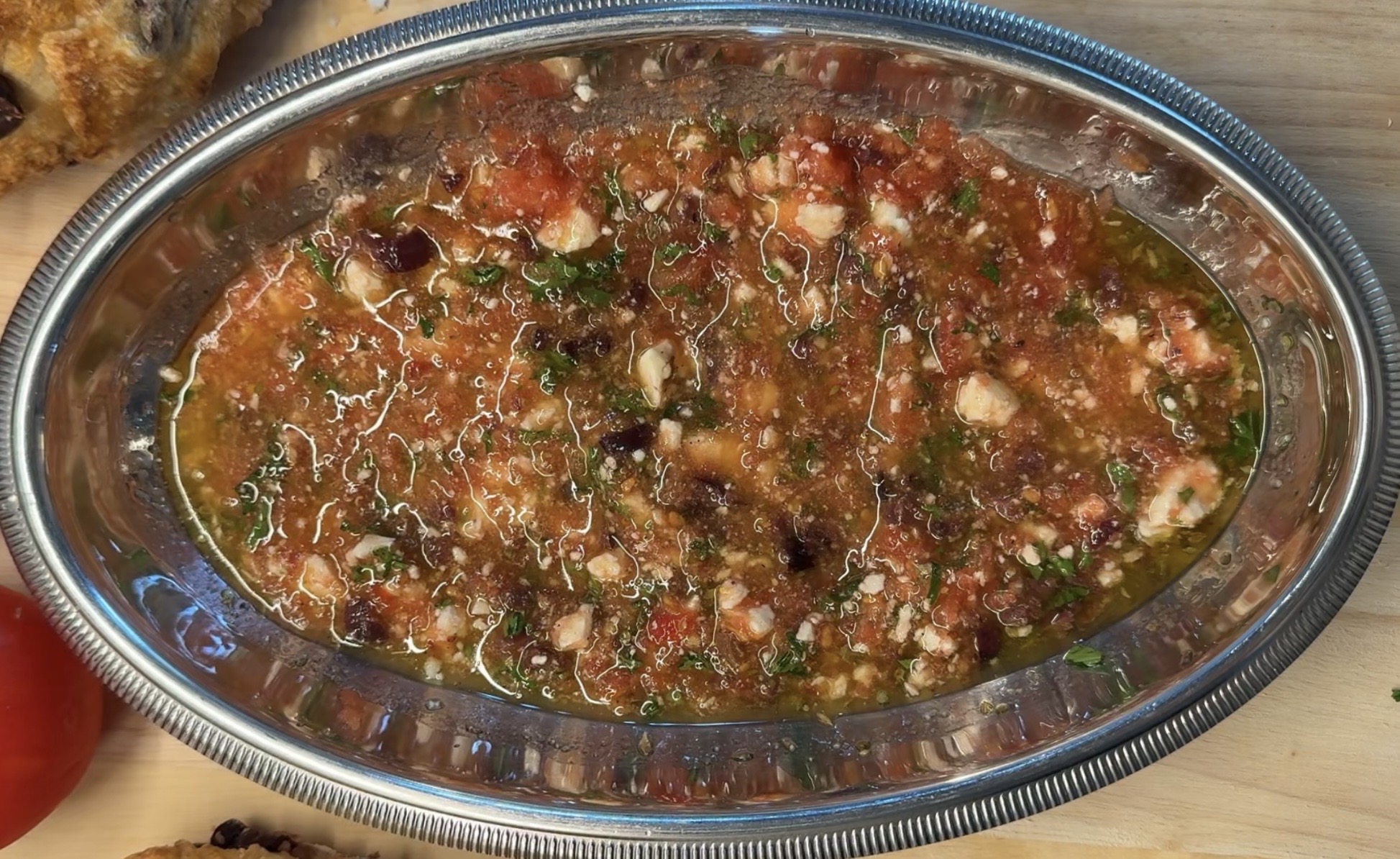
5 Season and stir
Season with salt and cracked black pepper, then mix until everything is combined and the oil turns pink from the tomato.
6 Serve
Serve with warm, toasted bread.
Notes & Tips
- This one is built for swapping. Dill in place of parsley, lemon in place of the vinegar, goat cheese or Parmesan in place of the feta — the structure holds either way.
- It works as a sauce as much as a dip. Spoon it over grilled chicken, steak, or a firm white fish.
- Made ahead, it behaves like a vinaigrette. An hour or two in the fridge softens the raw bite of the mustard and pulls the flavors together, so don’t feel locked into serving it the minute it’s mixed.
- Warm pita, sourdough, or focaccia are the obvious partners, but it holds up to sturdier dippers too — cucumber spears, endive leaves, seeded crackers, or a spoon straight over roasted vegetables.
- Adding shredded chicken or a can of drained chickpeas turns it from a starter into something closer to a meal.
Sasha Goreshtein is a Montreal-based home cook who calls hosting her love language and cooking her therapy. She grew up watching her mom cook, and now, as a mom herself, she's finding that spark again through experimenting with new flavors and gathering people around her table.