The Everyday Habits of People Who Live the Longest
Adapt the Blue Zones’ “Power 9” habits to your own life for better longevity.
Can consistent, daily, healthy habits actually extend your life? The short answer is yes, and they come down to moving more, choosing comfort, avoiding stress, and challenging your mind.
Since your lifestyle is specific to you, you may not be able to rely solely on imitating the habits of those who live in Blue Zones (regions where people live significantly longer). However, you can adopt and adapt the habits that make those zones bastions of longevity into your daily life, and it takes only, on average, a two-month commitment.
What You Should Know About Longevity Habits
Confirmed Blue Zones, which have high concentrations of healthy people in their triple digits, including Okinawa, Japan; Sardinia, Italy; Nicoya, Costa Rica; and Ikaria, Greece, share nine commonalities in daily life.
These nine shared habits — dubbed the “Power 9” by Blue Zones researcher Dan Buettner, who popularized the concept — are associations with longevity rather than proof of cause, though there’s some scientifically supported context behind each:
- Move Naturally
- Resistance training has numerous, well-studied benefits, including a position stand from the American College of Sports Medicine on muscle function and physical performance. Blue Zones, however, aren’t full of people constantly in the gym; they’re full of people who move naturally without having to think about it.
- Whether you move more by doing more housework, tackling the chores you need to get done, or taking up gardening, more movement is likely to extend your life.
- Purpose
- Whether you set a daily reminder or consciously recognize your “why,” research links a strong sense of purpose to a lower risk of dying early. Blue Zones researchers have put the payoff as high as seven years, though that specific number is a popular estimate, not a trial result.
- Downshift
- Chronic stress wears on the body over time and is linked to worse long-term health, even if an exact “years lost” figure is hard to pin down.
- Adopt a daily habit that can reduce stress, such as exercise, meditation, yoga, or another form of mindfulness.
- 80% Rule
- Don’t eat until you’re stuffed. Those in Blue Zones consider a meal finished when they are 80% full.
- Eating only until you’re 80% full likely leads to fewer calories and more vegetables. This type of calorie restriction can prolong life by reducing the risk of age-related diseases.
- Plant Slant
- Beans and lentils. Eat more of them. That’s the habit.
- Eating more legumes correlates with a reduction in the “mortality hazard ratio” of up to 8% for each additional 20 grams per day. Centenarians who ate more legumes and exercised consistently maintained the nutrition needed for proper muscle condition and function.
- Wine at 5 p.m.
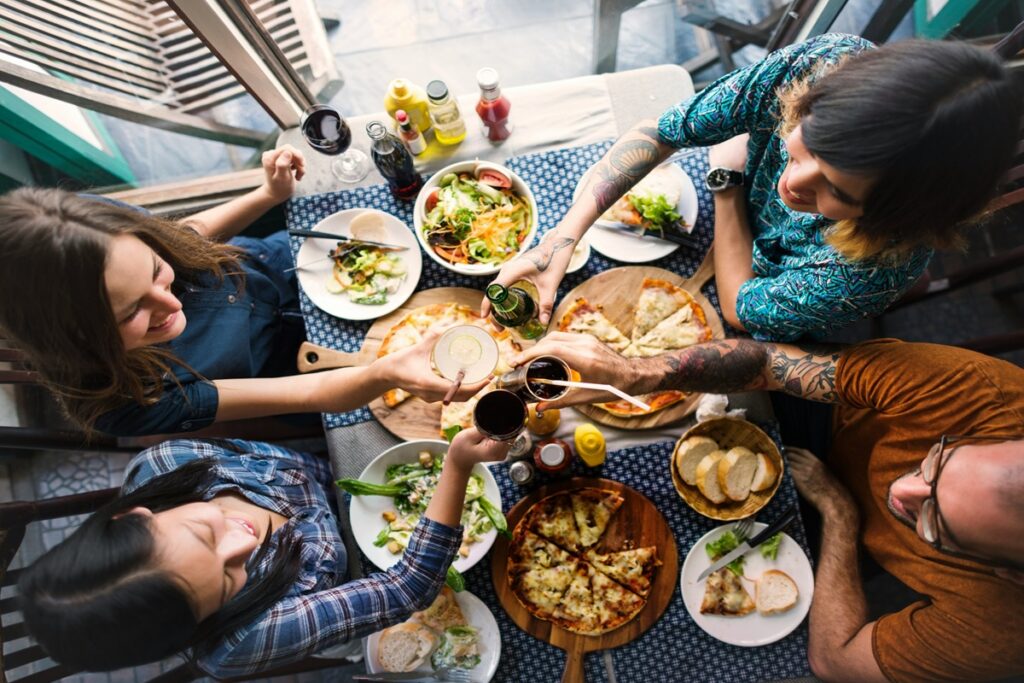
- In several Blue Zones, people enjoy a glass of wine with friends in the evening — but this is the one Power 9 habit that needs a hard caveat, because the science has shifted.
- The old “moderate drinkers outlive nondrinkers” idea is now considered largely an artifact of flawed studies. Bias-corrected research and the World Health Organization find no safe level of alcohol and no real mortality benefit from moderate drinking.
- The longevity signal here is probably the unwinding and the social connection, not the alcohol — so don’t start drinking for your health, and you can get the same ritual with a non-alcoholic pour.
- Belong
- Find your people. In the Blue Zones, regularly gathering with a faith- or values-based community — about four times a month — is associated with a longer life (Blue Zones researchers cite a range of roughly 4 to 14 added years). On the flip side, low social connection carries health risks that one landmark analysis likened to smoking 15 cigarettes a day.
- Loved Ones First
- Keep your loved ones close, proximally. Having loved ones near you is associated with longer life expectancy because it provides a sense of security for your future. Turns out having someone you can call for help if you get sick is emotionally and scientifically beneficial.
- Right Tribe
- You are most influenced by the five people you spend the most time with. Surround yourself with people who support and enable your healthy daily habits, and vice versa.
- Smoking, obesity, loneliness, or, conversely, happiness, are contagious, so your social network can affect your long-term health.
The Takeaway
Adopting daily habits for a longer life doesn’t take much effort, but it does require consistency. Naturally move more. Eat more vegetables (especially legumes), but stop eating when you’re 80% full, and wind down in the evening with supportive friends.
Bottom Line
Ultimately, there’s no guaranteed longevity hack, but being more active, eating a cleaner diet, and having a strong, supportive community of friends and family nearby seem to offer the best odds of living longer.
Experts Who Contributed
- Lauren Keary, NASM-CNC, reviewed this article for accuracy.