Green Light Therapy Is the New Red Light Therapy — But Does It Work?

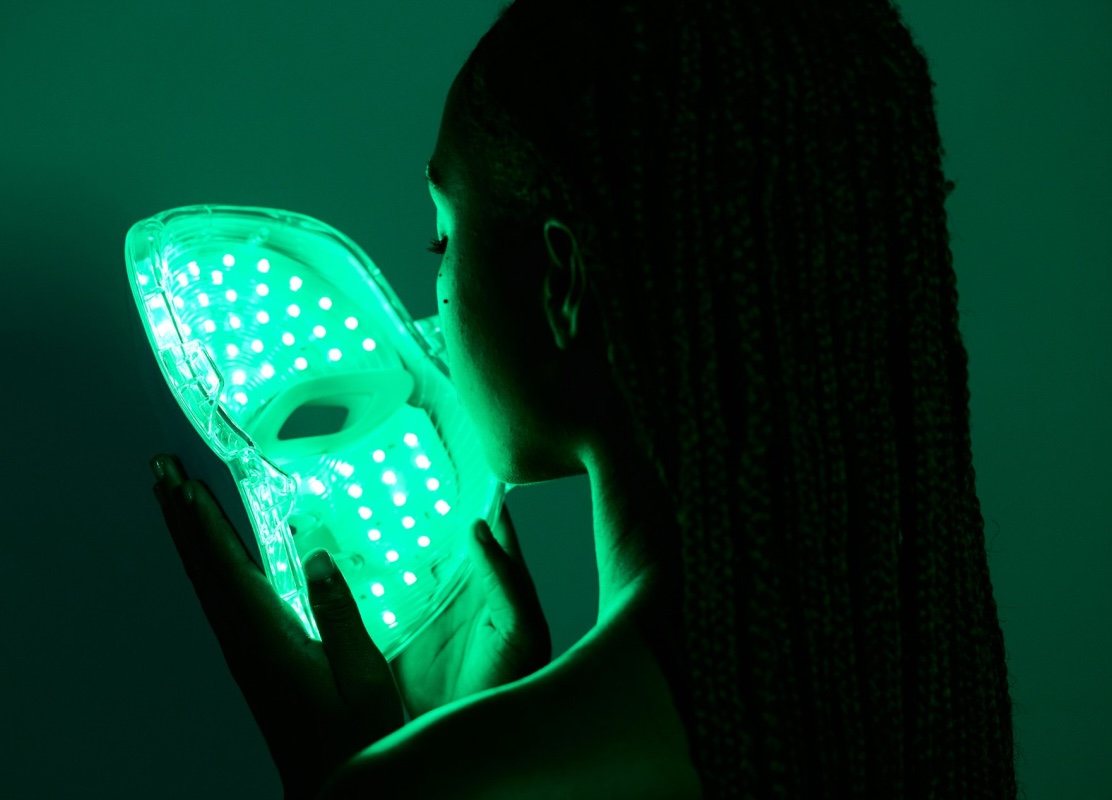
Natalia Blauth/Unsplash
The Trend: Red light therapy has a new competitor: green light therapy. Beauty influencers popularized red light therapy for its purported abilities to improve skin texture and elasticity, promote post-workout muscle recovery, and more. Green light is now gaining traction as creators and skincare companies claim it can target dark spots and reduce inflammation.
What People Are Saying: Green light therapy uses shorter wavelengths (roughly 495 to 590 nanometers compared to red light’s 590 to 700), allowing it to primarily target the epidermis, the skin’s outermost layer. Experts think this may help regulate melanin production — which could make it useful for treating certain types of hyperpigmentation — and early studies also suggest it may reduce inflammation.
What to Know: Researchers remind us that red light therapy became widely popular “despite limited scientific understanding of the long-term effects and safety, especially for home use” — and the evidence for green light therapy is even more limited. More research is needed, and experts caution that in some people, particularly those with darker skin tones, green light exposure could potentially worsen pigmentation rather than improve it.