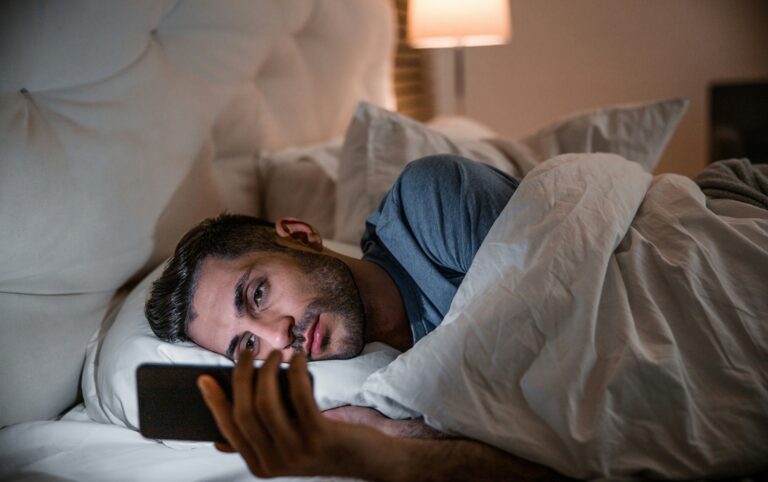
Too Little Sleep, and Too Much, Increases Disease Risk

Andrej Lišakov/Unsplash
The Goldilocks Zone: When it comes to sleep, getting by on as little as possible isn’t ideal — but apparently, neither is getting too much. New research suggests there may be a middle ground where sleep and healthy aging intersect.
The Study: Researchers analyzed sleep data from nearly 500,000 UK Biobank participants ages 37 to 84, comparing self-reported sleep duration with 23 biological aging “clocks” based on brain imaging, blood proteins, and metabolites. Across nine brain and body systems, they found a U-shaped relationship: biological age gaps were smallest among people sleeping roughly 6.4 to 7.8 hours, with men’s optimal range being about one-tenth of an hour shorter than women’s. For both sexes, sleeping less than 6 hours or more than 8 hours was associated with larger biological age gaps and higher risks of several diseases and mortality.
Takeaway: This is a lesson in “more isn’t always better.” For most adults, consistently getting around seven to eight hours remains a sensible target.
Keep in Mind: This was an observational study, and sleep duration was self-reported. The findings show associations, not proof that sleeping a particular number of hours will slow aging. Individual sleep needs also vary.