ADHD and Sleep: Why Your Body Clock Might Be the Real Problem

Screen timing might be more detrimental to sleep quality than screen time.
Troubled sleep gets written off as a side effect of attention deficit/hyperactivity disorder (ADHD) — the restless brain that won’t power down at night. But ADHD and sleep have a bidirectional relationship: poor sleep worsens inattention and emotional regulation, and ADHD in turn makes falling asleep harder.
While it’s possible to achieve better sleep without the use of hormone supplementation like melatonin, or by blocking light with eye masks or blackout curtains, recent research suggests that ADHD brains might need an adjustment on when to sleep.
What You Should Know About ADHD and Sleep
In the US, ADHD affects approximately 6% of the adult population, half of whom were diagnosed in adulthood (i.e., when they were older than 18). About a third of those diagnosed take a stimulant medication, assuming they can acquire it — and of those who do, more than seven in 10 report trouble filling the prescription because it’s unavailable.
Most people manage ADHD with stimulant medications — methylphenidate or amphetamine-based, in branded and generic forms. Those help with focus and impulse control, but they’re aimed at ADHD’s symptoms, not the body-clock problem underneath the sleep trouble.
ADHD poses significant risks to quality sleep, which can negatively affect mood, behavior, and quality of life. Nearly 80% of adults with ADHD suffer from sleep disturbances; up to 78% struggle to sleep or wake at conventional times and have delayed melatonin production under low-light conditions by up to 90 minutes.
A growing body of research is reframing the outcomes of sleep disruption caused by ADHD as a circadian rhythm mismatch. Your circadian rhythm is your natural, internal, 24-hour biological clock. That delayed melatonin production might be the result of being an evening chronotype, a biological preference for sleep timing and wakefulness, often referred to as a “night owl.”
Going Deeper on the ADHD–Body Clock Link
ADHD is classified as a neurodevelopmental disorder, but a 2025 perspective published in Frontiers in Psychiatry argues it could be a circadian-rhythm disorder — a real and common pattern in a meaningful share of the people who have it.
Although it’s a perspective review drawing on existing evidence rather than a randomized controlled trial, it points to intervention studies showing you can nudge the body clock earlier in people with ADHD using timed light and related therapies — like bright light therapy, daily exposure to artificial light to shift the circadian rhythm. So far, the evidence supports these as ways to improve ADHD symptoms.

The 2026 study in Chronobiology International compared screen time, circadian rhythm patterns, and sleep quality between 100 participants with ADHD and 100 without. All participants completed standardized questionnaires covering their ADHD symptoms, body-clock patterns, sleep quality, and screen use.
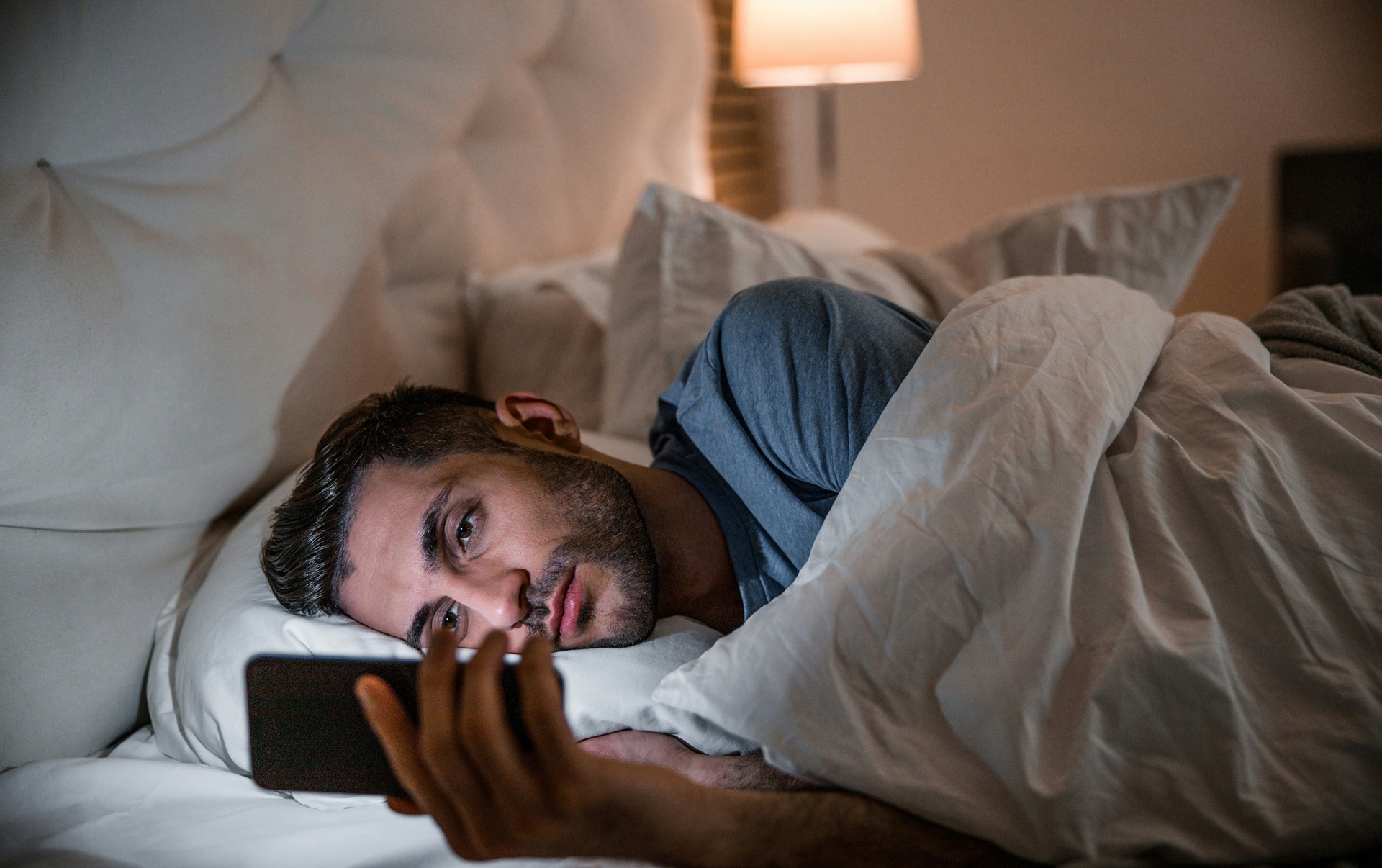
Participants with ADHD had significantly higher screen time usage than their non-ADHD counterparts, which correlated with more heavily disrupted circadian rhythms and poorer sleep quality. While there was a strong association, which is promising for chronotherapy, the sample size remains too small to support its use as standard care.
The mechanism at play is that light timing and exposure intensity affect your circadian rhythm by delaying melatonin release, which in turn delays sleep onset. This would most likely negatively impact early-morning work demands or school performance.
Jamie M. Zeitzer, PhD, a professor of psychiatry and behavioral sciences and co-director of the Stanford Center for Sleep and Circadian Sciences, has described this pattern as a “doom loop.” Because light is the primary cue your body uses to sync with the outside world, pairing erratic light exposure with an irregular sleep schedule weakens the circadian rhythm — sleep falters, energy drops, attention gets harder to hold, and performance slips. Scrolling into the early hours only tightens the loop.
The Takeaway
By front-loading light earlier in the day — morning sunlight especially — and holding consistent sleep and wake times seven days a week, chronotherapy for patients with ADHD has a promising future, provided more robust research can support the current evidence.
Current ADHD research suggests those who take a melatonin supplement to support sleep should do so earlier in the evening, though you should always consult your doctor when experimenting with timing.
Bright light, such as that from your phone or TV, delays the release of melatonin. Dimming them can help reset the circadian rhythm.
Bottom Line
There is a well-documented association between ADHD and delayed circadian rhythm. Treating ADHD by way of resetting your body clock remains a promising, though still emerging, area of research. Although it could impact a meaningful number of those with ADHD, it doesn’t replace current standardized treatments.
To think that ADHD treatment could encounter a breakthrough in circadian rhythm treatment is certainly exciting, but there is still much research to be done before any hard claims can be made.