Can — and Will — AI Replace Healthcare Professionals?

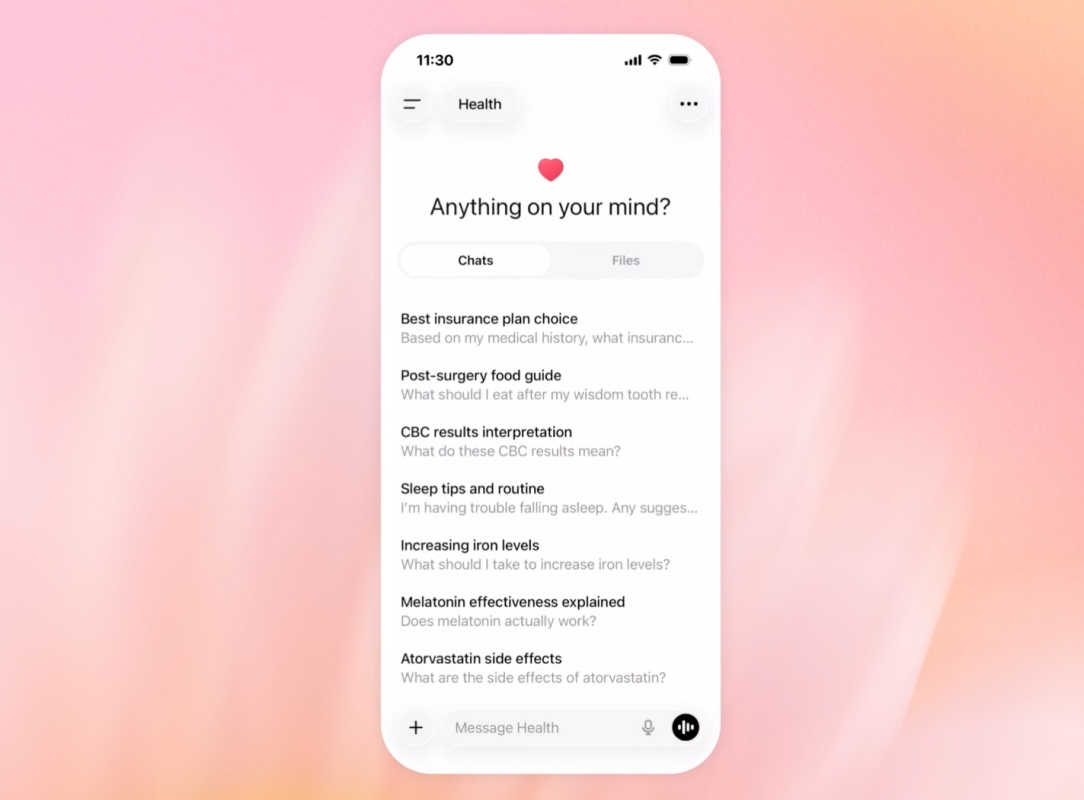
Courtesy: OpenAI
The Trend: OpenAI’s release of ChatGPT Health reinforces a growing shift in how people seek medical guidance: turning to chatbots. Instead of asking broad, one-off questions, users can now connect apps like Apple Health and Peloton to create a single hub for medical, nutrition, fitness, and wellness data. OpenAI says the result is a more personalized, holistic view of health.
What People Are Saying: Research estimates that around 800,000 people in the U.S. die each year from medical error. That figure has led some to ask whether AI could help reduce mistakes — and if so, whether doctors should be more open to it. But, writes Charlotte Blease, a philosopher and associate professor of health informatics, “If Dr. Bot is to have a role, it will not be as an imitation priest in a white coat.” Others raise concerns about data security, though OpenAI says privacy is a core priority.
What to Know: Taking more ownership of your health is a good thing — and if a tool like ChatGPT helps you organize information or ask better questions, that’s a win. But it still can’t diagnose or treat you. Even OpenAI emphasizes that ChatGPT Health is meant to support healthcare providers, not replace them. Used thoughtfully, it can be a useful supplement as long as its limits are clearly understood.