Over the past year or so, most of the phone conversations with my mom revolve around the garden. What her and my father are planting. What didn’t work. What they’re hoping will spring up. New types of mulch and fertilizer. I’m happy the two of them have found the hobby — and not just because of how good the garden has been looking these days. But because I’ve had some vague sense that this kind of activity feels healthy. As it turns out, there are actually 6 ways gardening supports longevity.
— J.D., Editor
◐
Mindfulness
Somatic Therapy Is Everywhere. Does the Science Back It Up?
Polina Kuzovkova/Unsplash
The Trend: If you’re familiar with the wellness space, you’ve likely heard “somatic therapy” mentioned in podcast ads and therapist bios. It’s a group of body-oriented techniques focused on the mind-body connection, and it’s gaining traction as more people look for ways to process stress and trauma outside of talk therapy.
What People Are Saying: Supporters say it works by homing in on physical sensations (like muscle tension, posture, breathing patterns, and movement) to release stored emotional stress. Techniques range from breathwork and grounding exercises to guided movement and body scanning. While more therapists have been arguing the body holds onto these experiences that talk therapy just can’t reach, skeptics note it’s difficult to define somatic therapy, and say we still need rigorous research on it.
What to Know: Forms of somatic therapy date back to the 1970s, when researchers began studying how trauma lives in the body. A 2017 trial showed promising results for PTSD, but the overarching evidence hasn’t caught up to that of established therapies like cognitive behavioral therapy (CBT). If you’re still curious, look for a licensed practitioner with formal training. Not everyone using the now quite popular term has the credentials to back it up.
✲
Sponsored
The Moment You See Your Real Data, Everything Gets Easier
Courtesy: Hume Health
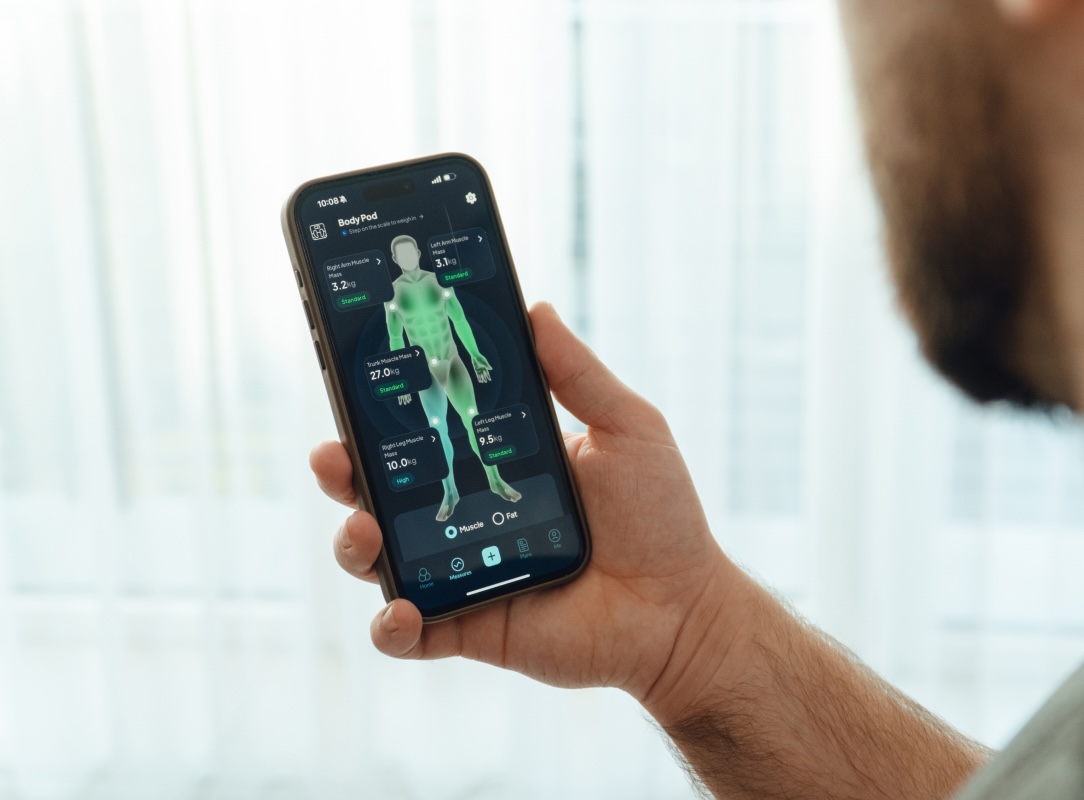
Most people don’t need more motivation. They need more clarity. Hume Body Pod gives you a true read on what’s happening beneath the surface, delivering 45+ body composition metrics in under 90 seconds, including fat and muscle tracking with 98% DEXA-level correlation. That means you can finally tell the difference between real progress and normal day-to-day fluctuation.
When you can see what’s changing, you stop second-guessing your meals, your workouts, and your routine. You make smarter adjustments, faster, because your body is no longer a mystery.
Thank you for supporting our sponsors! They help us keep All Healthy free.
✥
Fitness
What Is ‘Muscle Memory’ and Can I Improve Mine?
Renato Leal/Unsplash
Things I Don’t Remember: You’ve heard it a million times: “It’s just like riding a bike.” What that old chestnut is referring to is muscle memory — the body’s ability to automatically remember how to do a skill. Muscle memory can be applied to lots of things: swimming, typing on a keyboard without looking at the keys, picking up the piano again after a long hiatus, even tying your shoes. But can you lose that skill as you age — and if so, are there ways to protect or even improve it?
The Benefits: The more science-y term for muscle memory is “procedural memory.” It’s different from other types of memory, as it’s tied to remembering actions, not words. With repetition over time, a task can become automatic. Muscle memory isn’t as affected by dementia as other types of memory for this reason. People with dementia might forget their spouse’s name, but they could still know how to knit. Continuing to learn new skills as we age, however, has a protective benefit against age-related cognitive decline.
How to Do It: To learn a new skill, you have to work through the uncomfortable learning phase, which requires deep focus and concentration. Create a frequent practice schedule. Sleeping afterward has been found to improve retention.
✾
Nutrition & Food
Your Brain Has a Secret Fullness Switch and Scientists Just Found It
Kateryna Hliznitsova/Unsplash
Satisfied: Scientists have known for a while that the brain has an entire system for telling you when to stop eating. For a long time, researchers assumed that neurons (the main messaging cells of the brain) did most of the heavy lifting when it came to hunger and fullness. But recent research indicates the mechanism that tells you you’re full is way more complicated than that.
Going Deeper: A new study from the University of Marylandidentified a previously unknown signaling chain in the hypothalamus, the region of the brain that controls hunger. When you eat, blood sugar rises and triggers specialized cells to release a compound called lactate. That lactate reaches another cell type, which then activates the brain's fullness neurons. Researchers also found that lactate may simultaneously dial down hunger neurons, hitting the brakes from two directions at once.
The Takeaway: The brain's “stop eating” signal is more complicated than anyone realized until now, and this newly mapped pathway could eventually open doors to better treatments for obesity and disordered eating, potentially working alongside existing options like GLP-1 medications.
Keep In Mind: The research was conducted in animal models, so the next step is testing whether manipulating this pathway actually changes eating behavior in humans.
Eight Longevity Trials. One Science-Backed Competition
Courtesy: Super Age
The Super Age Games wasn't built around what looks impressive in a gym. It was built around eight longevity markers that actually predict how long you'll live well: functional strength, aerobic capacity, agility, endurance, balance, grip strength, working memory, and relational capacity. Eight trials. Each one tied to a measurable longevity outcome.
We partnered with researchers at the Buck Institute for Research on Aging to make sure every trial has science behind it. The waitlist is open now. Spots are limited and waitlist members will get access to tickets first.
After a long day, sometimes you just need an easy way to get dinner on the table. This recipe leans on pantry staples like preserved lemon, harissa, and jarred (or canned) tuna to transform simple rice into a quick, satisfying meal with bright North African flavors. Fresh ingredients like scallions, cilantro, red bell pepper, and green beans add a bright crunch, making it perfect for those evenings when the fridge is nearly bare but you still want something delicious.
By clicking, you are agreeing to receive a daily recipe from All Healthy.
✲
Sponsored
See What’s Changing, Not Just What You Weigh
Hume Body Pod gives you 45+ body insights in under 90 seconds, so you can see what’s working and adjust with confidence. With fat and muscle tracking backed by 98% DEXA correlation, it helps make your health goals feel clear, measurable, and motivating.
Thank you for supporting our sponsors! They help us keep All Healthy free.
❦
HEALTHY HABIT
Shoulder Reset
Once or twice during the day, roll your shoulders slowly backward ten times. Desk work tends to pull the shoulders forward and tighten the upper back. A quick reset restores circulation and posture. Done consistently, it can reduce that familiar neck-and-shoulder stiffness.
★
Final Thought
The true value of a human being can be found in the degree to which he has attained liberation from the self.”